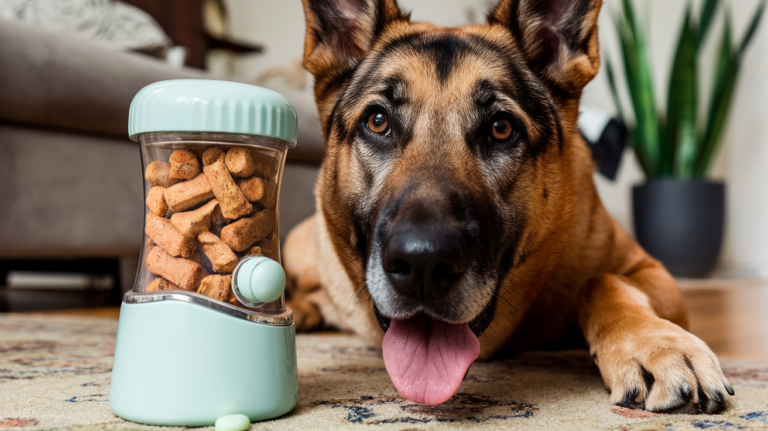
If your German Shepherd tunes you out, this one simple fix could change everything. It’s shockingly effective and works faster than you’d expect.
You call your German Shepherd’s name. Nothing. You try again, louder this time. Still nothing. Meanwhile, your supposedly loyal companion is staring intently at a leaf blowing across the yard, completely oblivious to your existence. Sound familiar?
If you’re nodding your head right now, welcome to the club nobody wanted to join. The “My German Shepherd Thinks I’m Furniture” support group has millions of members worldwide. But here’s the thing: your dog isn’t being stubborn or disrespectful. There’s actually a fascinating reason behind this behavior, and an even better solution that most owners never discover.
Why German Shepherds Develop “Selective Deafness”
German Shepherds aren’t ignoring you because they’re trying to be difficult. These dogs were literally bred to make independent decisions while working. Herding dogs need to assess situations and act without waiting for constant human input. That independence, which makes them phenomenal working dogs, can also make them seem aloof or disobedient in a home setting.
The problem gets worse when owners accidentally train their dogs to ignore them. Yes, you read that right. Most owners are unknowingly teaching their German Shepherds that commands are optional.
Here’s how it happens: You call your dog. They don’t come. You call again. Still nothing. You call a third, fourth, maybe fifth time, each repetition teaching your GSD that your words are meaningless background chatter. Eventually, they might mosey over, and you’re just relieved they finally listened. Congratulations! You’ve just reinforced that commands are suggestions, not requirements.
The Attention Economy Problem
Your German Shepherd lives in what we might call an “attention economy.” Everything in their environment competes for their focus: squirrels, smells, sounds, other dogs, that fascinating pile of leaves. Your voice is just one channel in a very noisy world.
When trainers work with distracted German Shepherds, they often discover the same issue: the dog has learned that human speech is irrelevant. Think about it from your dog’s perspective. How many times per day do you talk near your dog without expecting any response? You chat on the phone, talk to family members, narrate your cooking, complain about traffic. Your GSD hears hundreds, maybe thousands of words daily that require zero action from them.
When your dog hears constant noise but rarely needs to respond, your actual commands become invisible. You’re not speaking a different language; you’re just more static in an already static filled world.
The One Genius Fix: The Silence Protocol
Ready for the game changer? Stop talking to your dog.
Wait, what? That sounds completely backwards, doesn’t it? But this counterintuitive approach, which professional trainers call the “Silence Protocol” or “Earned Communication,” transforms ignored dogs into attentive partners in as little as two weeks.
Here’s the concept: Make your words valuable by making them rare. When you dramatically reduce the amount of meaningless chatter your German Shepherd hears, your actual commands become significant events worth paying attention to.
How to Implement the Silence Protocol
The implementation is straightforward but requires discipline from every human in your household.
| Phase | Duration | What You Do | What Changes |
|---|---|---|---|
| Phase 1: Total Reset | Days 1 to 3 | Zero talking to your dog except for essential commands (sit, stay, come). No narration, no chatting, no baby talk. | Dog becomes curious about the sudden silence. |
| Phase 2: Earned Words | Days 4 to 10 | Only speak when dog makes eye contact with you first. Every word must mean something. | Dog starts actively seeking your attention and eye contact. |
| Phase 3: Reinforcement | Days 11 to 14 | Gradually add back some casual talk, but maintain 70% silence. Commands remain non-negotiable. | Dog differentiates between casual speech and important commands. |
| Phase 4: Maintenance | Ongoing | Keep casual chatter minimal. Make commands count by using them sparingly and enforcing them consistently. | Dog maintains high responsiveness and attention. |
Phase 1 feels weird. You’ll want to narrate everything (“Good morning buddy!” “Who’s a good dog?” “Let’s go outside!”). Resist. Those three days of near silence reset your dog’s expectation about human speech.
Phase 2 introduces the earned communication concept. Your GSD has to check in with you, making eye contact, before they hear your voice. This creates a habit of attention. When they look at you, mark it with a quick “yes” or “good” and occasionally a treat. You’re building a powerful association: paying attention to humans results in good things.
During Phase 3, you’re testing the new system while preventing backsliding. Your dog should now differentiate between your “just talking” voice and your “this is important” voice. Commands should be given once, in a clear tone, and always enforced. If you say “come” and your dog doesn’t respond, calmly go get them and bring them to where you were standing. No yelling, no repeating, just quiet follow through.
Why This Works So Effectively
The Silence Protocol leverages several psychological principles simultaneously:
Novelty and Contrast: When something that was constant (your voice) suddenly becomes rare, it automatically becomes more interesting. Your German Shepherd’s brain is wired to notice changes in patterns.
Operant Conditioning: By only speaking when your dog offers attention first, you’re rewarding the exact behavior you want: a dog who checks in with you regularly.
Clear Communication: Reducing verbal clutter makes your actual signals stand out. It’s like turning off every other radio station so your dog can finally hear your frequency clearly.
Silence isn’t the absence of communication. It’s the foundation that makes real communication possible. When you stop filling the air with meaningless words, your meaningful words gain the power they deserve.
Troubleshooting Common Challenges
“My Family Won’t Stop Talking to the Dog”
This is the biggest obstacle. Everyone in your household must participate, or the protocol loses effectiveness. Call a family meeting. Explain that constant chatter is actually harming your relationship with your dog. For two weeks, everyone commits to the same rules. Make it a challenge: who can be most consistent?
If you have kids, frame it as a special training game. “We’re teaching Max a new skill, and it only works if we’re all very careful with our words around him.” Kids often love being part of a structured training plan.
“What About Praise and Affection?”
Physical affection doesn’t stop during the Silence Protocol. You can still pet, scratch, and cuddle your German Shepherd. The restriction is specifically on verbal communication. You’d be amazed how much connection happens through touch, eye contact, and body language when words are removed from the equation.
After the initial reset phase, you can add back praise, but make it earned and meaningful. Instead of a constant stream of “good boy, good boy, good boy,” save it for genuinely praiseworthy moments. Your dog will value that specific praise so much more.
“My Dog Seems Confused or Sad”
Some German Shepherds do seem puzzled during the first few days. They might follow you around more, offer behaviors trying to get a response, or seem uncertain. This is actually a good sign. It means your dog is noticing the change and trying to figure out the new rules.
Stay consistent but warm. Your body language should remain friendly and open. You’re not punishing your dog; you’re upgrading your communication system. Most dogs adjust within 48 hours and actually seem relieved to have clearer guidelines.
Beyond Basic Obedience: Building Real Partnership
Once your German Shepherd consistently responds to commands, the Silence Protocol transforms into something even more valuable: a foundation for genuine partnership. Dogs who have learned to check in regularly become better at reading your body language, anticipating your needs, and working cooperatively.
The Check In Habit
The most beautiful outcome of this training is the “check in” your German Shepherd develops. Instead of a dog who wanders off and does their own thing, you’ll have a dog who regularly looks back at you, even when off leash. This isn’t obedience born from fear; it’s connection born from clear communication.
Professional working dog handlers rely on this exact dynamic. Military and police K9s aren’t constantly being given commands. Instead, they maintain a state of relaxed attention, checking in with their handlers regularly and responding instantly when actual commands are given. Your pet German Shepherd can absolutely achieve this same level of partnership.
Making Training Sessions Count
With your new communication framework, training sessions become dramatically more effective. When your dog is actually listening because your words matter, teaching new skills becomes easier and faster.
Keep training sessions short (five to ten minutes) and impactful. Quality over quantity. Three focused five minute sessions scattered throughout the day will accomplish more than a frustrating thirty minute session with a distracted dog.
The Role of Physical and Mental Exercise
Here’s a truth that might sting: sometimes your German Shepherd ignores you because they’re bored out of their skull. These are not couch potato dogs. They were designed to work all day, covering miles of terrain while making split second decisions.
A tired German Shepherd is an attentive German Shepherd. Before you start the Silence Protocol, make sure your dog is getting adequate physical exercise. We’re talking at least 60 to 90 minutes daily of actual activity, not just potty breaks in the backyard.
Mental stimulation matters just as much. Puzzle toys, scent work, trick training, and novel experiences all tire out that powerful GSD brain. A mentally satisfied dog has the bandwidth to pay attention to you. An under stimulated dog is too busy trying to create their own entertainment to care about your commands.
You can’t train focus into a dog whose basic needs for exercise and mental stimulation aren’t being met. Meet those needs first, and training becomes ten times easier.
Integrating the Fix Into Daily Life
After your initial two week protocol, the maintenance phase becomes your new normal. You don’t maintain total silence forever, but you do maintain intentional communication.
Before you speak to your dog, pause and ask yourself: “Does this need to be said?” If you’re just filling the air, skip it. If you’re actually communicating something important, say it clearly, once, and follow through.
Your German Shepherd will thank you by becoming the attentive, responsive partner you always knew they could be. That genius fix? It was inside you all along, waiting quietly for its moment to shine.