New owners often learn the hard way. Avoid these big mistakes that can lead to frustration, stress, and long-term behavior problems.
You bring home your adorable German Shepherd puppy, those giant ears flopping around, those oversized paws promising a big, beautiful dog. Fast forward six months, and you’re wondering why your “dream dog” is bouncing off the walls, ignoring your commands, and treating your backyard like their personal excavation site.
Sound familiar? You’re not alone. Thousands of new German Shepherd owners make the same critical mistakes, turning what should be an amazing experience into a frustrating struggle. The good news? These mistakes are completely avoidable once you know what they are.
1. Treating Exercise Like It’s Optional
Let’s get something straight right now: your German Shepherd was bred to work all day long. We’re talking about dogs whose ancestors herded sheep across massive fields for hours without breaking a sweat. That genetic coding doesn’t just disappear because your GSD now lives in suburbia.
The average German Shepherd needs at least 1 to 2 hours of serious exercise every day. And no, letting them out in the backyard doesn’t count. These dogs need purposeful, engaging physical activity that actually challenges them. Think running, hiking, agility training, or playing intense games of fetch (not the lazy kind where you throw the ball five times and call it good).
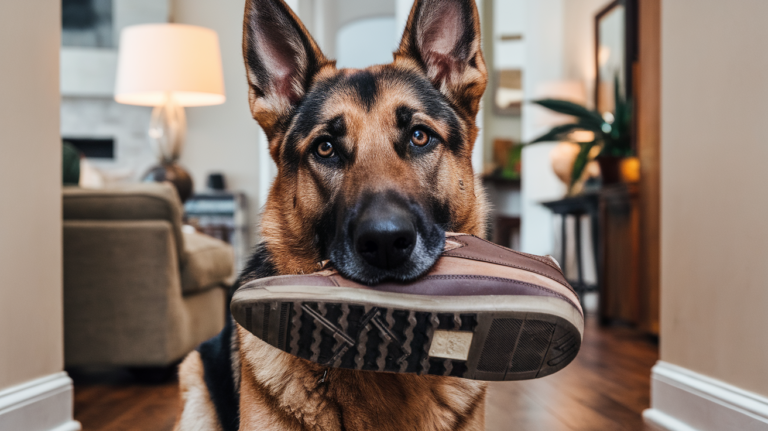
What happens when you skip proper exercise? Your German Shepherd becomes a furry tornado of destructive energy. They’ll chew your favorite shoes, dig craters in your yard, bark at literally everything, and develop anxiety behaviors that’ll make you question all your life choices.
A tired German Shepherd is a good German Shepherd. An under-exercised one is a home renovation crew you never hired.
Many new owners make the mistake of thinking a 20 minute walk around the block will suffice. Wrong! That’s barely a warmup for these athletic powerhouses. You need to commit to serious daily exercise, or you’re setting both yourself and your dog up for failure.
Here’s what proper German Shepherd exercise actually looks like:
| Activity Type | Duration | Frequency | Intensity Level |
|---|---|---|---|
| Morning walk/jog | 30-45 minutes | Daily | Moderate to High |
| Evening play session | 30-45 minutes | Daily | High |
| Training exercises | 15-20 minutes | Daily | Mental + Physical |
| Weekend adventures | 2-3 hours | Weekly | Variable |
2. Skipping Early Socialization (The Biggest Regret You’ll Have)
Here’s where things get serious. German Shepherds are naturally protective and alert. Without proper socialization, that protective instinct transforms into fear-based reactivity, aggression toward other dogs, or anxiety around strangers. And trust me, trying to fix these issues in an adult German Shepherd is about ten times harder than preventing them in the first place.
The critical socialization window is between 3 and 14 weeks of age. That’s it. Miss this window, and you’re playing on hard mode for the rest of your dog’s life. During this period, your puppy needs to experience everything: different people (kids, elderly folks, people in uniforms, people wearing hats), various environments (parks, pet stores, busy streets), other dogs, cats, weird sounds, strange surfaces… basically everything they might encounter as an adult.
But here’s where new owners mess up: they either don’t socialize at all, or they do it wrong. Forcing a scared puppy to interact with something frightening isn’t socialization; it’s traumatization. Proper socialization means positive experiences with new things. Treats, praise, and keeping things low pressure are essential.
Common socialization mistakes include:
- Waiting until after all vaccinations are complete (too late!)
- Only socializing with other German Shepherds
- Skipping exposure to children because “we don’t have kids”
- Avoiding busy places because the puppy seems nervous
- Not introducing various surfaces like metal grates, stairs, or slippery floors
The puppy that meets 100 new people before four months old becomes the confident adult dog everyone admires. The puppy that meets only family becomes the reactive dog everyone avoids.
3. Inconsistent Training (Or No Training At All)
Let’s talk about something that drives professional dog trainers absolutely crazy: owners who think their German Shepherd will just “figure things out” naturally. Spoiler alert… they won’t. Or rather, they will, but not in ways you’ll appreciate.
German Shepherds are scary smart. We’re talking top three most intelligent dog breeds on the planet. But intelligence without direction is just chaos with a good memory. These dogs need training like they need food and water. It’s not optional; it’s essential to their mental wellbeing.
The mistake isn’t usually about whether to train, but how people train. New owners often:
- Train sporadically (once a week when they remember)
- Use different commands for the same behavior (“sit,” “sit down,” “get down”)
- Let family members enforce different rules (Dad allows couch sitting, Mom doesn’t)
- Give up when the dog doesn’t learn something immediately
- Only train at home in comfortable, distraction-free environments
Here’s the truth about German Shepherd training: consistency beats intensity every single time. Five minutes of focused training twice a day will produce better results than an hour-long session once a week. These dogs thrive on routine and clear expectations.
And another thing: basic obedience isn’t enough. Your German Shepherd’s brain needs jobs. Teach them to bring you items by name, learn complex tricks, do nose work, or master agility courses. Without mental stimulation, all that intelligence gets channeled into figuring out how to open cabinets and unzip bags (yes, they can do that).
4. Underestimating The Grooming Commitment
Oh boy, here’s a fun surprise that hits new German Shepherd owners like a furry freight train: the shedding. If you’ve never owned a German Shepherd before, you have absolutely no idea what’s coming. These dogs don’t shed; they produce fur like it’s their full time job.
People see these gorgeous dogs with their sleek double coats and think, “How bad could it be?” The answer is spectacularly bad. German Shepherds shed year round, and then twice a year they “blow their coat,” which basically means they release enough fur to construct an entirely new dog. Maybe two dogs.
You don’t own a German Shepherd; you enter into a lifelong partnership with your vacuum cleaner, lint roller, and the acceptance that fur is now a condiment in your home.
But shedding isn’t even the biggest grooming mistake new owners make. The real problem is neglecting their teeth, nails, and ears. German Shepherds are prone to dental disease, and those nails grow surprisingly fast for such active dogs. Their upright ears are less prone to infections than floppy-eared breeds, but they still need regular checking and cleaning.
The bare minimum grooming schedule:
- Brushing: at least 3 times per week (daily during shedding season)
- Nail trimming: every 2 to 3 weeks
- Teeth brushing: ideally daily, minimum 3 times per week
- Ear checking: weekly
- Baths: every 6 to 8 weeks (or as needed)
Many new owners skip this maintenance and then wonder why their dog’s nails are clicking on hardwood floors like tap shoes or why their breath could knock out a horse. Regular grooming isn’t about vanity; it’s about health and catching problems before they become expensive veterinary emergencies.
5. Ignoring The Breed’s Health Realities
Here’s where we need to have an uncomfortable but necessary conversation. German Shepherds are not the healthiest breed. Thanks to decades of questionable breeding practices prioritizing appearance over function, many German Shepherds come with genetic health issues baked right in.
The most devastating? Hip and elbow dysplasia. This painful condition affects a huge percentage of German Shepherds and can lead to arthritis, mobility issues, and thousands of dollars in veterinary bills. Degenerative myelopathy (basically the canine version of ALS) is another heartbreaking condition that disproportionately affects this breed.
The mistake new owners make is assuming that all those health problems happen to “other people’s dogs.” They skip health screenings, buy from backyard breeders who can’t produce health certificates, and don’t maintain appropriate weight management (obesity makes joint problems exponentially worse).
Critical health considerations for German Shepherd owners:
First, if you haven’t bought your dog yet, only purchase from breeders who do OFA (Orthopedic Foundation for Animals) health certifications for hips and elbows. This isn’t negotiable. Responsible breeders test their breeding dogs and can show you documentation.
Second, keep your German Shepherd lean. That Instagram aesthetic of chunky, thick dogs? It’s destroying their joints. Your German Shepherd should have a visible waist and you should be able to feel (but not prominently see) their ribs. Extra weight is literally destroying their hips and elbows with every step.
Third, budget for healthcare. German Shepherds aren’t cheap to maintain. Between routine veterinary care, potential emergency situations, and the likelihood of needing joint supplements or treatments later in life, you need to be financially prepared. Pet insurance isn’t a bad idea if you get it while they’re young and healthy.
Look, nobody wants to think about their adorable puppy developing health problems. But ignoring breed specific health realities doesn’t make them go away. It just means you’ll be caught unprepared when problems arise. Knowledge is power, and in this case, it’s also the difference between catching treatable conditions early versus dealing with advanced disease.
The beautiful truth about German Shepherds is that when you get it right, they’re absolutely incredible companions. Loyal, intelligent, goofy, protective, and endlessly entertaining. But getting it right means avoiding these five massive mistakes that trip up so many new owners. Your future self (and your German Shepherd) will thank you for doing the homework now.