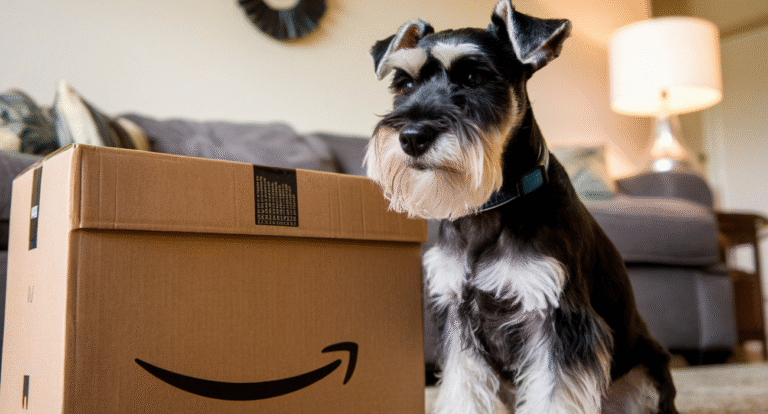
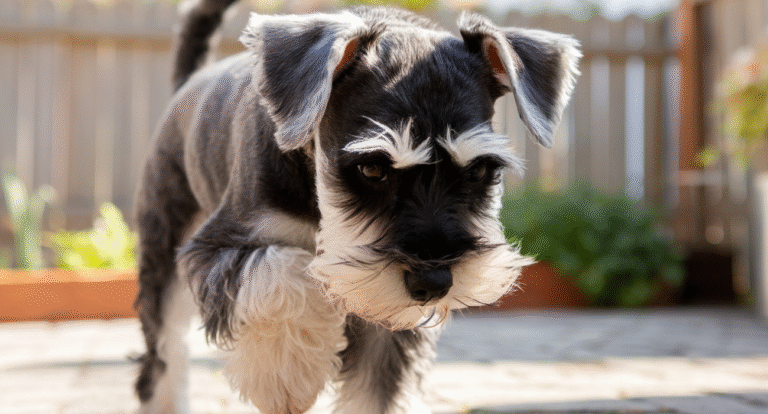
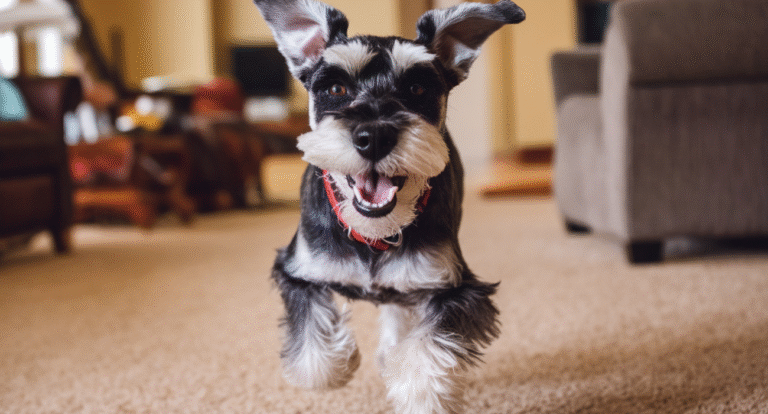
If your Schnauzer is nervous around kids, discover techniques to help them relax and build positive memories together.
So your Schnauzer thinks kids are basically tiny tornado sirens on legs. Every time a child appears, your pup acts like the world is ending. The good news is that nervous behavior around children isn’t a personality flaw, it’s a communication issue that you can absolutely work through.
Schnauzers have earned their reputation as loyal, protective family dogs for good reason. They’re smart, attentive, and deeply bonded to their people. But that intelligence comes with a side of caution, especially around unpredictable situations. Children represent everything a control-loving Schnauzer finds challenging: random movements, unexpected noises, and zero respect for personal space.
Why Your Schnauzer Feels Anxious
The root of your Schnauzer’s nervousness often lies in socialization (or the lack thereof). These terrier-type dogs develop their social preferences during a critical window in puppyhood, roughly between 3 and 14 weeks of age. If your Schnauzer didn’t have positive experiences with children during this period, they might view kids as unpredictable aliens who speak a different language.
But lack of early socialization isn’t the only culprit. Maybe your dog had a negative experience with a child in the past. Even one scary encounter can leave a lasting impression on a sensitive Schnauzer. Perhaps a toddler pulled that magnificent beard a bit too hard, or a child accidentally stepped on a paw during playtime. Dogs have excellent memories, especially when it comes to things that frightened them.
The Schnauzer Personality Factor
Schnauzers come in three sizes, but they all share certain personality traits. They’re alert, spirited, and sometimes stubborn. These dogs were originally bred to catch rats and guard property, which means they’re hardwired to be suspicious of anything unusual. Children, with their erratic behavior and high-pitched voices, can trigger that guardian instinct in confusing ways.
Your Schnauzer might also be picking up on your energy. Dogs are incredibly perceptive, and if you’re worried about how your dog will react around kids, they’ll sense that tension. It creates a feedback loop where your anxiety reinforces their nervousness, and their nervousness makes you more anxious.
Reading Your Schnauzer’s Body Language
Before you can help your nervous Schnauzer, you need to become fluent in their communication style. Dogs tell us exactly how they’re feeling, but humans often miss the subtle signs until the dog has escalated to more obvious behaviors like barking or snapping.
| Body Language Signal | What It Means | Action to Take |
|---|---|---|
| Whale eye (showing whites of eyes) | Stress, discomfort, feeling trapped | Create distance between dog and child immediately |
| Yawning when not tired | Anxiety or stress signal | Remove dog from situation before it escalates |
| Lip licking or nose licking | Nervousness, trying to self-soothe | Give your dog space and reduce stimulation |
| Tucked tail | Fear or submission | Don’t force interaction; let dog retreat to safe space |
| Raised hackles along back | Arousal (fear or excitement) | Closely monitor; redirect attention before reaction occurs |
| Stiff, frozen body | High stress, potential for defensive behavior | End the interaction immediately and calmly |
Watch for displacement behaviors too. These are things dogs do when they’re conflicted or stressed, like suddenly sniffing the ground intensely, scratching when they’re not itchy, or shaking off as if they’re wet when they’re completely dry. Your Schnauzer is essentially saying, “I need a break from whatever is happening right now.”
The Stress Ladder Concept
Think of your dog’s stress level as a ladder. At the bottom, they’re calm and relaxed. As they climb the ladder, they become increasingly anxious. By the time they reach the top, they might snap or bite. The key is to intervene when your Schnauzer is still on the lower rungs.
If you notice your dog getting stiff, staring intensely, or showing any of the signals mentioned above, that’s your cue to step in. Don’t wait until they’re growling or lunging. Prevention is always easier than damage control.
Creating Positive Associations with Children
The goal here is simple but requires patience: you want your Schnauzer to think “kids equal good things happening.” This process, called counter-conditioning, changes your dog’s emotional response at a fundamental level.
The foundation of helping a nervous Schnauzer isn’t about forcing interaction. It’s about changing the way your dog feels when children are present, which naturally leads to better behavior.
Start at a distance where your dog notices children but isn’t reactive. This might be across a park or even just watching kids through a window. The moment your Schnauzer sees a child, something amazing happens: treats rain from the sky. Not just any treats, but the absolute best things you can find. We’re talking small pieces of chicken, cheese, or hot dog.
The Gradual Approach Method
Here’s how to structure your training sessions:
Step One: Distance Work
Keep your Schnauzer far enough away from children that they’re aware but not stressed. Feed high-value treats continuously while kids are visible. When the children disappear, the treats stop. You’re building a mental connection: kids appear = delicious things happen.
Step Two: Controlled Exposures
Once your dog is comfortable at a distance, gradually decrease the space over multiple sessions. Never rush this process. Some dogs need weeks or even months to progress. If your Schnauzer shows stress signals, you’ve moved too quickly. Go back to a distance where they were comfortable and spend more time there.
Step Three: Calm Children First
When you’re ready for closer interactions, start with calm, older children who can follow instructions. Teenagers are perfect for this stage. Teach these young helpers to ignore your dog completely at first. No eye contact, no talking to the dog, no reaching out. They’re simply existing in the same space while you continue the treat party.
Teaching Children How to Interact Safely
Even the friendliest Schnauzer can become nervous if children don’t understand basic dog etiquette. You need to educate the kids in your life just as much as you train your dog. Think of it as creating a common language that both species can understand.
The Golden Rules for Kids
Rule one: Ask permission first. Children should always ask the dog’s owner before approaching or touching. This gives you the chance to assess whether your Schnauzer is ready for interaction. Teach kids to ask you, not the dog, because dogs can’t actually consent to being petted.
Rule two: Gentle touches only. Show children how to pet with an open palm using slow, calm strokes on the dog’s side or chest. The top of the head, tail, and paws are off limits. No hugging, no kissing, no grabbing that tempting beard. Explain that dogs don’t hug the way humans do; to them, it feels like being trapped.
Rule three: Respect the dog’s space. If your Schnauzer walks away, that’s the end of the interaction. Period. Kids need to understand that dogs have the right to say “no thanks” to attention. This is perhaps the most important lesson, yet it’s often overlooked.
A nervous dog isn’t being difficult or disobedient. They’re communicating that the situation exceeds their current comfort level. Respecting those boundaries is how trust gets built.
Management Strategies for Daily Life
While you’re working on training, you need practical solutions for real-life situations. Management means setting up your environment so your nervous Schnauzer doesn’t have to practice feeling anxious around children.
Create a safe space where your dog can retreat when things get overwhelming. This might be a crate, a specific room, or a cozy corner with a bed. Make this area off limits to children always. Your Schnauzer should know they can go there and be left alone, no questions asked.
Using Barriers and Separation
Baby gates are your best friend during this process. They allow your dog to observe children from a safe distance without the pressure of direct interaction. Your Schnauzer can choose to watch or retreat, giving them a sense of control over the situation.
When visitors come over with kids, don’t feel bad about putting your dog in another room with a stuffed Kong or long-lasting chew. Sometimes the kindest thing you can do is remove your dog from a situation that’s too stressful. This isn’t failure; it’s smart management.
Professional Help When You Need It
Sometimes DIY training isn’t enough, and that’s perfectly okay. If your Schnauzer’s nervousness includes aggressive behaviors like snapping, biting, or intense lunging, you need professional guidance. A certified dog behaviorist or veterinary behaviorist can create a customized behavior modification plan.
Look for trainers with credentials like CPDT-KA (Certified Professional Dog Trainer, Knowledge Assessed) or CBCC-KA (Certified Behavior Consultant Canine, Knowledge Assessed). Avoid anyone who talks about “dominance” or uses punishment-based methods. Nervous dogs don’t need corrections; they need to feel safe.
When Medication Might Help
For severely anxious Schnauzers, anti-anxiety medication prescribed by a veterinarian can be a game changer. Medication doesn’t replace training, but it can lower your dog’s baseline anxiety enough that learning becomes possible. Think of it like lowering the water level in a flood; suddenly your dog can touch the ground and move forward.
Building Confidence Through Other Outlets
A confident dog is generally less nervous, so invest time in activities that build your Schnauzer’s self-assurance. Nose work classes are fantastic for this breed. Schnauzers have excellent sniffers, and using their natural abilities gives them a huge confidence boost.
Trick training works wonders too. Teaching your Schnauzer to spin, shake hands, or play dead might seem silly, but it creates positive training experiences and strengthens your bond. Every time your dog successfully learns something new, they’re building a mental bank account of “I can handle new things.”
Confidence isn’t built through flooding a dog with their fears. It’s constructed through small successes, predictable routines, and the knowledge that their person will keep them safe.
The Time Investment Reality
Here’s the truth nobody wants to hear: fixing fear-based behaviors takes time. We’re talking months, not weeks. You might see improvement quickly, or you might feel like you’re making no progress at all for the first month. Both scenarios are normal.
Some Schnauzers will become genuinely comfortable around children with consistent work. Others will simply learn to tolerate kids without loving the experience. And a small percentage will always need careful management around young children. All of these outcomes are acceptable if your dog feels safe and secure.
The key is consistency without obsession. Short, positive training sessions beat marathon practices every time. Five minutes a day of quality work trumps an hour of stressful interaction. Your Schnauzer is an individual, and their timeline is their own. Comparing your progress to other dogs only leads to frustration.
Celebrate the small victories. Did your dog glance at a child without tensing? That’s progress. Did they take a treat while a kid was ten feet away when last week it had to be twenty feet? Victory. These tiny steps compound over time into real, lasting change. Your nervous Schnauzer is counting on you to be patient, stay positive, and remember that every dog deserves to feel safe in their world.