Does your Schnauzer nip or bite? Learn what’s really behind this behavior and how to guide them with calm solutions.
Your adorable Schnauzer just nipped at your hand, and you’re standing there wondering if you’ve somehow adopted a tiny, bearded piranha instead of a dog. You’re definitely not alone in this struggle.
Whether your Schnauzer is still a puppy testing out those needle-sharp baby teeth or an adult who never quite learned that human skin isn’t a chew toy, nipping and biting behaviors can range from mildly annoying to genuinely problematic. The good news is that this behavior is absolutely fixable with the right approach.
Why Schnauzers Use Their Mouths
Before you can fix the nipping problem, you need to play detective and figure out what’s driving the behavior. Schnauzers don’t just bite for no reason (even though it might feel that way when you’re on the receiving end). Dogs use their mouths to explore the world, communicate feelings, and sometimes to tell us they’re uncomfortable or overstimulated.
Puppies are particularly mouthy because, well, they’re babies learning how the world works. Those razor-sharp puppy teeth are nature’s way of making sure they get the message when they bite too hard. If your Schnauzer is under six months old, some nipping is completely normal developmental behavior. They’re essentially learning bite inhibition, which is the fancy term for “figuring out how hard is too hard.”
Adult Schnauzers who nip usually have a different story. Maybe they never learned proper bite inhibition as puppies, or perhaps the behavior has been accidentally reinforced over time. Some Schnauzers nip out of excitement (you just got home and they’re SO HAPPY), others do it when they’re anxious or fearful, and some have learned it’s an effective way to control situations they don’t like.
The Most Common Triggers for Schnauzer Nipping
Identifying your specific Schnauzer’s triggers is like having a roadmap to solving the problem. Keep a mental note (or better yet, an actual notebook) of when the nipping happens. Is it during rough play? When strangers approach? During grooming sessions? When you try to move them off the furniture?
Excitement-Based Nipping
Excitement-based nipping is probably the most common type, especially in younger Schnauzers. Their little brains get so overwhelmed with joy or enthusiasm that they revert to puppy behavior and start chomping on whatever’s nearest. These are usually quick, relatively gentle nips that happen during greetings or play sessions.
Resource Guarding
Then there’s resource guarding, where your Schnauzer nips to protect something valuable like food, toys, or even their favorite human. This type of biting is more serious and requires careful handling. If your Schnauzer growls, stiffens, or shows whale eye (when you can see the whites of their eyes) before nipping, you’re likely dealing with guarding behavior.
Fear or Anxiety-Based Biting
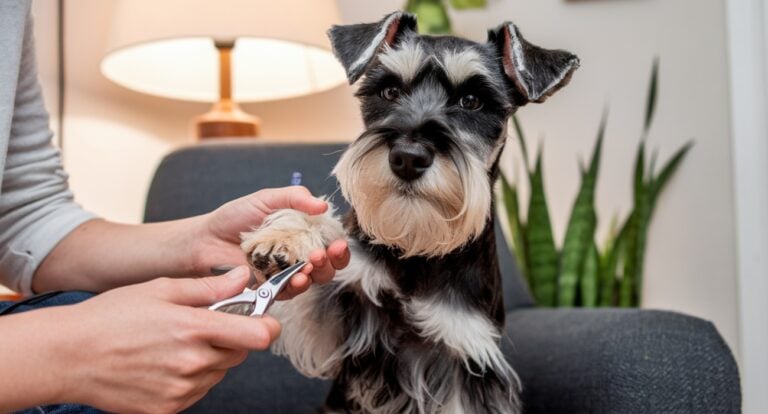
Fear or anxiety-based biting happens when your Schnauzer feels cornered or threatened. This might occur during vet visits, nail trims, or when they’re startled. These bites can be the most severe because they’re coming from a place of genuine panic. Your Schnauzer isn’t being mean; they’re essentially saying “please stop, I’m terrified” in the only language they think will work.
Setting Up Your Schnauzer for Success
Before diving into training techniques, you need to create an environment that naturally discourages nipping. Think of it as schnauzer-proofing your approach to interactions.
The foundation of solving any behavioral problem starts with meeting your dog’s basic needs. A tired, mentally stimulated Schnauzer is far less likely to engage in problematic behaviors than one who’s bored and bursting with pent-up energy.
Schnauzers are working dogs at heart, which means they need jobs to do. If they don’t have an appropriate outlet for that energy and intelligence, they’ll create their own entertainment (and you probably won’t like their choices). Aim for at least 30 to 60 minutes of physical exercise daily, combined with puzzle toys, training sessions, or scent work games.
Equally important is establishing clear, consistent rules throughout your household. If sometimes you allow your Schnauzer to playfully mouth your hands and other times you correct them for it, you’re creating confusion. Dogs thrive on predictability, so everyone in the family needs to be on the same page about what’s acceptable.
Effective Training Techniques to Stop Nipping
Now for the practical stuff: what do you actually do when your Schnauzer nips? The most effective approach combines teaching your dog what you want them to do while simultaneously removing rewards for the unwanted behavior.
The Redirect Method
The Redirect Method works beautifully for excitement nipping and puppy mouthing. The instant your Schnauzer’s teeth touch your skin, make a high-pitched “ouch!” sound (mimicking how another puppy would react), then immediately redirect their attention to an appropriate chew toy. When they take the toy, praise them enthusiastically. You’re essentially teaching them that toys are way more rewarding than your hands.
Timeout Technique
For persistent nippers, try the Timeout Technique. When teeth touch skin, say “oops!” in a calm, neutral voice and immediately stand up and walk away or leave the room for 30 to 60 seconds. This isn’t about punishing your Schnauzer; it’s about teaching them that nipping makes all the fun stop instantly. When you return, greet them calmly and resume interaction. If they nip again, repeat the timeout.
| Training Method | Best For | Key Principle | Timeframe for Results |
|---|---|---|---|
| Redirect Method | Puppies, excitement nipping | Replace unwanted behavior with appropriate alternative | 2-4 weeks with consistency |
| Timeout Technique | Attention-seeking nipping, playful biting | Remove reward (your attention) immediately | 3-6 weeks |
| Desensitization | Fear-based or handling-related biting | Gradually increase tolerance through positive associations | 6-12 weeks or longer |
| Impulse Control Training | Overexcitement, hyperarousal | Build self-control before arousal peaks | 4-8 weeks |
Impulse Control Exercises
Impulse control exercises are absolutely essential for Schnauzers who get overexcited and lose control of their mouths. Games like “wait” before meals, “leave it” with treats on the floor, and “settle” on a mat teach your Schnauzer that good things come to dogs who can control themselves. These skills directly translate to better bite inhibition because your dog learns to think before acting.
When Nipping Is More Serious: Resource Guarding and Aggression
Not all nipping is created equal, and it’s crucial to recognize when you’re dealing with something more serious than typical mouthy behavior. If your Schnauzer’s bites are breaking skin, if they’re accompanied by aggressive body language (stiff posture, hard stare, raised hackles), or if they’re escalating in frequency or intensity, you need professional help.
Resource guarding, in particular, requires a carefully structured training protocol. You absolutely should not try to “show your dog who’s boss” by forcibly taking items away or alpha rolling them. These outdated techniques are dangerous and will likely make the guarding worse. Instead, you need to teach your Schnauzer that humans approaching their stuff is the best thing ever through systematic desensitization.
True behavior modification for serious biting problems isn’t about dominance or punishment. It’s about changing your dog’s emotional response to triggers from negative to positive, which requires patience, consistency, and often professional guidance.
Start by tossing high-value treats near (but not too close to) your Schnauzer when they have a resource, then walk away. You’re building the association that your presence predicts good things appearing, not things being taken away. Gradually decrease distance over many sessions, always staying below your dog’s threshold for reacting. This process can take months, and rushing it will backfire spectacularly.
If your Schnauzer has ever bitten hard enough to bruise or break skin, or if they show aggression toward family members (especially children), contact a certified dog behaviorist or veterinary behaviorist immediately. Some biting problems have medical causes like pain or neurological issues, so a vet visit should be your first stop anyway.
Managing the Environment While Training
Training takes time, and you can’t just let your Schnauzer keep practicing the nipping behavior while you work on it. Management is your friend here. Think of it as setting up guardrails while your dog learns better habits.
If your Schnauzer nips during greetings, put them in another room or behind a baby gate when guests arrive until they’ve calmed down. Then bring them out on a leash so you have control if they start to get mouthy. If they nip during play, keep play sessions shorter and calmer, ending them before your Schnauzer gets overstimulated enough to start using teeth.
Prevention is always easier than correction. If you know your Schnauzer gets nippy when overtired (yes, dogs get cranky when they need naps, just like toddlers), enforce rest times in a crate or quiet room before the behavior starts. If certain toys or games trigger nipping, remove them temporarily until your training has progressed.
Leashes aren’t just for walks; they’re excellent management tools indoors too. Keeping a “house line” (a lightweight leash) attached to your Schnauzer’s collar when you’re home gives you a way to calmly interrupt nipping without having to grab your dog, which can inadvertently turn into a fun game of chase.
Building a Better Relationship Through Training
Here’s something most people don’t realize: fixing nipping problems usually improves your entire relationship with your Schnauzer. The training process itself builds communication, trust, and mutual respect. You’re learning to read your dog’s body language better, and they’re learning that you’re a reliable, predictable presence who helps them make good choices.
Incorporate cooperative care training into your routine, where you teach your Schnauzer to voluntarily participate in grooming, handling, and vet care. This drastically reduces fear-based nipping because your dog learns they have some control over what happens to their body. For example, teaching a “chin rest” behavior where your Schnauzer places their chin in your hand and keeps it there gives them a way to say “I’m okay with this” or to opt out by removing their chin.
Make training sessions short (five minutes or less) and fun. Schnauzers are whip-smart, but they can also be a teensy bit stubborn, so keeping things upbeat and rewarding prevents frustration on both ends. Use the tiniest, most delicious treats you can find (we’re talking pea-sized or smaller), and deliver them rapid-fire when your Schnauzer is doing well.
Remember that consistency is absolutely everything. If you let your Schnauzer get away with nipping even occasionally, you’re putting yourself on what trainers call a “variable reinforcement schedule,” which actually makes the behavior harder to eliminate. It’s like a slot machine: if it pays out sometimes, you’ll keep playing. Every single time teeth touch skin must have the same consequence, no exceptions.
The Role of Proper Socialization
Many adult Schnauzers who nip never learned appropriate bite inhibition as puppies, which typically happens through interactions with littermates and their mother. When a puppy bites too hard during play, their siblings yelp and stop playing. This natural feedback is incredibly valuable, and puppies separated from their litters too early (before eight weeks) often miss out on these crucial lessons.
If you have an adult Schnauzer with poor bite inhibition, you can’t recreate puppyhood, but you can provide clear feedback about pressure. Allow soft mouthing initially (if you’re comfortable with it), but the instant pressure increases even slightly, react immediately with your “ouch!” and timeout. You’re essentially doing what their littermates would have done.
Proper dog-to-dog socialization can also help, but be cautious here. Not every dog park or playgroup is appropriate, especially if your Schnauzer is already showing aggressive tendencies. Look for structured playgroups led by professionals who match dogs carefully by play style and temperament. Well-adjusted, patient adult dogs can teach your Schnauzer proper play manners better than any human can.
What NOT to Do
Let’s talk about some common mistakes that can actually make nipping worse. First on the list: never hit, slap, or physically punish your Schnauzer for nipping. Besides being cruel, physical punishment teaches your dog that humans are unpredictable and potentially dangerous, which can lead to fear-based aggression. You might suppress the behavior temporarily, but you’re creating much bigger problems.
Similarly, avoid the old-school advice to “bite your dog back” or pin them down. These techniques are based on thoroughly debunked dominance theory and can seriously damage your relationship with your dog. Schnauzers are terriers; they don’t back down from confrontation. You’re much more likely to escalate the situation than to “show them who’s boss.”
Don’t yell or give lengthy corrections. Your Schnauzer has no idea what you’re saying when you launch into a frustrated lecture about appropriate behavior. Dogs learn through consequences that happen within seconds of the behavior, not through verbal explanations. Keep your response simple, immediate, and consistent.
Punishment might stop a behavior temporarily, but it doesn’t teach your dog what to do instead. Effective training always includes showing your Schnauzer the right choice and making that choice more rewarding than the wrong one.
Finally, don’t inadvertently reward nipping by giving your Schnauzer attention when they do it. Even negative attention (pushing them away, saying “no,” making eye contact) can be rewarding for an attention-seeking dog. This is why the timeout method works so well; you’re removing all attention instantly and completely.