Aggression in Schnauzers has causes you can address quickly. Learn how to spot triggers and calm your pup effectively.
So your Schnauzer has turned into a grumpy little gremlin, and you’re not sure when things went sideways. Maybe it started with some light barking that escalated into full-blown aggression, or perhaps your pup has always been a bit “spicy” with other dogs. Either way, you’re dealing with a breed that’s got opinions and isn’t afraid to share them with teeth if necessary.
Schnauzers are wickedly smart and fiercely loyal, which sounds great until those traits morph into territorial behavior and reactive outbursts. But here’s what most people don’t realize: aggression in Schnauzers is almost always fixable once you understand what’s triggering it. From socialization gaps to overprotective tendencies, we’re about to break down exactly why your Schnauzer is acting like the neighborhood bully and what you can do to restore peace.
The Root Causes of Schnauzer Aggression
Understanding why your Schnauzer is aggressive is half the battle. These dogs weren’t bred to be lap warmers; they were working dogs with serious jobs. Miniature, Standard, and Giant Schnauzers all share common traits: high intelligence, strong territorial instincts, and a natural suspicion of strangers. When these characteristics aren’t properly channeled, they can manifest as aggressive behavior.
Lack of Early Socialization is the number one culprit behind most Schnauzer aggression issues. If your dog wasn’t exposed to a wide variety of people, animals, sounds, and environments during their critical socialization period (roughly 3 to 14 weeks old), they’re more likely to perceive new experiences as threats. An under-socialized Schnauzer doesn’t have the mental database to determine what’s safe and what’s actually dangerous, so they default to defensive aggression.
Fear-based aggression is particularly common in this breed. Schnauzers are alert dogs by nature, which means they’re constantly scanning for potential threats. When something triggers their fear response (whether it’s a loud noise, an unfamiliar person, or another dog), they may lash out preemptively. This is their way of saying “back off before you hurt me,” even if the perceived threat was never actually dangerous.
Then there’s territorial aggression, which is basically a Schnauzer’s bread and butter. These dogs take their guardian duties seriously. Whether it’s protecting your home, your car, or even you personally, Schnauzers can become overly possessive of their space and resources. This often shows up as aggressive behavior toward visitors, delivery people, or other dogs that venture too close to what your Schnauzer considers “their” territory.
Remember: Aggressive behavior is almost always rooted in either fear, lack of socialization, or misguided protective instincts. Your Schnauzer isn’t mean; they’re overwhelmed, confused, or operating on faulty information about how to handle perceived threats.
Common Triggers That Set Off Schnauzers
| Trigger Type | Common Situations | Typical Response |
|---|---|---|
| Other Dogs | Dog parks, walks, vet visits | Lunging, barking, snapping |
| Strangers | Doorbell ringing, people approaching on walks | Excessive barking, growling, nipping |
| Resource Guarding | Someone near food bowl, toys, or favorite person | Stiffening, growling, biting |
| Sudden Movements/Sounds | Children running, loud noises, unexpected touch | Defensive snapping, retreating then lunging |
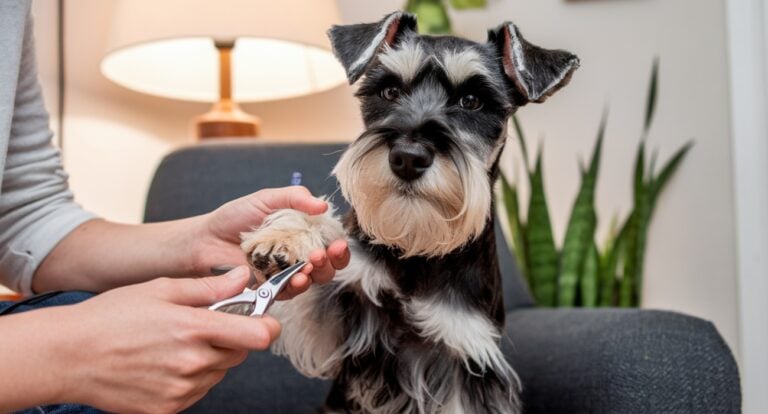
| Handling/Grooming | Nail trimming, brushing, vet exams | Growling, attempting to bite, thrashing |
Identifying your Schnauzer’s specific triggers is crucial because you can’t fix what you can’t pinpoint. Start keeping a journal of aggressive incidents. Note what happened right before the outburst, who was present, where you were, and what your dog’s body language looked like. Patterns will emerge, and those patterns are your roadmap to solutions.
Pay attention to the ladder of aggression that dogs display. Your Schnauzer probably isn’t going from zero to bite in one second. There are usually warning signs: whale eye (showing the whites of their eyes), lip licking, yawning when not tired, freezing, raised hackles, a stiff body, and low growling. Many owners accidentally punish these warning signs, which teaches the dog to skip straight to biting since their earlier communication was ignored.
Fixing the Aggression: Practical Strategies That Work
Counter-conditioning and desensitization are your most powerful tools. This involves gradually exposing your Schnauzer to their triggers at a low intensity while pairing the experience with something incredibly positive (usually high-value treats). The goal is to change your dog’s emotional response to the trigger from “THREAT! PANIC!” to “oh hey, good things happen when that appears.”
Here’s how it works in practice: if your Schnauzer loses their mind when other dogs appear, you start working at a distance where your dog notices the other dog but hasn’t reached their reactive threshold yet. The instant your dog sees the other dog, you start feeding amazing treats continuously. When the other dog disappears, the treats stop. You’re literally rewiring your dog’s brain to associate other dogs with something awesome rather than something scary.
This process requires patience and consistency. You might spend weeks working at a distance before you can decrease the space between your Schnauzer and their trigger. Rushing this process will set you back, so embrace the slow and steady approach.
Impulse control training is equally important for aggressive Schnauzers. Teach your dog that calm behavior gets them what they want, while reactive behavior gets them nothing. Simple exercises like “wait” before meals, “leave it” with toys, and “settle” on a mat can dramatically improve your dog’s ability to regulate their emotions. Schnauzers are smart enough to learn these concepts quickly, and structured training gives them mental stimulation that can reduce overall reactivity.
The truth about dominance: Forget everything you’ve heard about being the “alpha” or dominating your aggressive dog. Modern behavioral science has thoroughly debunked dominance theory. Punishment-based methods typically make aggression worse because they increase fear and anxiety. Your Schnauzer doesn’t need you to intimidate them; they need you to help them feel safe and teach them better coping strategies.
Consider hiring a certified professional dog trainer (CPDT) or a veterinary behaviorist, especially if your Schnauzer has already bitten someone or if the aggression is severe. These professionals can create a customized behavior modification plan and teach you proper technique. Some aggression cases also have underlying medical causes (pain, thyroid issues, neurological problems), so a vet visit should be part of your game plan.
Management: Setting Your Schnauzer Up for Success
While you’re working on behavior modification, smart management prevents your Schnauzer from rehearsing aggressive behavior. Every time your dog practices lunging, barking, or biting, that neural pathway gets stronger. Your job is to control the environment so your dog can’t keep practicing the unwanted behavior.
Environmental management might include things like closing the blinds so your Schnauzer can’t bark at passersby, using a different entrance when guests arrive, or avoiding the dog park entirely until your dog’s reactivity improves. These aren’t permanent solutions, but they’re essential temporary measures that prevent the problem from getting worse while you work on training.
Use physical barriers wisely. Baby gates can separate your Schnauzer from triggering situations while still allowing them to observe from a safe distance. A properly fitted basket muzzle can be a helpful safety tool during training sessions, and contrary to popular belief, a well-conditioned dog doesn’t mind wearing one. Muzzles should never be punishment; they’re simply management tools that keep everyone safe while you work on the underlying issues.
Exercise and mental stimulation can’t be overlooked. A tired Schnauzer is generally a better-behaved Schnauzer. These dogs were bred to work all day, and if they don’t have an appropriate outlet for their energy and intelligence, that pent-up frustration often manifests as aggression. Daily walks, puzzle toys, sniffing games, and training sessions should be non-negotiable parts of your routine.
The Reality Check You Need to Hear
Fixing aggression in Schnauzers takes time, often months rather than weeks. There’s no magic pill or quick fix, and anyone promising overnight results is selling snake oil. Progress won’t be linear; you’ll have good days and setbacks. The key is celebrating small victories and staying committed to the process even when it feels like you’re not getting anywhere.
Some Schnauzers will never be social butterflies, and that’s okay. Your goal isn’t necessarily to have a dog who loves everyone and everything. Your goal is to have a dog who can exist in the world without reacting aggressively to normal, everyday situations. A Schnauzer who can walk past other dogs calmly, allow guests in your home without losing their mind, and accept necessary handling from vets and groomers is a success story, even if they never want to play at the dog park.
Consistency across all family members is absolutely critical. If one person allows the Schnauzer to bark aggressively at the window while another tries to interrupt the behavior, you’re just confusing your dog and making progress impossible. Everyone in the household needs to be on the same page with training protocols and management strategies.
Your mindset matters: Dogs are incredibly perceptive and feed off your emotional state. If you’re tense, anxious, or frustrated during training sessions, your Schnauzer will pick up on that energy and become more reactive themselves. Approach training with calm confidence, even if you have to fake it at first.
Finally, know when to adjust your expectations. Some dogs have genetic temperaments that make them naturally more reactive or suspicious. Some have experienced trauma that left lasting effects. While virtually all dogs can improve with proper training, not every dog will become completely “fixed.” Learning to manage your Schnauzer’s triggers and keeping everyone safe might be the most realistic goal, and there’s no shame in that outcome.
The bottom line is this: your aggressive Schnauzer can change, but it requires commitment, education, and often professional help. These dogs are too smart and too wonderful to give up on when behavior problems crop up. With the right approach, most Schnauzers can learn to navigate the world without resorting to aggression, transforming from reactive terrors into the loyal, entertaining companions they were meant to be.