German Shepherds thrive when they have a mission. See why giving them a job boosts confidence, reduces misbehavior, and taps into their natural instincts.
Getting a German Shepherd because they look cool is like buying a Ferrari to drive exclusively in school zones. Sure, it’s impressive, but you’re completely missing the point. German Shepherds are obsessed with having purpose. It’s hardwired into their DNA, stamped into their personality, and basically the entire reason they exist as a breed today.
When people complain about their German Shepherd’s “behavioral problems,” what they usually mean is their dog is displaying perfectly normal German Shepherd behavior in an environment with zero appropriate outlets. The jumping, the herding of children, the mysterious ability to find and destroy the most valuable item in your house? That’s not a bad dog. That’s an unemployed working dog trying desperately to create their own job.
The Working Dog Heritage Nobody Talks About Enough
German Shepherds weren’t always the family pets and police dogs we know today. Back in late 1800s Germany, a cavalry captain named Max von Stephanitz had a vision: create the perfect working dog. He wanted intelligence, loyalty, strength, and an insatiable drive to work. Guess what? He succeeded. Maybe a little too well.
These dogs were originally tasked with herding sheep across the German countryside. Not the gentle, casual type of herding either. We’re talking about marathon days of keeping hundreds of sheep in line, protecting them from predators, and making split second decisions without human input. That legacy doesn’t just disappear because your modern German Shepherd lives in suburbia and has never seen a sheep in their life.
The breed’s working heritage means they come equipped with traits that demand an outlet. Their legendary focus, their problem solving abilities, their seemingly endless energy reserves? Those aren’t party tricks. They’re tools bred into the dog over generations, and tools that rust without use become dangerous.
A German Shepherd without a job isn’t relaxing. They’re suffering from unemployment, complete with all the frustration, anxiety, and destructive behavior that comes with being capable but idle.
What Happens When German Shepherds Don’t Have Jobs
The Behavioral Disaster Zone
Let’s get real about what “unemployed” German Shepherds do with their time. Spoiler alert: nothing good. Without proper mental and physical stimulation, these dogs transform into furry tornados of chaos. They’ll dig up your yard, not because they hate your azaleas, but because excavation is a job they’ve assigned themselves.
Excessive barking becomes their new career. And we’re not talking about the occasional alert bark. This is the doctoral thesis of barking: complex, varied, and seemingly never ending. Your neighbors will know exactly how you feel about this new development in about 48 hours.
Destructive chewing reaches Olympic levels. That expensive leather couch? Employment opportunity. Your kid’s favorite toy? New project. The corner of your drywall? Clearly needed some remodeling anyway, at least according to your dog’s newfound interior design career.
The Mental Health Crisis
Here’s where it gets genuinely sad: bored German Shepherds develop real anxiety and depression. These aren’t just bratty dogs acting out. They’re intelligent creatures experiencing genuine psychological distress because their fundamental needs aren’t being met.
You’ll notice behaviors like:
- Obsessive licking or chewing of their own paws
- Pacing in repetitive patterns (hello, worn paths in your carpet)
- Separation anxiety that manifests as full blown panic attacks when you leave
- Reactivity and aggression born from frustration, not malice
Some German Shepherds literally develop compulsive disorders. Tail chasing stops being cute and becomes a genuine mental health issue. Shadow chasing, fly snapping at nothing, staring at walls for hours? These are signs of a mind desperately seeking stimulation and finding none.
The Science Behind Working Dog Brains
| Brain Feature | Purpose | What Happens Without Jobs |
|---|---|---|
| High dopamine response | Rewards problem solving and task completion | Dog seeks inappropriate outlets for dopamine hits |
| Enhanced focus capacity | Allows sustained concentration on herding/protection tasks | Becomes fixation on unwanted targets (squirrels, cars, mailmen) |
| Pattern recognition skills | Helps anticipate livestock behavior and threats | Creates anxiety as dog over analyzes every household change |
| Physical endurance | Enables full days of active work | Translates to destructive energy with nowhere to go |
German Shepherds have larger prefrontal cortexes relative to many other breeds. Translation? They’re really smart, and smart brains need complex problems to solve. When you don’t provide appropriate challenges, their brain doesn’t just shut down and accept a peaceful life. It finds challenges anyway, and those self selected challenges rarely align with what you consider acceptable household behavior.
Research shows working breeds experience measurable stress when understimulated. Their cortisol levels (the stress hormone) stay elevated, their sleep quality decreases, and their overall health suffers. This isn’t speculation or anthropomorphization. It’s biological reality backed by veterinary science.
What Counts as a “Job” for Your German Shepherd
Formal Working Roles
The gold standard? Actual jobs. German Shepherds excel in:
Search and rescue work lets them use their incredible nose and problem solving skills to locate missing persons. These dogs can cover terrain humans can’t access and do it faster. The training is intensive, but for a German Shepherd, it’s basically heaven. Purpose, praise, and puzzles all rolled into one.
Protection sports like Schutzhund or IGP (Internationale Gebrauchshunde Prüfungsordnung, if you want to get fancy about it) tap into their natural guarding instincts in controlled, safe ways. Your dog learns to channel protective energy into structured exercises rather than terrorizing the Amazon delivery driver.
Therapy and service work transforms your German Shepherd’s intelligence and sensitivity into genuine help for humans who need it. Medical alert dogs, mobility assistance, PTSD support? German Shepherds rock at all of it because the work is meaningful and constant.
Everyday Job Alternatives
Not everyone can train a professional working dog, and that’s totally fine. German Shepherds are flexible enough to accept “jobs” that fit into normal life. The key is making them feel genuinely useful and mentally engaged.
Daily training sessions count as work, especially when you’re teaching complex, multi-step behaviors. Forget simple “sit” and “stay.” Teach your dog to retrieve specific items by name, close doors on command, or navigate obstacle courses. Make them think.
The best job for your German Shepherd isn’t necessarily the most elaborate. It’s the one that happens consistently, challenges them appropriately, and makes them feel like a valued contributor to your household pack.
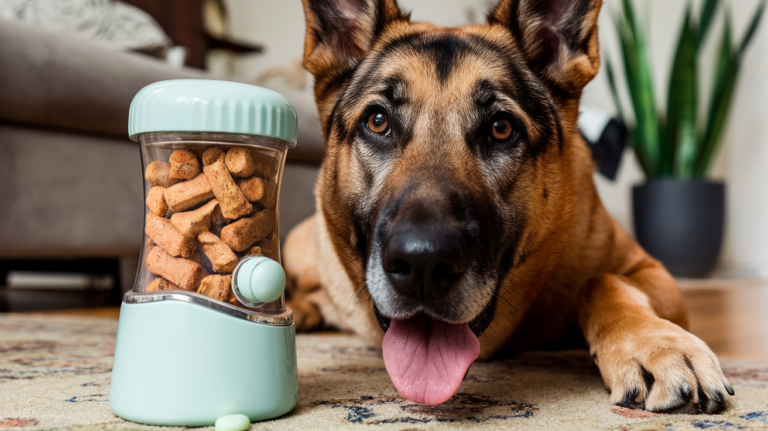
Puzzle toys and food dispensers become employment when used strategically. Rotate them to maintain novelty. Freeze treats in layers of different foods. Hide them around the yard for scavenger hunts. Every meal can be a job if you make it one.
Agility training provides both physical exhaustion and mental stimulation. Your dog has to remember courses, respond to directional commands, and problem solve while moving at high speed. It’s basically the triathlon of dog jobs.
The Daily Structure Strategy
German Shepherds thrive on routine with variation. Create a schedule that includes multiple “work sessions” throughout the day:
Morning might include a training session before breakfast (work for food, just like their ancestors). Midday could be puzzle toys or hide and seek games. Evening brings a long walk with obedience practice mixed in, not just mindless strolling. Before bed, maybe some calm scent work or gentle trick training.
The beauty of this approach? Your German Shepherd becomes tired in all the right ways. Physical exhaustion from exercise, mental fatigue from problem solving, and emotional satisfaction from purposeful activity. That’s the magic formula for a happy, well adjusted German Shepherd who actually sleeps through the night instead of redecorating your house at 2 AM.
How Much Work Are We Actually Talking About?
Let’s shoot straight: German Shepherds are not low maintenance dogs. If you thought adopting one meant occasional walks and weekend playtime, we need to have an honest conversation. These dogs require genuine daily commitment.
Plan for at least two hours of combined physical and mental exercise daily. Notice that’s “combined,” not “total of two separate things.” A two hour walk where your dog just sniffs and wanders? That’s one component. You still need dedicated training time, play sessions, or job activities on top of that.
Young German Shepherds (under three years) often need even more. They’re basically furry toddlers with the stamina of ultramarathon runners. Seriously. Your teenage German Shepherd can outlast you, your spouse, your kids, and probably your extended family in terms of sheer energy.
| Age Range | Daily Exercise Needs | Mental Stimulation | Job Complexity |
|---|---|---|---|
| 8 weeks to 6 months | 30-45 minutes (multiple sessions) | Basic training, socialization | Simple tasks, lots of variety |
| 6 months to 2 years | 90-120 minutes | Intermediate obedience, puzzle games | Moderate complexity, consistent challenge |
| 2 to 7 years | 90-120 minutes | Advanced training, specialized work | High complexity, sustained focus required |
| 7+ years | 60-90 minutes | Adapted activities, continued learning | Adjusted for physical abilities, emphasis on mental work |
Weather doesn’t excuse you from this commitment. Rain, snow, heat, cold? Your German Shepherd still needs their job. That’s where creativity comes in: indoor training sessions, stairway exercises, tug of war games with rules, or setting up indoor obstacle courses using furniture and household items.
The Jobs That Don’t Work (And Why People Keep Trying Them)
Here’s where German Shepherd owners get themselves in trouble: they try to substitute inadequate activities for real jobs and wonder why their dog is still a nightmare.
Just having a yard isn’t a job. Your German Shepherd won’t spontaneously decide to run laps or invent productive activities. They’ll mostly stand there staring at the fence, barking at every sound, or finding the one spot where they can dig to China. A yard is a tool for providing exercise, not the exercise itself.
Dog park visits seem like they should count, but for many German Shepherds, they create more problems than they solve. These dogs often develop dog selectivity or reactivity, especially if they’re bored at home. The chaos of a dog park, combined with owners who aren’t actively engaging their dogs, often results in your German Shepherd either trying to herd the other dogs (not popular) or getting overwhelmed and aggressive.
Doggy daycare works for some dogs but not all German Shepherds. These dogs often prefer purposeful activity over social play. Eight hours of random play with other dogs doesn’t satisfy their need for directed work. They come home physically tired but mentally unsatisfied, which is somehow worse than just being energetic.
Making It Work in Real Life
The secret to successfully giving your German Shepherd a job isn’t about having unlimited time or resources. It’s about integration and consistency. Your dog’s work needs to weave into your actual lifestyle, not exist as some separate, perfect ideal you can never achieve.
Start small and build up. You don’t need to immediately enroll in professional protection sports or train a service dog. Begin with 10 minute training sessions twice daily. Teach your dog to help with household chores: bringing you items, carrying groceries from the car in a special backpack, or “checking” rooms for you.
The mental stimulation matters more than the physical exhaustion for German Shepherds. A 20 minute training session that really makes them think can be more satisfying than an hour walk where they’re just going through the motions.
Your German Shepherd doesn’t judge the prestige of their job. They care about feeling useful, challenged, and appreciated. The task itself matters less than the purposeful engagement it provides.
Rotate activities to prevent boredom. Monday might be obedience training. Tuesday brings nose work. Wednesday is agility practice. Thursday goes back to obedience but with different commands or environments. Friday introduces a new puzzle or game. Variety keeps their brain engaged and prevents the “been there, done that” burnout.
Get your whole family involved. German Shepherds love having multiple “teammates” and different people provide different types of engagement. Kids can play structured games (with supervision). Partners can handle different types of training. Everyone benefits, and your dog gets diverse stimulation.
The Bottom Line on German Shepherd Employment
German Shepherds aren’t difficult dogs because they’re flawed. They’re challenging when their fundamental nature is ignored or misunderstood. These magnificent animals were created to work, and that drive doesn’t disappear because modern life doesn’t require herding sheep or protecting flocks.
Giving your German Shepherd a job isn’t optional enrichment or a nice bonus for ambitious owners. It’s a basic requirement for their mental health and your household harmony. Whether that job is formal working roles or creative everyday tasks doesn’t matter nearly as much as the consistency and genuine engagement you provide.
The reward? A confident, calm, focused German Shepherd who’s genuinely happy. Not just content or peaceful, but truly thriving because they’re fulfilling their purpose. That transformation from destructive nightmare to valued partner happens when you finally give them what they’ve been desperately asking for all along: something meaningful to do.
Your German Shepherd isn’t being difficult. They’re being exactly what generations of careful breeding created: an intelligent, capable working dog. The question isn’t whether they need a job. It’s whether you’re ready to be their employer.