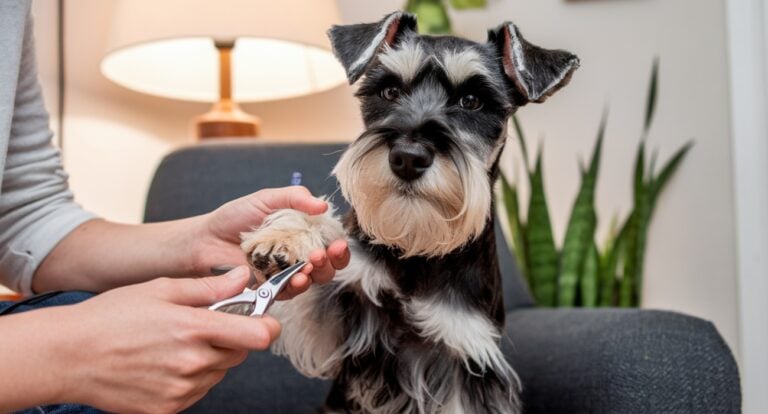
Constant paw-licking can mean more than just grooming. Learn the top causes and simple solutions to help your Mini Schnauzer break the habit.
You’re sitting on the couch, enjoying your favorite show, when you hear it: that unmistakable slurp, slurp, slurp sound. Your Schnauzer is at it again, licking their paws like they’re the most delicious thing on earth. At first, it seems cute, maybe even a little quirky. But when it happens constantly, you start to wonder: is this normal, or is something actually wrong?
The truth is, paw licking is one of those behaviors that can range from totally harmless grooming to a red flag signaling something needs attention. Miniature Schnauzers are particularly prone to this habit. Let’s dig into why your fuzzy friend might be obsessed with their feet and what you can actually do about it.
1. Allergies Are Making Their Paws Itchy
Let’s start with the most common culprit: allergies. Just like humans can be allergic to pollen, dust, or certain foods, your Mini Schnauzer can develop allergies that make their paws unbearably itchy. The irritation drives them crazy, and licking becomes their way of trying to get relief. Unfortunately, while it might feel good in the moment, all that moisture can actually make things worse by creating the perfect environment for yeast or bacteria to thrive.
Allergies in dogs typically fall into three categories: environmental allergens (like grass, pollen, or mold), food allergies (often proteins like chicken or beef), and contact allergies (reactions to things like carpet cleaners or lawn chemicals). Mini Schnauzers can be particularly susceptible to skin issues because of their wiry coat and sensitive skin underneath.
When your dog’s paws become a never-ending source of irritation, the licking isn’t just a bad habit. It’s a desperate attempt to soothe discomfort that won’t go away on its own.
So how do you tell if allergies are the problem? Look for additional signs: red or inflamed skin between the toes, a distinct yeasty smell, constant scratching in other areas, or recurring ear infections. Your Mini Schnauzer might also have watery eyes or sneeze frequently if environmental allergens are the issue.
What you can do about it:
First, schedule a vet visit to confirm allergies and identify potential triggers. Your vet might recommend an elimination diet if food allergies are suspected, which means feeding a limited ingredient diet for several weeks to see if symptoms improve. For environmental allergies, antihistamines, medicated shampoos, or even allergy shots might be necessary. You can also wipe your Schnauzer’s paws with a damp cloth after walks to remove allergens before they can cause problems.
| Allergy Type | Common Triggers | Typical Symptoms |
|---|---|---|
| Environmental | Pollen, grass, dust mites, mold | Red paws, watery eyes, sneezing |
| Food | Chicken, beef, dairy, wheat | Itchy skin, ear infections, digestive issues |
| Contact | Cleaning products, lawn chemicals, fabrics | Localized redness where skin touches irritant |
2. They’ve Got a Paw Injury You Haven’t Noticed
Sometimes the answer is simpler than we think. Your Mini Schnauzer might be licking their paws because something actually hurts. Dogs are surprisingly good at hiding pain, and a small injury can easily go unnoticed until the licking becomes excessive. We’re talking about things like tiny cuts, splinters, broken nails, bug bites, or even something stuck between their toes.
Think about it: when you get a paper cut, don’t you automatically bring it to your mouth? Your dog is doing the same thing. Licking is their instinctive response to injury, an attempt to clean the wound and make it feel better. The problem is that too much licking can prevent healing and introduce bacteria.
What you can do about it:
Get up close and personal with those paws. Gently examine each one, checking between the toes, around the pads, and under the nails. Look for cuts, swelling, redness, foreign objects, or anything that seems out of the ordinary. If you find something minor like a small thorn, you can carefully remove it with tweezers. For anything more serious (like a deep cut, a broken nail, or significant swelling), head to the vet. They might prescribe antibiotics if there’s an infection or recommend an E-collar (the dreaded cone) to prevent further licking while the injury heals.
3. Anxiety and Stress Are Taking a Toll
Here’s something many dog parents don’t realize: emotional distress can absolutely manifest as physical behaviors. When Mini Schnauzers feel anxious, stressed, or bored, they sometimes turn to repetitive behaviors like paw licking as a coping mechanism. It’s essentially a canine version of nail biting or hair twirling in humans, a self-soothing behavior that can quickly become compulsive.
Mini Schnauzers are intelligent, high-energy dogs who thrive on mental stimulation and routine. When they don’t get enough exercise, when there are changes in the household, or when they’re left alone for long periods, anxiety can creep in. Some dogs develop what’s called “acral lick dermatitis,” where they lick one spot so obsessively that they create a wound that won’t heal because they just keep licking it.
Sometimes the most persistent behaviors aren’t about what’s wrong with your dog’s body, but what’s troubling their mind. A stressed Schnauzer needs emotional support just as much as medical attention.
Watch for patterns: Does the licking happen more when you’re about to leave? After you come home from work? During thunderstorms or fireworks? When there are visitors? These contextual clues can help you identify anxiety triggers.
What you can do about it:
Address the root cause of the anxiety. Make sure your Mini Schnauzer gets adequate physical exercise (at least 30 to 60 minutes daily) and mental enrichment through puzzle toys, training sessions, or scent work. Establish a consistent routine so they know what to expect. If separation anxiety is the issue, work on gradual desensitization by leaving for short periods and slowly increasing the duration.
For more severe cases, talk to your vet about anxiety medications or supplements like CBD oil (always consult your vet first). You might also consider working with a certified dog behaviorist who can create a customized behavior modification plan.
4. Yeast or Bacterial Infections Have Set In
Once your Mini Schnauzer starts licking their paws excessively, whether due to allergies, injuries, or anxiety, a secondary problem often develops: infections. All that saliva creates a warm, moist environment that yeast and bacteria absolutely love. It’s like rolling out the welcome mat for microscopic troublemakers.
Yeast infections are particularly common in dogs and have some telltale signs. The affected paws might smell distinctly musty or like corn chips (seriously, that’s a real thing called “Frito feet,” though not in a good way when it’s excessive). The skin between the toes often looks red, inflamed, and sometimes even brown-stained from all the licking. Your Schnauzer might also chew at their paws, not just lick them, in an attempt to get relief from the intense itchiness.
Bacterial infections can occur alongside yeast or on their own, especially if there’s been a break in the skin from a cut or excessive licking. These infections can cause pustules, crusting, or oozing, and they typically require antibiotic treatment to clear up.
What you can do about it:
A vet visit is essential for proper diagnosis. They’ll likely examine the paws, possibly take a skin scraping or swab to identify the specific organism causing the problem, and prescribe appropriate treatment. This might include medicated shampoos, topical creams, oral antifungals, or antibiotics.
At home, keep your Schnauzer’s paws clean and dry. After baths or walks in wet conditions, thoroughly dry between the toes where moisture tends to linger. Some vets recommend antifungal wipes or foot soaks with diluted chlorhexidine or Epsom salts (always get your vet’s approval on concentration and frequency). And yes, you might need that E-collar again to break the lick-infection-lick cycle.
5. It’s Become a Compulsive Habit
Sometimes, paw licking starts for a legitimate reason (allergies, injury, boredom), but even after the original problem resolves, the behavior sticks around. It’s become a compulsive habit, deeply ingrained in your Mini Schnauzer’s daily routine. Just like how some people mindlessly scroll through their phones or tap their feet, your dog has incorporated paw licking into their behavioral repertoire.
This is particularly common in intelligent, high-strung breeds like Mini Schnauzers. Their busy brains need constant engagement, and when they don’t get it, they can fixate on repetitive behaviors. The licking itself might even release endorphins that feel good, reinforcing the habit and making it harder to break.
Compulsive behaviors aren’t signs of a bad dog or poor training. They’re signals that your Schnauzer needs help redirecting their energy and breaking a cycle that’s taken on a life of its own.
You’ll know it’s likely a compulsive habit if the licking happens at predictable times (like every evening on the couch), if there’s no obvious physical cause after vet examination, and if your dog seems almost “zoned out” while doing it, unresponsive to distractions.
What you can do about it:
Breaking a compulsive habit requires patience, consistency, and redirection. When you notice your Mini Schnauzer starting to lick, interrupt the behavior with a command or distraction. Offer an alternative activity: a chew toy, a training session, a game of fetch, or a puzzle feeder. The key is to catch them before they get into the zone, redirecting their attention repeatedly until a new pattern forms.
Increase overall enrichment in your dog’s life. Rotate toys to keep things interesting. Try new activities like agility training, nosework classes, or even doggy playdates. A tired, mentally stimulated Schnauzer is far less likely to resort to compulsive behaviors. In severe cases, your vet might prescribe anti-anxiety medications to help break the cycle, combined with behavior modification techniques.
Consider using bitter-tasting sprays on the paws (vet-approved only) to make licking less appealing, though this works better as a deterrent than a solution on its own. The real goal is to address the underlying need for stimulation and give your dog better outlets for their energy.
Remember, every Mini Schnauzer is unique, and what works for one might not work for another. The most important thing is to pay attention to your dog’s individual patterns and needs. Persistent paw licking deserves investigation, not dismissal. With the right approach, a little detective work, and possibly some professional help, you can help your bearded buddy find relief and finally give those poor paws a break.