Food guarding can feel scary. These proven techniques safely reduce tension and create peaceful mealtimes again.
Your German Shepherd starts growling the moment you walk past their food bowl. Maybe they’ve snapped at your hand when you tried to add kibble, or perhaps they’ve gotten into scuffles with other pets during mealtime. Sound familiar? You’re not alone, and more importantly, this behavior isn’t a life sentence for your pup.
Food aggression in German Shepherds is surprisingly common, but here’s the good news: it’s totally fixable. These intelligent, loyal dogs respond incredibly well to the right training approach. Let’s dive into five proven methods that will transform your tense mealtimes into peaceful ones.
Why Your German Shepherd Guards Their Food
Before we jump into solutions, let’s talk about the “why” behind food aggression. German Shepherds are protective by nature (it’s literally in their job description), and resource guarding is an evolutionary survival mechanism. In the wild, protecting food means staying alive.
Your shepherd might display food aggression for several reasons: they could have experienced food scarcity as a puppy, competed with littermates, or simply never learned that humans near their bowl is actually a good thing. Some dogs develop this behavior seemingly out of nowhere, while others show signs from day one.
Common signs of food aggression include:
| Mild Signs | Moderate Signs | Severe Signs |
|---|---|---|
| Eating faster when approached | Growling or showing teeth | Snapping or biting |
| Stiffening body posture | Raising hackles | Lunging at people or pets |
| Side-eyeing (whale eye) | Blocking the bowl with their body | Actual attacks or injury |
| Low rumbling sounds | Air snapping (biting at air) | Guarding empty bowls |
Recognizing where your German Shepherd falls on this spectrum helps you gauge how carefully you need to proceed. Never punish food aggression; it only confirms your dog’s fear that you’re a threat to their resources. Instead, we’re going to rebuild their trust and change their emotional response to having people around during meals.
1. Start With Hand Feeding and Building Positive Associations
Hand feeding is like hitting the reset button on your German Shepherd’s relationship with food and humans. It teaches them that hands near their face during mealtime equal good things happening, not resources being stolen.
Here’s how to implement it: for one to two weeks, stop using the food bowl entirely. Every single kibble should come from your hand. Yes, this takes time, but it’s incredibly effective. Sit with your dog and make them take each piece gently from your palm. If they snatch or show aggression, close your hand and wait until they calm down before offering again.
The foundation of trust is built one meal at a time. When your German Shepherd learns that your presence equals food appearing rather than disappearing, their entire perspective shifts.
Make this fun! Use meal times for quick training sessions. Ask for a sit, reward with kibble. Practice “touch” or “down,” reward with more food. Your shepherd starts associating your proximity with positive experiences, which directly counters the guarding instinct.
After a week or two of pure hand feeding, you can gradually reintroduce the bowl, but continue to add kibble by hand periodically during meals. This maintains the positive association you’ve worked so hard to build.
2. Practice the “Trade Up” Technique
The trade up method teaches your German Shepherd that giving up resources leads to even better rewards. It’s basically teaching them that cooperation pays off big time.
Start when your dog isn’t eating. Give them a low value treat or toy, then immediately offer something way better (think: piece of chicken, cheese, or their absolute favorite treat). The moment they drop the first item to take the upgrade, praise enthusiastically and give them the good stuff. Practice this throughout the day with various objects.
Once they understand the concept, you can apply it during feeding time. Approach their bowl while they’re eating, without reaching toward it, and toss an incredibly high-value treat into their bowl or nearby. Then walk away. Repeat this multiple times per meal. Your shepherd learns that your approach equals bonus goodies, not theft.
Gradually decrease the distance as they become comfortable. Eventually, you’ll be able to walk right up, add something amazing to their bowl, and walk away without any tension. The key is never taking food away during this training phase. We’re only adding, never subtracting, which makes you a welcomed presence rather than a threat.
3. Implement Structured Feeding Routines With “Work to Eat” Programs
German Shepherds are working dogs who thrive on structure and mental stimulation. A “work to eat” program gives them a job to do before receiving food, which naturally reduces anxiety and possessive behavior.
Before every meal, ask your shepherd to perform a task: sit and wait, go to their mat, practice a down-stay, or run through a quick training sequence. They only get the food bowl after calmly completing the task. This establishes you as the provider who gives resources rather than someone who threatens them.
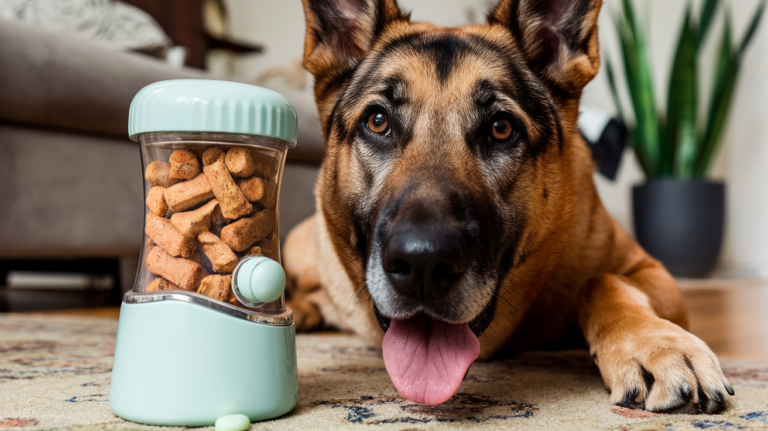
Consider using puzzle feeders, snuffle mats, or Kong toys for some meals. These slow down eating and make mealtime a positive, engaging activity rather than a high-stress competition. When your dog works for their food through play or problem-solving, they’re less likely to guard it aggressively because the focus shifts from protection to engagement.
Structure creates security. When your German Shepherd knows exactly what to expect at mealtimes and understands the routine, anxiety decreases and food aggression naturally diminishes.
Consistency is crucial here. Feed at the same times daily, in the same location, following the same routine. Predictability helps anxious dogs relax because there are no surprises. They know food is coming, they know what’s expected, and they know you’re the reliable source of all good things.
4. Create Safe Feeding Spaces and Manage the Environment
Sometimes food aggression isn’t just about the dog; it’s about their environment feeling unsafe. German Shepherds need to feel secure while eating, especially if they’re sharing space with other pets or in a high traffic area of your home.
Designate a quiet, low-traffic feeding area where your shepherd can eat without feeling vulnerable. This might be a corner of the kitchen, a separate room, or even their crate (if they’re crate trained and view it as a safe space). The goal is eliminating the perceived need to guard their resources.
If you have multiple pets, always feed them separately, at least initially. Food aggression often intensifies when dogs feel they’re competing with other animals. Use baby gates, closed doors, or different rooms to ensure each pet eats in peace. Some dogs need this separation permanently, while others can eventually share space once their anxiety decreases.
Consider the bowl itself too. Some dogs are more possessive over certain bowl types. Experiment with slow feeders, elevated bowls, or even feeding off a flat surface like a baking sheet. You’d be surprised how changing the physical setup can reduce tension.
During training, keep children and other family members at a safe distance during meals. Once your shepherd shows consistent improvement, you can gradually include other family members in the training process using the same techniques. But initially, limit the training to one calm, confident person.
5. Use Desensitization and Counter-Conditioning Protocols
This is the gold standard behavioral modification technique that professional trainers use for serious food aggression cases. It’s systematic, it takes time, but it works exceptionally well for German Shepherds.
Desensitization means gradually exposing your dog to the trigger (people near their food) at levels they can handle without reacting. Counter-conditioning means changing their emotional response to that trigger from negative to positive.
Here’s a basic protocol: Start by simply being in the same room while your shepherd eats, but at a distance where they show zero signs of tension. This might be 15 feet away initially. At this distance, occasionally toss high-value treats toward their bowl (not at your dog, but landing near the food). You’re building the association: human presence = extra good stuff.
Over multiple sessions (we’re talking days or weeks, not hours), gradually decrease the distance. Move one foot closer only when your dog is completely relaxed at the current distance. If they show any signs of stress, you’ve moved too fast. Go back to the previous distance and spend more time there.
Patience is your superpower in behavioral modification. Rushing the process can undo weeks of progress in seconds. Trust the gradual approach, celebrate tiny victories, and remember that lasting change happens incrementally.
Eventually, you’ll be able to stand right next to their bowl while they eat calmly. At this point, you can practice briefly touching the bowl (without moving it), adding food, or even picking it up for a second before immediately returning it with bonus treats inside. Each action reinforces that your interaction with their food leads to positive outcomes.
Some German Shepherds progress through these stages in weeks, while others need months. More severe cases benefit enormously from working with a certified professional dog trainer or veterinary behaviorist who specializes in aggression. There’s absolutely no shame in getting expert help; these professionals have tools and experience that can accelerate progress safely.
When to Seek Professional Help:
- Your dog has bitten someone or caused injury
- Aggression is escalating despite training efforts
- You feel unsafe or uncertain about handling the situation
- Multiple behavior issues exist beyond food aggression
- Your shepherd shows aggression in various contexts, not just food
Remember, food aggression doesn’t make your German Shepherd a bad dog. It makes them a normal dog with a fixable behavioral issue. These intelligent, devoted companions are absolutely capable of learning new associations and behaviors. With consistency, patience, and the right techniques, those tense mealtimes can become just another pleasant part of your daily routine together.
The journey from food aggressor to calm eater isn’t always linear. You’ll have great days and frustrating setbacks. But every small win (your dog glancing at you calmly while eating, accepting a treat from your hand near their bowl, or relaxing their body when you approach) is genuine progress. Celebrate these moments, stay consistent with your training, and trust the process. Your German Shepherd is worth the effort.