Pain isn’t always obvious. These overlooked signs reveal when your German Shepherd may be hurting and needs extra care.
German Shepherds don’t complain. If they could talk, they’d probably still insist everything’s fine while limping around on three legs. This breed’s legendary work ethic and loyalty means they’ll push through pain to stay by your side, perform their duties, or play fetch just one more time.
The reality? Your GSD might be hurting right now, and you could be missing the signs. Unlike smaller, more vocal breeds that yelp at the slightest discomfort, German Shepherds communicate pain through behavioral changes so subtle that even experienced owners overlook them. Learning to read these signals isn’t just about being a better pet parent; it’s about potentially adding years to your dog’s life.
1. Changes in Sleeping Position or Difficulty Getting Comfortable
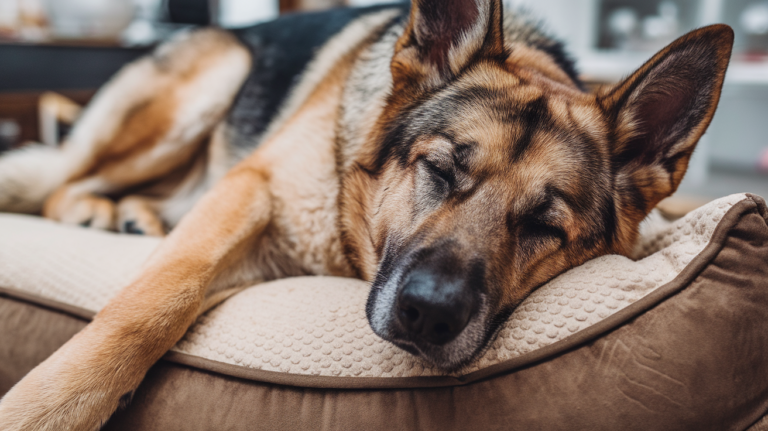
Watch your German Shepherd when they settle down for the night. A healthy dog typically cycles through several positions: curled up, stretched out, on their side, occasionally on their back with legs akimbo. But a dog in pain? They’ll obsessively search for the “right” position, circling endlessly before lying down, or they’ll stick to one unusual posture that minimizes their discomfort.
Pay special attention if your GSD suddenly refuses to lie on a particular side or avoids their favorite sleeping spot. Dogs with hip or elbow pain often switch to hard floors instead of soft beds because the firm surface provides better joint support. Conversely, some will seek out extra cushioning to pad painful joints.
Your German Shepherd’s sleeping habits are a window into their physical comfort. When a dog who always slept curled up suddenly sprawls out completely, or vice versa, their body is telling you something hurts.
The midnight position changes matter too. If you’re hearing your dog get up and relocate multiple times per night, that’s not just restlessness; it’s pain management. They’re trying to find relief that keeps slipping away.
| Normal Sleep Behavior | Pain Indicators |
|---|---|
| Cycles through multiple positions | Sticks to one rigid position all night |
| Lies down smoothly in 1-2 circles | Takes 5+ circles or multiple attempts to settle |
| Uses their regular bed happily | Suddenly prefers hard floor or excessive padding |
| Sleeps through the night | Frequently relocates or seems restless |
| Comfortable on either side | Always favors one specific side |
2. Subtle Gait Changes and “Bunny Hopping”
Here’s where owners miss critical early warnings. Your German Shepherd doesn’t need to be limping obviously to be in significant pain. In fact, bilateral pain (hurting on both sides) often produces a gait that looks almost normal because the dog isn’t favoring one leg over another.
Watch for “bunny hopping” when your GSD runs, where they bring both back legs forward simultaneously instead of alternating them. This is a classic compensation pattern for hip pain. Some dogs will also show a slightly shortened stride, take corners wider than necessary, or demonstrate a subtle head bob when certain paws hit the ground.
The stairs tell the truth. A painful German Shepherd will often go up stairs normally (using momentum and front leg strength) but hesitate or slow down considerably coming back down, when they have to absorb impact on potentially painful hips or elbows. Some will even try to “cheat” by going down sideways or backwards.
Take video of your dog walking and running from behind and from the side. Compare footage taken months apart. The changes can be so gradual that you won’t notice day to day, but the video doesn’t lie.
3. Decreased Interest in Activities They Previously Loved
Your ball-obsessed GSD who would play fetch until they collapsed suddenly loses interest after two throws? That’s not aging or boredom; that’s pain. German Shepherds are driven, energetic dogs who don’t just decide they’re done with activities that previously brought them joy.
Watch for subtle avoidance behaviors. Maybe they still chase the ball but don’t return as quickly. Perhaps they go on walks but lag behind instead of pulling ahead. They might still greet you at the door but without the jumping and spinning they used to do.
The key word here is gradual. If these changes happen overnight, owners notice and rush to the vet. But when your dog slowly dials back their enthusiasm over six months, your baseline shifts without you realizing it. You start thinking, “Well, he’s just getting older,” when really, he’s just getting more painful.
A German Shepherd who stops doing what they love isn’t being lazy or stubborn. They’re making calculated decisions to avoid activities that hurt, which means the pain is significant enough to override their natural drive.
Social changes count too. If your typically friendly GSD starts avoiding other dogs at the park or seems less interested in greeting visitors, consider that roughhousing and social interactions might be aggravating a painful condition.
4. Excessive Licking, Chewing, or Attention to Specific Body Parts
Dogs can’t tell you their elbow hurts, so they lick it. And lick it. And lick it some more. German Shepherds experiencing joint pain, arthritis, or soft tissue injuries will often focus obsessive attention on the painful area, even when there’s no visible wound or irritation.
Common targets include:
- Paws and wrists (carpal joints)
- Elbows (extremely common in GSDs)
- Hips and lower back
- The “armpit” area (shoulder pain)
- Tail base (spine or hip issues)
The licking can be so persistent that it creates hot spots, hair loss, or skin discoloration. Many owners treat these as skin conditions without addressing the underlying pain that’s driving the behavior. If your vet prescribes cream for a lick granuloma but your dog goes right back to licking once they can reach it again, you’re treating a symptom, not the cause.
Some German Shepherds nibble or chew rather than lick. Others will simply rest their chin on the painful area repeatedly or refuse to let you touch certain spots during petting sessions. They might tense up, pull away, or give you a worried look when you reach for their hip or shoulder, even if they’ve never shown aggression before.
5. Personality Changes, Irritability, or Withdrawal
Chronic pain changes brain chemistry. It floods the system with stress hormones, disrupts sleep quality, and creates a constant low-level anxiety. Your patient, friendly German Shepherd can become snappish, antisocial, or depressed, and the shift can be so gradual you barely register it until someone else points it out.
Look for the dog who used to greet every family member enthusiastically but now just opens one eye from their bed and goes back to sleep. Notice if your GSD suddenly seems “grumpy” with other pets, children, or during grooming sessions. Pain makes tolerance levels plummet.
When a German Shepherd’s temperament shifts from engaged and responsive to withdrawn and irritable, pain should be your first suspect, not a behavioral problem requiring training corrections.
Some dogs become clingy instead of withdrawn, following you obsessively and seeming anxious when you leave. This isn’t sudden separation anxiety; it’s a dog seeking comfort from their trusted person because they feel vulnerable and uncomfortable.
Aggression warnings matter here. A German Shepherd who has never shown food guarding might suddenly growl when you approach their bowl, not because they’ve developed a behavioral issue, but because the act of eating in a lowered position hurts their neck or shoulders, and they’re defensive about being disturbed in a vulnerable moment.
6. Reluctance to Jump, Climb, or Navigate Obstacles
This one seems obvious until you realize how many owners rationalize it away. “He’s just being stubborn about getting in the car.” “She’s suddenly afraid of the stairs.” “He doesn’t like hardwood floors anymore.” These explanations all ignore the simpler truth: it hurts to do these things.
A German Shepherd in pain will:
- Hesitate before jumping into vehicles (or refuse entirely)
- Stop jumping on furniture they previously accessed easily
- Take stairs slowly, one step at a time
- Refuse to navigate slippery surfaces (because they can’t compensate if they slip)
- Balk at curbs, small steps, or uneven terrain
The “thinking about it” pause is crucial. Watch your dog approach something they need to jump onto or over. A healthy dog commits and moves. A painful dog stops, assesses, considers alternatives, and either attempts it gingerly or finds another way.
Car entry is particularly diagnostic. If your GSD used to hop right in but now needs encouragement, multiple attempts, or has started using their front legs to pull themselves up while their back end scrambles, you’re watching pain compensation in real time.
7. Panting, Restlessness, or Changes in Breathing Patterns (When Not Hot or After Exercise)
Unexplained panting is one of the most overlooked pain indicators in dogs. Your German Shepherd is lying on the couch in an air-conditioned room, hasn’t exercised in hours, and they’re panting like they just ran a marathon. That’s not normal; that’s pain breathing.
Dogs can’t sweat to thermoregulate the way humans do, so they pant. But they also pant as a stress response, and chronic pain creates chronic stress. The breathing becomes shallow and rapid, sometimes accompanied by a worried facial expression: wide eyes, furrowed brow, tight mouth.
Nighttime restlessness combined with panting is especially significant. If your GSD can’t seem to settle at night, keeps getting up and down, panting intermittently without obvious cause, you’re watching a dog in discomfort trying desperately to find relief.
| Time of Day | Activity Level | Normal Panting | Pain-Related Panting |
|---|---|---|---|
| After exercise | High | Heavy, gradually slows | Continues long after cooling down |
| Resting indoors | None/Low | Minimal to none | Persistent, unexplained episodes |
| During sleep | None | None | Starts suddenly, disrupts rest |
| Cool weather | Any | Minimal | Occurs despite comfortable temperature |
Some German Shepherds will also exhibit shallow, careful breathing because deep breaths aggravate pain in their chest, spine, or abdomen. If your dog’s breathing pattern has changed and your vet has ruled out respiratory and cardiac issues, musculoskeletal pain should be the next consideration, not anxiety or behavioral problems.
What to Do If You Recognize These Signs
Don’t wait. German Shepherds are already predisposed to hip dysplasia, elbow dysplasia, degenerative myelopathy, and arthritis. Early intervention can mean the difference between managing a condition conservatively and facing surgical intervention or permanent disability.
Document what you’re seeing with video and notes, then schedule a veterinary examination focusing on orthopedic and pain assessment. Be specific about the changes you’ve noticed, even if they seem minor. Vets can’t assess what they don’t know to look for.
Your German Shepherd has been hiding their pain because genetics and instinct tell them to. Now that you know what to watch for, you can be the advocate they need, catching problems while they’re still manageable and giving your loyal companion the comfort they deserve.