Keep your Schnauzer smelling fresh and looking fabulous with this simple weekly grooming routine. It’s kindness they’ll appreciate every time.
There’s a reason Schnauzers always look like they’re about to give you investment advice or critique your wine selection. That distinctive look requires work, people. Unlike breeds that can get away with a monthly bath and the occasional brush, Schnauzers need consistent attention to maintain their signature appearance. Their double coat doesn’t shed much (hooray for your furniture!), but that means the dead hair stays trapped, requiring regular removal.
Think of weekly grooming as preventive maintenance for your four legged friend. Just like changing your car’s oil keeps the engine running smoothly, regular grooming sessions keep your Schnauzer’s coat healthy, skin happy, and overall vibe immaculate. Ready to become your pup’s personal stylist?
Your Schnauzer Has a Unique Double Coat
Schnauzers sport a double coat that sets them apart from many other breeds. The outer layer is wiry and tough, almost bristly to the touch, while the undercoat is soft and dense. This combination was originally bred to protect these ratting dogs from harsh weather and pesky vermin bites. Today, it mostly protects them from… well, slightly chilly afternoons and the occasional judgmental cat.
This coat structure means your Schnauzer is a low shedding breed, which sounds great until you realize the trade off: all that dead hair stays put. Without regular grooming, those dead hairs create mats, trap dirt, and can cause skin irritation. The coat can also become dull and lose that characteristic texture that makes Schnauzers look so distinguished.
Different Schnauzer varieties (Miniature, Standard, and Giant) all share this coat type, though the amount of grooming real estate varies considerably. Regardless of size, the weekly routine remains essentially the same. Your tiny Miniature just requires less time than your Giant Schnauzer, who is basically a small pony with eyebrows.
The Essential Weekly Grooming Schedule
Consistency is everything when it comes to Schnauzer maintenance. Here’s a breakdown of what needs attention each week and approximately how long each task takes:
| Grooming Task | Frequency | Time Required | Priority Level |
|---|---|---|---|
| Brushing | 3-4 times per week | 10-15 minutes | High |
| Beard cleaning | Daily | 2-3 minutes | High |
| Ear checking & cleaning | Once weekly | 5 minutes | Medium |
| Nail inspection | Once weekly | 2 minutes | Medium |
| Paw pad check | Once weekly | 3 minutes | Medium |
| Teeth brushing | 3-4 times per week | 3-5 minutes | High |
| Eye area cleaning | Daily | 2 minutes | High |
Your Schnauzer’s grooming routine is an investment in their health, comfort, and that undeniable dapper charm that makes heads turn at the dog park.
Monday Through Wednesday: Brushing and Daily Maintenance
The Art of Proper Brushing
Start your week with a good brushing session on Monday. You’ll need a slicker brush for the body and a metal comb for those furnishings (that’s groomer speak for the leg hair and facial hair). Begin at the head and work your way back, brushing in the direction of hair growth. Pay special attention to areas where matting loves to hide: behind the ears, under the legs, and around the collar area.
The technique matters here. Don’t just skim the surface like you’re petting your dog. You need to get down to the skin, working in sections. Hold the hair up and brush from the skin outward. This removes dead undercoat and prevents those sneaky mats from forming. Your Schnauzer might give you the side eye, but they’ll thank you later when they’re not dealing with painful tangles.
Wednesday gets another brushing session. By midweek, your pup has accumulated new outdoor adventures, perhaps rolled in something questionable, and definitely collected debris in that magnificent beard. This session is typically quicker than Monday’s because you’re maintaining rather than correcting.
The Beard Situation
Let’s talk about the elephant in the room: the beard. That glorious facial hair is both a blessing and a curse. It catches everything. Food particles, water, dirt, mysterious sticky substances, and possibly the hopes and dreams of every dog owner who thought having a bearded breed would be easy.
Daily beard maintenance is non negotiable. After meals, use a damp cloth to wipe through the beard thoroughly. Some owners keep grooming wipes handy for quick cleanups throughout the day. For a deeper clean during your weekly routine, use a mild dog shampoo on just the beard area, rinse thoroughly, and comb through while damp.
That distinctive mustache and eyebrows need daily attention too. Use your metal comb to work through these areas gently, removing any crusties (technical term) from the corners of the eyes and mouth. If you let this go, you’ll end up with staining and a beard that’s more crusty than dapper.
Thursday Through Weekend: Deep Maintenance Tasks
Ear Care That Actually Works
Thursday is ear day. Schnauzers can be prone to ear infections, especially if moisture gets trapped in those adorable folded ears. Lift each ear and take a good look inside. Healthy ears should be pink, clean, and odorless. If you notice redness, a yeasty smell, or excessive wax buildup, that’s a vet visit waiting to happen.
For routine cleaning, use a veterinarian approved ear cleaning solution. Put a few drops into the ear canal, massage the base of the ear (you’ll hear a squelching sound, which is oddly satisfying), and let your dog shake their head. Then gently wipe out the visible part of the ear with a cotton ball. Never stick anything into the ear canal itself; you’re cleaning the parts you can see.
Some Schnauzers grow hair inside their ear canals that needs regular plucking. If you’re not comfortable doing this yourself (and many owners aren’t), leave it to the professionals. Improper plucking can cause irritation and increase infection risk.
Paw and Nail Inspection
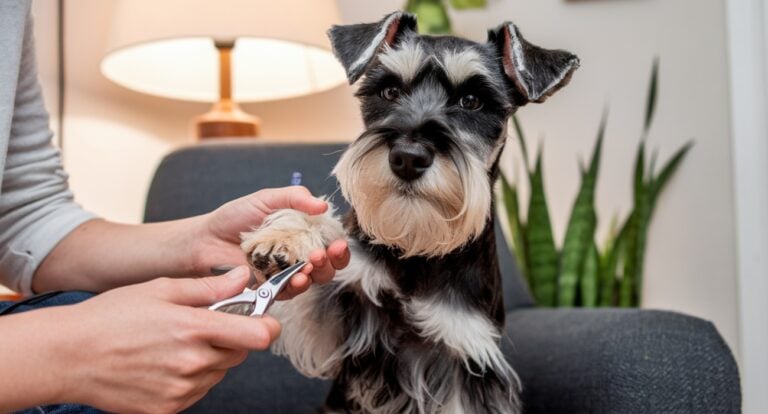
Friday focus: those precious paws. Check between the paw pads for debris, cuts, or irritation. Schnauzers grow hair between their pads that can mat and collect stuff, so trim this carefully with blunt tipped scissors. The hair on top of the feet also needs regular trimming to maintain that neat, rounded appearance.
Nail length deserves weekly assessment. If you hear clicking on hard floors, the nails are too long. Most Schnauzers need nail trims every two to three weeks, but checking weekly helps you stay on schedule. Long nails affect gait and can cause joint problems over time. If you’re nervous about nail trimming (welcome to the club), a professional groomer or vet can handle this.
Regular paw maintenance isn’t just about aesthetics; it’s about preventing painful issues that can affect your Schnauzer’s mobility and quality of life.
The Weekend Deep Clean
Bath Time Strategy
Not every week requires a full bath, but when it’s bath week (typically every three to four weeks), Saturday is prime time. Use lukewarm water and a high quality dog shampoo formulated for wire coats. Human shampoo is a hard no; the pH is all wrong and will dry out your dog’s skin faster than you can say “why is my Schnauzer so itchy?”
Work the shampoo into a lather, paying special attention to the undercoat. This is where dirt and oils accumulate. The beard, legs, and underbelly usually need extra attention because they contact surfaces directly. Rinse thoroughly (more than you think necessary), then rinse again. Leftover shampoo residue causes itching and dandruff.
After rinsing, apply a dog conditioner to the furnishings. This keeps the leg and facial hair softer and easier to manage. Leave it on for the recommended time, then rinse completely. Towel dry enthusiastically (your Schnauzer will help by doing the shake of a lifetime), then use a blow dryer on a cool setting while brushing. This straightens the furnishings and gives that professional groomed look.
Dental Care Fundamentals
Sunday wraps up the week with attention to those teeth. Dental disease affects most dogs over three years old, and Schnauzers are no exception. Brushing three to four times weekly (remember, we counted this in our schedule) dramatically reduces plaque and tartar buildup.
Use a dog specific toothpaste (never human toothpaste, which contains ingredients toxic to dogs) and a finger brush or dog toothbrush. Start slowly if your Schnauzer isn’t used to this. Let them taste the toothpaste first, then gradually work up to actual brushing. Focus on the outer surfaces of the teeth where plaque accumulates most.
The gum line is where the magic happens. Angle the brush at 45 degrees and use gentle circular motions. You don’t need to brush the inner surfaces as thoroughly; your dog’s tongue does some of that work naturally. The whole process takes just a few minutes but adds years of health to your pup’s life.
Professional Grooming Integration
Even with a diligent weekly routine, your Schnauzer needs professional grooming every six to eight weeks. Professionals handle the tasks beyond most owners’ skill levels: hand stripping (for show dogs or those maintaining proper coat texture), sanitary trims, exact breed standard cuts, and those tricky areas around the eyes and ears.
Think of your weekly routine as the maintenance between tune ups. You’re keeping everything running smoothly so the professional can focus on styling rather than damage control. When you stay on top of weekly grooming, professional appointments are shorter, less expensive, and less stressful for your dog.
Build a relationship with a groomer who understands Schnauzers specifically. This breed has unique coat requirements that differ from other terriers. A groomer experienced with Schnauzers will maintain the proper texture and shape while keeping your dog comfortable.
The partnership between consistent home grooming and professional expertise creates the perfect formula for a healthy, happy, and handsome Schnauzer.
Tools That Make Life Easier
Investing in quality tools transforms grooming from a frustrating chore into a manageable routine. Here’s what actually makes a difference:
A slicker brush with flexible pins prevents scratching while effectively removing dead coat. Cheap slicker brushes with rigid pins can irritate skin. Spend the extra twenty dollars; your dog will notice.
A steel comb (often called a Greyhound comb) with both wide and narrow teeth handles everything from body coat to facial furnishings. This becomes your most used tool.
Thinning shears help blend areas without creating harsh lines. Even if you’re not doing full grooms at home, these are perfect for tidying up between professional appointments.
Grooming scissors with blunt tips are essential for safety when working around eyes, ears, and paws. Dogs move unpredictably, and sharp pointed scissors near sensitive areas are accidents waiting to happen.
A quality dog nail grinder can be easier than clippers for many owners. The gradual grinding feels less scary than the quick snip of clippers, though it takes longer.
Don’t forget grooming spray or detangler for working through furnishings. Trying to comb dry, tangled leg hair is an exercise in frustration for both you and your dog.
Troubleshooting Common Issues
Matting happens even with regular grooming. When you find a mat, don’t panic and grab scissors (that’s how grooming disasters happen). Work through it with your fingers first, gently separating the hair. Then use your slicker brush and comb to work through the mat from the outside in. Detangling spray helps tremendously here.
Coat color changes can occur in Schnauzers, particularly the salt and pepper variety. Regular grooming actually helps maintain color intensity by removing dead coat that can make the color appear dull. Hand stripping (done by professionals) preserves true color better than clipping.
Skin irritation sometimes appears as you groom. Red patches, bumps, or excessive scratching need veterinary attention. Your weekly grooming sessions are actually the best early warning system for skin problems.
Resistance to grooming is common with dogs not started young. Work gradually, using high value treats and short sessions. Never fight with your dog over grooming; that creates lifetime negative associations. If your Schnauzer truly won’t cooperate, consult with a professional trainer or behaviorist.
The Bonding Benefits Nobody Talks About
Here’s something that doesn’t fit neatly into grooming instructions but matters enormously: these weekly sessions become sacred bonding time. Your Schnauzer learns to trust you handling their body. You learn to read their comfort signals. It becomes a ritual that strengthens your relationship.
Dogs are social creatures who groom each other in packs. When you groom your Schnauzer, you’re speaking their language. That beard cleaning might seem tedious, but to your dog, it’s intimate pack behavior. The trust built during grooming sessions translates into better behavior in other areas, easier vet visits, and a deeper bond.
Plus, there’s something meditative about the repetitive motions of brushing and combing. Many owners find their own stress levels decrease during grooming time. It forces you to slow down, focus on the present moment, and connect with your furry friend. Not a bad side effect for something that also keeps your dog looking fabulous.
Your Schnauzer’s magnificent appearance isn’t accidental. It’s the result of consistent care, the right tools, and a commitment to weekly maintenance. But beyond the practical benefits of mat prevention and skin health, you’re investing in your dog’s comfort and your relationship. That distinguished look? That’s just the bonus.