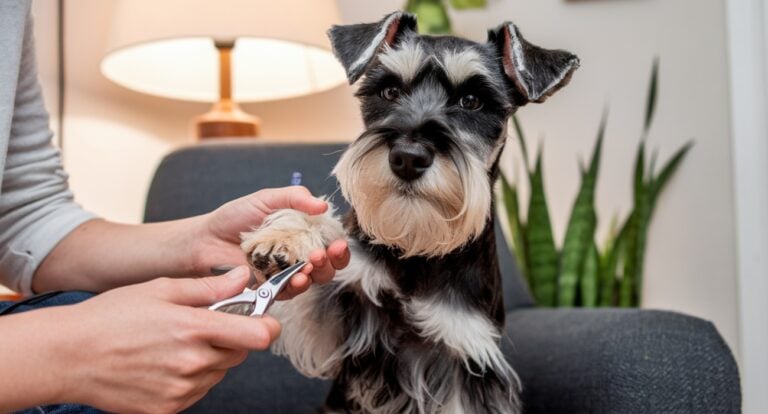
Want a more social Schnauzer? These easy hacks help your pup become friendlier, more loving, and ready to bond.
You’re at the dog park, and while other pups are playing and making friends, your Schnauzer is standing at your feet, giving every approaching dog their best “back off” bark. Sound familiar? You’re not alone. Schnauzers are famously loyal to their families but can be skeptical of pretty much everyone else.
But what if I told you that your stubborn Schnauzer could become genuinely sociable? Not just tolerant of other dogs and people, but actually enjoying their company? It’s totally possible, and it doesn’t require turning your dog into someone they’re not. These hacks work with your Schnauzer’s personality, not against it.
1. Start Socialization During the “Puppy Window” (Or Make Up for Lost Time)
If you have a Schnauzer puppy, you’re holding a golden ticket. The period between 3 and 14 weeks is when puppies are most receptive to new experiences. Expose your little one to different people, dogs, sounds, and environments during this time, and you’ll set the foundation for a socially confident adult dog.
Already missed that window? Don’t panic. Adult Schnauzers can absolutely learn new social skills; it just takes more patience and consistency. The key is gradual exposure at a pace your dog can handle. Think of it as social rehabilitation rather than socialization. Start small, celebrate tiny victories, and never push your Schnauzer beyond their comfort zone too quickly.
| Age Range | Socialization Focus | Expected Timeline |
|---|---|---|
| 3-14 weeks | Broad exposure to people, dogs, environments | 2-3 months of intensive socialization |
| 14 weeks – 6 months | Continued exposure, basic obedience in social settings | 4-6 months of consistent practice |
| Adult (6+ months) | Gradual desensitization, positive associations | 6-12 months for significant improvement |
2. Use High-Value Treats as Social Currency
Schnauzers are food motivated. Like, really food motivated. Use this to your advantage by creating positive associations with social situations. When another dog walks by, out comes the chicken. When a stranger approaches, suddenly it’s raining cheese cubes.
The trick is timing. Your Schnauzer needs to receive the treat while the “scary” thing is happening, not after. This creates a neural connection: other dogs equal delicious rewards. Over time, your pup will start to anticipate good things when they see potential friends instead of automatically going into guard mode.
The foundation of social confidence isn’t built on commands or corrections. It’s built on positive experiences that outweigh negative assumptions.
3. Arrange Controlled Playdates with Calm Dogs
Not all dog friends are created equal. Your Schnauzer doesn’t need to meet the hyperactive puppy who plays too rough. Instead, seek out mature, calm dogs with excellent social skills. These dogs act as tutors, showing your Schnauzer what appropriate interaction looks like.
Start with short sessions in neutral territory. Maybe just 10 or 15 minutes at first. Watch your Schnauzer’s body language carefully. Loose, wiggly movements? Great! Stiff body, whale eye, or excessive barking? Time to create some distance and try again another day. The goal is to end each playdate on a positive note, leaving your dog wanting more rather than feeling overwhelmed.
4. Practice the “Look at That” Game
This genius technique, developed by trainer Leslie McDevitt, transforms reactive behavior into engagement. Instead of trying to stop your Schnauzer from fixating on triggers, you reward them for noticing triggers and then choosing to look back at you.
Here’s how it works: when your dog spots another dog or person, mark the moment with “yes!” and immediately reward. You’re teaching your Schnauzer that spotting potential “threats” is actually an opportunity to earn treats. Eventually, your dog will see another dog, glance at you expectantly, and wait for their reward. You’ve redirected that intense Schnauzer focus from guarding to a fun game.
5. Respect Their Personal Space Bubble
Schnauzers are not Golden Retrievers. They don’t automatically love every person and dog they meet, and that’s okay. One of the biggest mistakes owners make is forcing interactions before their dog is ready. This creates negative associations and can actually increase antisocial behavior.
Instead, let your Schnauzer approach new friends on their own terms. Use a long leash to give them choices. Can they sniff that person from five feet away instead of being pet immediately? Perfect. Do they want to observe the other dog from across the park before saying hello? Excellent. Respecting boundaries builds confidence, and confident dogs are social dogs.
6. Enroll in Group Training Classes
Group obedience classes are sneaky socialization goldmines. Your Schnauzer learns to focus on you despite distractions (other dogs), and they get regular exposure to other pups in a structured, controlled environment. Plus, you’ll have a professional trainer on hand to help if things get tricky.
Choose a class that uses positive reinforcement methods. Harsh corrections can increase anxiety and make your Schnauzer more reactive, not less. The best classes maintain good spacing between dogs and don’t force interactions. Your Schnauzer should feel safe and successful, not stressed.
7. Create Positive Experiences with Strangers at Home
Many Schnauzers are territorial, viewing visitors to their home as intruders. Combat this by making guests part of your Schnauzer’s treat delivery system. Before your visitor even enters, give them a bag of your dog’s favorite snacks.
The guest should ignore your Schnauzer initially (staring and reaching can be threatening) while casually tossing treats in your dog’s direction. No interaction required. Your Schnauzer can stay at whatever distance feels comfortable while still benefiting from the “stranger equals treats” association. Over multiple visits, most Schnauzers will start approaching on their own, curiosity overcoming caution.
Transformation happens in the space between pressure and permission. Give your Schnauzer the freedom to choose connection, and they usually will.
8. Exercise Before Social Situations
A tired Schnauzer is a friendly Schnauzer. These terriers have energy to burn, and when that energy isn’t channeled properly, it often manifests as reactivity and over-arousal. Before any social outing, make sure your dog has had adequate physical and mental exercise.
This doesn’t just mean a walk around the block. Schnauzers need to think as much as they need to move. Try a 20 minute training session, a puzzle toy, or a game of hide and seek in the house. When your dog’s brain is pleasantly tired, they’re much more likely to remain calm when meeting new friends.
9. Use Calming Signals Yourself
Dogs are masters at reading body language, and your energy directly affects your Schnauzer’s behavior. If you tense up when you see another dog approaching, your Schnauzer notices and assumes there’s something to worry about. Your anxiety becomes their anxiety.
Practice staying relaxed. Keep your leash loose, breathe normally, and maintain a calm, upbeat tone. You might even smile (weird as it sounds, dogs can read human facial expressions). When you signal that everything is fine, your Schnauzer is more likely to believe you. Think of yourself as your dog’s emotional thermostat; you set the temperature of each interaction.
10. Celebrate Small Wins and Stay Consistent
Your Schnauzer won’t transform into a social butterfly overnight. Progress might look like tolerating another dog’s presence without barking, or accepting a single pet from a stranger without retreating. These are victories. Acknowledge them.
Consistency matters more than intensity. Five minutes of positive socialization practice daily beats an occasional marathon training session. Keep showing up, keep creating positive experiences, and keep believing in your Schnauzer’s ability to grow. These intelligent, loyal dogs are capable of so much more than we sometimes give them credit for.
Every social skill your Schnauzer learns isn’t just about being friendlier. It’s about expanding their world and giving them more freedom to enjoy life alongside you.
The beauty of Schnauzers is that once they bond with someone (human or canine), that loyalty runs deep. By implementing these hacks, you’re not changing your dog’s fundamental nature; you’re simply helping them feel safe enough to share that incredible capacity for love with more beings. Your Schnauzer will still have preferences, opinions, and boundaries. But they’ll also have the social skills to navigate the world with confidence instead of suspicion, and that makes all the difference.