Nail trims don’t have to be stressful. Use these pro tips to make the process calm and easy for your Schnauzer.
Click, click, click, click. Your Schnauzer’s nails are tapping out a morse code message across your floors that roughly translates to “please trim me.” You know it needs to happen. They know it needs to happen. Yet somehow, weeks pass and those nails keep growing while you both engage in an elaborate dance of avoidance.
If this scenario feels painfully familiar, you’re part of a very crowded club. Nail trimming anxiety isn’t just common among Schnauzers, it’s practically a breed characteristic, right up there with being gloriously stubborn and having eyebrows that could rival any Hollywood actor. But what if nail trim time didn’t have to involve treats scattered strategically like breadcrumbs and the agility of a ninja? Let’s change that narrative.
1. Start With Paw Handling Sessions (Not Actual Trimming)
Before you even think about bringing clippers near those precious paws, you need to build tolerance for touch. Schnauzers are clever little creatures, and they’ll remember every uncomfortable grooming session you’ve ever subjected them to. That’s why desensitization is your secret weapon.
Spend a week (yes, a whole week!) just touching your Schnauzer’s paws during cuddle time. Hold each paw gently, press on the pads, massage between the toes. Make it casual and pair it with something wonderful like their favorite treats or enthusiastic praise. The goal here is to rewire their brain so that paw touching = good things happening, not impending doom.
Your Schnauzer doesn’t need to love nail trims, they just need to tolerate them. And tolerance starts with trust built through patient, positive experiences.
Watch your dog’s body language carefully during these sessions. Pulled back ears, lip licking, or trying to pull away? You’re moving too fast. Keep sessions super short at first (we’re talking 30 seconds!) and gradually increase the duration. This foundation work might feel tedious, but it’s the difference between a dog who cooperates and one who treats you like you’re attempting amateur surgery.
2. Choose Your Weapon Wisely (Equipment Matters More Than You Think)
Walk into any pet store and you’ll face an overwhelming array of nail trimming tools. Guillotine style clippers, scissor style clippers, grinding tools, and even filing attachments that promise miracle results. For Schnauzers specifically, the type of tool you choose can dramatically impact your success rate.
| Tool Type | Best For | Schnauzer Suitability | Noise Level | Learning Curve |
|---|---|---|---|---|
| Scissor Clippers | Thick, tough nails | Excellent | Silent | Moderate |
| Guillotine Clippers | Quick, single cuts | Good | Silent | Easy |
| Nail Grinders | Smoothing and shaping | Very Good | Loud | Steep |
| Manual Files | Touch-ups only | Fair | Silent | Easy |
Many Schnauzer owners swear by grinders (like Dremel style tools) because they allow for gradual nail shortening, which reduces the risk of hitting the quick. However, the buzzing sound and vibration can terrify some dogs, especially at first. If you go this route, introduce the sound separately before ever touching it to a nail. Turn it on across the room during treat time for several days until your Schnauzer barely notices it.
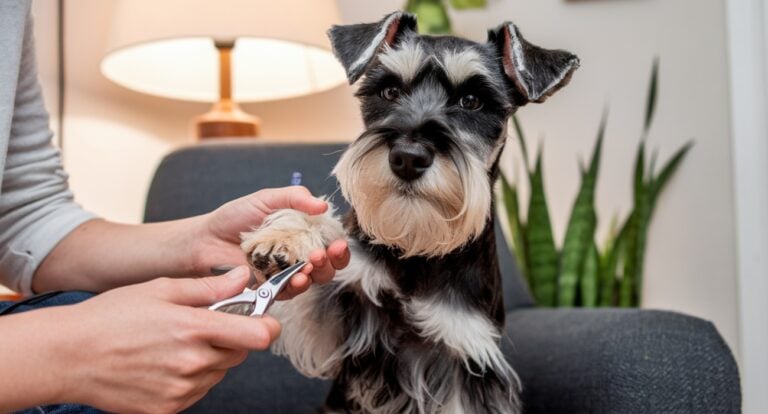
Scissor style clippers, on the other hand, give you the most control and work beautifully on a Schnauzer’s sturdy nails. Look for clippers with sharp blades specifically designed for small to medium dogs. Dull clippers don’t cut cleanly; they crush the nail, which is painful and will make your dog never trust you with those things again.
3. Master the Art of the Quick (And What to Do If You Hit It)
The quick is that pink part inside your Schnauzer’s nail containing blood vessels and nerves. Hit it, and you’ll have a bleeding, traumatized dog and a guilt-ridden human. If your Schnauzer has clear or white nails, you can actually see the quick and avoid it easily. But many Schnauzers sport black nails, turning nail trimming into something resembling a high stakes guessing game.
Here’s the insider trick: trim tiny amounts at frequent intervals rather than trying to cut a lot at once. After each small cut, look at the cross section of the nail. When you start seeing a grayish or pink oval in the center (instead of the white, chalky texture), stop immediately. You’re approaching the quick.
For black-nailed Schnauzers, position yourself so good lighting hits the nail from underneath. Sometimes you can see a shadow or slight transparency where the quick ends. Still uncertain? Err on the side of caution. It’s better to trim more frequently and take less off than to traumatize your dog with a painful quick hit.
If you do hit the quick, stay calm. Your Schnauzer will react to your energy more than the actual pain. Apply styptic powder immediately, offer high value treats, and don’t let it end on that negative note. Do some easy paw touches they’re comfortable with before wrapping up the session.
Keep styptic powder or cornstarch within arm’s reach during every nail trim session. Quick hits bleed impressively (like a horror movie amount), but they’re not actually dangerous. Applying pressure with styptic powder stops the bleeding within 30 seconds typically.
4. Perfect Your Positioning and Restraint Technique
How you hold your Schnauzer during nail trims can be the difference between cooperation and chaos. Many people instinctively try to cradle their dog like a baby or hold them facing forward in their lap. While this might work for ultra chill dogs, most Schnauzers need a setup that feels more secure and gives you better access.
Try the “side sit” position: Sit on the floor with your Schnauzer sitting beside you, their body against yours. This prevents them from backing away and lets you gently lift one paw at a time while keeping them grounded. For wiggly Schnauzers, having a second person offer treats from the front while you work from the side transforms everything.
Some Schnauzer owners find success with the elevated approach. Place your dog on a table or sturdy surface with a non-slip mat. Dogs often behave differently when elevated because they’re less confident about jumping down. This “grooming table effect” is why professional groomers use it universally. Just never leave your dog unattended on an elevated surface, even for a second.
Consider using a grooming loop (attached to a secure hook at dog height) if your Schnauzer is particularly resistant. This isn’t about force; it’s about gentle restraint that prevents them from spinning around constantly. The loop keeps their head forward and still, which paradoxically helps many dogs relax since they’re not in control of the situation anymore.
5. Create an Irresistible Positive Association (Bribery Works!)
Let’s drop any pretense: you need to bribe your Schnauzer shamelessly. And we’re not talking about their regular kibble or those training treats they get for sitting nicely. Break out the good stuff. The real MVP treats. Think small pieces of cheese, freeze dried liver, tiny bits of chicken, or whatever makes your particular Schnauzer lose their mind with excitement.
The strategy here involves counterconditioning, which is a fancy way of saying “make them associate nail trims with awesome things.” Before you even pick up the clippers, let your Schnauzer see you preparing their favorite treats. Throughout the trimming process, deliver treats constantly. One clip, one treat. Another clip, another treat. Create a predictable pattern their food-motivated brain can anticipate.
Some creative Schnauzer parents use distraction techniques that border on genius. Smear peanut butter (xylitol free, always check!) or squeeze cheese on a lick mat and place it at your dog’s eye level while you work on their nails. Their brain literally cannot focus on two things simultaneously, so if they’re intensely licking, they’re barely noticing the nail trim happening.
The most successful nail trimming sessions aren’t about overpowering your Schnauzer’s resistance. They’re about making the experience so rewarding that your dog’s desire for treats outweighs their anxiety about the procedure.
Keep these special treats exclusively for nail trimming. Don’t use them for training or random rewards. When your Schnauzer sees these particular treats appear, they should know exactly what’s happening, and over time, they’ll start making peace with the routine because those treats are just that good.
6. Know When to Quit (Short Sessions Trump Perfect Nails)
Here’s something most Schnauzer owners learn the hard way: you don’t have to trim all four paws in one session. In fact, for anxious dogs, trying to complete everything at once virtually guarantees a negative experience that’ll make next time even harder. Working with your dog’s tolerance level, not against it, creates long term success.
If your Schnauzer cooperates beautifully for two nails but starts getting squirmy on the third, stop right there. End on a positive note, deliver extra treats and praise, and call it a victory. Come back in a few hours or the next day for the remaining nails. Yes, this means the process takes longer overall, but you’re building positive associations instead of eroding trust.
Some Schnauzers do best with a “one paw per day” schedule. Monday might be front left, Tuesday front right, and so on. While this seems inefficient, it prevents overwhelming your dog and keeps each session short enough that they never escalate into full panic mode. You’re playing the long game here.
Watch for stress signals that indicate your Schnauzer has reached their limit: excessive panting, yawning, looking away repeatedly, stiffening up, or trying to leave. These aren’t acts of defiance; they’re legitimate communications that your dog is uncomfortable. Pushing past these signals teaches them that their communication doesn’t matter, which damages your relationship and makes future sessions worse.
7. Maintain a Consistent Schedule (Prevention Beats Desperation)
The absolute worst approach to Schnauzer nail maintenance? Waiting until the nails are so overgrown that you must cut deeply into territory dangerously close to the quick. When you let nails grow excessively, the quick actually grows longer too, which means you’re stuck in a difficult cycle where you can’t safely shorten the nails to proper length.
Schnauzers typically need nail trims every two to three weeks, depending on their activity level and where they walk regularly. Dogs who spend time on concrete naturally wear their nails down more than those who mostly walk on grass. Check your Schnauzer’s nails weekly by listening. If you hear clicking when they walk on hard floors, it’s time for a trim.
Regular maintenance allows you to take off tiny amounts, which is exponentially safer and less stressful than infrequent major trimming sessions. Think of it like mowing your lawn: cutting a little bit often is easier than letting it become a jungle and having to do major landscaping.
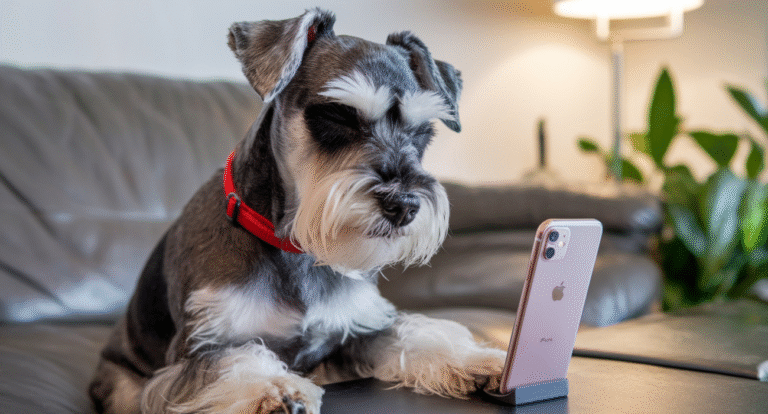
Set a recurring reminder on your phone. “Schnauzer Nail Day” should appear on your calendar like any other important appointment. Consistency helps your dog anticipate the routine, and predictability reduces anxiety. When nail trimming happens randomly whenever you suddenly notice they need it, your Schnauzer never knows when to expect it, which keeps their guard up constantly.
Consider keeping a log of each trimming session: the date, which nails you did, how your dog reacted, and what treats worked best. This data helps you identify patterns and optimize your approach. Maybe you’ll notice your Schnauzer is more cooperative in the morning, or that sessions go better after a walk when they’re slightly tired. Small insights like these compound into significantly easier experiences.