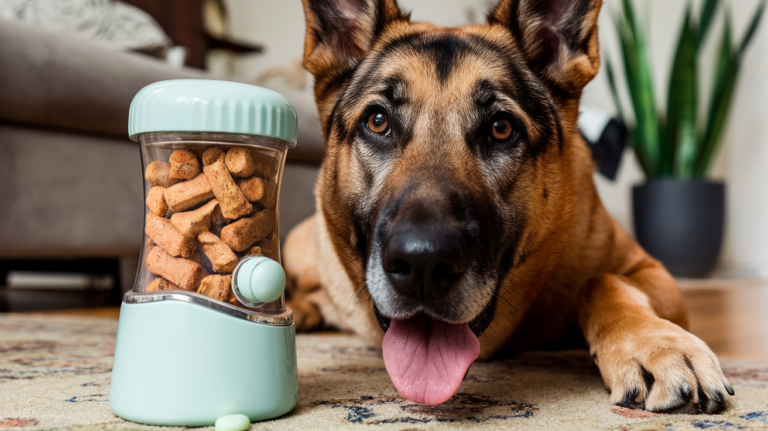
This simple game triggers pure excitement. Watch focus, tail wags, and problem solving instincts explode in seconds.
German Shepherds were bred to work, think, and solve problems. Stick one in a house with nothing to do and you’re basically asking for redecorated furniture and a psychology degree’s worth of behavioral issues. But here’s the thing: you don’t need sheep or a police academy to satisfy that working dog brain.
Enter the treat hiding game, the activity that transforms your living room into a detection training facility. Watch your GSD’s ears perk up, their nose go into overdrive, and their tail start helicoptering as they channel their inner search and rescue dog. It’s genuinely magical to watch, and the best part is how simple it actually is to set up.
What Makes This Game Perfect for German Shepherds
German Shepherds aren’t your average couch potato breed. These dogs were designed to have jobs, and their brains are essentially Ferrari engines that need premium fuel. When you combine their exceptional scenting abilities with their problem solving intelligence and their intense desire to work, you get a dog that needs more than just physical exercise.
The treat hiding game hits every single button that makes a GSD tick. It engages their nose (which has roughly 225 million scent receptors compared to our measly 5 million). It challenges their intelligence. It gives them a task with a clear reward. And perhaps most importantly, it makes them feel like they’re doing something productive.
This isn’t just a game. It’s giving your German Shepherd the mental workout equivalent of running a marathon, except it happens in your living room and takes 15 minutes.
Supplies You’ll Need
| Item | Why You Need It | Budget Option |
|---|---|---|
| High value treats | Motivation and reward | Cut up hot dogs or cheese |
| Timer or phone | Track sessions and build duration | Any smartphone |
| Multiple hiding spots | Varying difficulty levels | Use existing furniture and rooms |
| Release word/command | Controlled start to the game | Choose any word consistently |
| Optional: Puzzle toys | Advanced difficulty modifier | DIY from cardboard boxes |
The beauty of this game is its simplicity. You don’t need fancy equipment or expensive gadgets. Your German Shepherd’s nose is the star of the show, and treats are treats, whether they cost $2 or $20 per bag.
Step by Step: Teaching the Basic Game
Step 1: Establish the Foundation Command
Before you start hiding treats in elaborate locations, your GSD needs to understand what “find it” actually means. This foundation work is crucial and skipping it is like trying to teach calculus before someone knows addition.
Start in a single room with minimal distractions. Have your dog in a sit/stay or have someone hold them gently. Let them watch you place a treat just a few feet away in an obvious spot, like on the floor in plain sight. Use your chosen release word (I use “seek,” but “find it” or “search” work beautifully) and let them grab the treat.
Repeat this 5 to 10 times. Yes, it seems almost insultingly simple. Your genius German Shepherd is probably giving you a look that says “really, human?” But you’re building the association between the command and the action. This is pattern building, not intelligence testing.
Step 2: Introduce Actual Hiding
Now things get interesting. Keep your dog in another room or have someone gently restrain them so they can’t see where you’re hiding the treats. Start with stupidly easy locations: behind a chair leg, under the edge of a rug, on a low shelf.
Place 3 to 5 treats around the room. Bring your dog back, give them the seek command, and watch their brain light up. The first few times, they might look confused or try to use their eyes instead of their nose. Guide them gently toward the first treat if needed, but let them make the discovery.
German Shepherds typically catch on to this game within 2 to 3 sessions. Their working dog genetics kick in, and suddenly you’ll see that focused, intense expression that police K9 handlers know so well.
Step 3: Increase the Difficulty Gradually
Here’s where you can really challenge that incredible GSD brain. Start hiding treats in progressively trickier spots:
- Easy level: On furniture, under edges of rugs, behind visible objects
- Medium level: Inside cardboard boxes, under cushions, on higher shelves, behind doors
- Hard level: Inside closed containers with holes, wrapped in towels, in different rooms, at varying heights
The key word here is gradually. If you jump from “treat on the floor” to “treat inside a closed box in another room,” you’ll just frustrate your dog. Think of it like video game levels: each one should be slightly harder than the last, but still achievable.
Your German Shepherd’s confidence in their seeking abilities grows with each successful find. Build that confidence systematically, and you’ll create a dog who approaches problems with enthusiasm instead of frustration.
Step 4: Expand the Search Area
Once your GSD is confidently finding treats in a single room, it’s time to go bigger. Start using multiple rooms, the hallway, even the backyard if weather permits. This expansion serves multiple purposes: it increases the physical activity, extends the duration of the game, and really forces your dog to use their nose systematically.
When expanding to multiple rooms, start with doors open and a clear path. Place treats in each room using the difficulty level your dog has mastered. Give the seek command and let them work through the space methodically. Most German Shepherds will develop their own search pattern, which is absolutely fascinating to observe.
Advanced Variations That’ll Blow Your GSD’s Mind
The Scent Discrimination Challenge
Once your German Shepherd is a hiding game expert, introduce scent discrimination. Place multiple objects around the room, but only one has treats associated with it. For example, put out three identical cardboard boxes, but only hide treats in/around one.
This teaches your dog to really use their nose rather than just checking every object. It’s closer to actual detection work and will seriously engage that working dog brain. Start obvious (one box with treats, two empty boxes far apart) and gradually make it harder (three boxes close together, only one correct).
The Multi-Level Hunt
Use your home’s vertical space. Hide treats on different levels: floor, coffee table, counter height (if safe), stairs at different steps. This forces your German Shepherd to search three dimensionally, which is much more challenging than a simple floor scan.
Safety note: only use heights your dog can safely reach and investigate without jumping dangerously or knocking things over. The goal is mental stimulation, not emergency vet visits.
The Duration Game
Instead of several treats hidden at once, hide one treat at a time but send your dog to find it multiple times in succession. Hide treat one, release them to find it, call them back, hide treat two while they wait, release again. This builds impulse control and provides the seeking stimulation.
You can do 10 to 15 repetitions of this, and it’ll tire your GSD out more effectively than a lot of physical exercise. Mental work is genuinely exhausting for dogs in the best possible way.
Troubleshooting Common Issues
Problem: Your dog uses their eyes instead of their nose
Make the treats less visible. Hide them completely under or inside things. You can also practice in dimmer lighting (not total darkness) to force nose reliance. Some GSDs are so visually oriented that you need to literally make sight unhelpful.
Problem: Your dog gives up too easily
You’ve made it too hard, too fast. Back up to the difficulty level where they were succeeding and build more slowly. Also check your treats. Are they high value enough? Kibble might not cut it for this game. Try cheese, hot dogs, or freeze dried liver.
Problem: Your dog gets overexcited and destructive
Build in a calm settle period between finds. After each discovery, have your dog return to you for a sit or down before releasing them to find the next treat. This teaches them to channel their excitement productively.
How Often Should You Play?
The beautiful thing about the treat hiding game is its flexibility. You can play it:
- Daily short sessions: 5 to 10 minutes each morning or evening
- Longer weekend sessions: 20 to 30 minutes with multiple difficulty levels
- Rainy day marathons: Rotate through different variations for mental exhaustion
- Pre-departure routine: Tire them out before you leave for work
Most German Shepherds will happily play this game every single day without losing interest. The variable difficulty and changing hiding spots keep it fresh. Plus, the reward (treats) is built right in, so motivation stays high.
The Real Benefits You’ll Notice
Within a week or two of regular play, you’ll start seeing changes. Your German Shepherd will seem calmer overall because their mental energy has an outlet. They’ll be more focused during training because you’ve been building their concentration skills. They might even sleep better because mental exercise is genuinely tiring.
You’ll also notice your bond strengthening. This game requires cooperation and communication between you and your dog. You’re working together toward a goal, which is exactly what German Shepherds were bred to do with their humans.
Mental stimulation doesn’t replace physical exercise, but 15 minutes of intense seeking can tire a German Shepherd as much as 30 to 45 minutes of walking. It’s efficiency at its finest.
Safety Considerations
Always supervise the game, especially when introducing new hiding spots or objects. Make sure treats are hidden in safe locations where your dog won’t knock things over, eat something harmful, or get stuck trying to reach them.
Avoid hiding treats near toxic plants, chemicals, small objects that could be swallowed, or anything breakable that’ll cause injury if destroyed. Your enthusiastic GSD will move furniture, flip boxes, and generally ransack the area. Plan accordingly.
Also consider the treat quantity. If you’re playing multiple times daily, those calories add up. Use tiny pieces, or reduce meal portions slightly to compensate. A mentally stimulated but overweight German Shepherd isn’t the goal here.
Making It a Lifestyle
The treat hiding game shouldn’t be a special occasion activity. Make it part of your routine. Hide treats before you leave for work and let your dog seek them out. Hide some in the backyard before letting them out. Turn dinner time into a seek session by hiding their meal in puzzle toys or around the yard.
German Shepherds thrive on routine and purpose. When seeking becomes part of their daily life, you’re fulfilling that deep genetic need to work. You’re giving them a job, and that job happens to be fun, rewarding, and exhausting in all the right ways.
Your German Shepherd doesn’t need sheep to herd or criminals to catch. They just need their incredible nose, their problem solving brain, and an owner creative enough to hide some cheese around the house. Start simple, build gradually, and watch your GSD transform into the happy, tired, mentally satisfied dog they were always meant to be.