Clear communication changes training fast. This method builds precision, confidence, and enthusiasm during every session.
German Shepherds were bred for precision work. Police forces, military units, and search-and-rescue teams don’t choose this breed by accident. They picked German Shepherds because these dogs are learning machines who crave mental stimulation and clear direction.
So why are you still wrestling with basic obedience? The answer might be simpler than you think: you need clicker training. This method harnesses everything that makes German Shepherds exceptional while eliminating the confusion that turns training sessions into battles. Ready to unlock your dog’s full potential?
Understanding the Clicker Training Foundation
What Actually Is Clicker Training?
Clicker training operates on a beautifully simple premise. You use a small device that makes a distinct clicking sound to mark the exact moment your German Shepherd does something right. That click becomes a promise: “Good job! Treat incoming!” The precision timing is what makes this method so powerful.
Unlike verbal praise (which varies in tone, timing, and clarity), the clicker sound is always identical. Your German Shepherd learns to associate that specific sound with rewards, creating a direct line of communication between their actions and your approval. No confusion, no mixed signals, just pure clarity.
Why German Shepherds Respond Exceptionally Well
German Shepherds possess what trainers call “high drive.” They’re motivated to work, eager to please, and mentally capable of learning complex sequences. This combination makes them perfect candidates for clicker training. Here’s why this breed thrives with this method:
| German Shepherd Trait | How Clicker Training Leverages It |
|---|---|
| High intelligence | Quickly associates click with reward, learns patterns rapidly |
| Strong work ethic | Views training as a job to master, stays engaged longer |
| Sensitivity to handler | Responds to clear communication without harsh corrections |
| Food motivation | Treats paired with clicks create powerful positive reinforcement |
| Need for mental stimulation | Clicker games provide endless cognitive challenges |
When you give a German Shepherd clarity instead of confusion, you’re not just training a dog. You’re building a partnership based on mutual understanding and trust.
Step One: Getting Your Equipment and Setup Right
Choosing Your Clicker
Walk into any pet store and you’ll find dozens of clicker options. Don’t overthink this step. A basic box clicker works perfectly fine, though some trainers prefer button clickers for easier one-handed operation. The key features to consider:
Sound consistency matters most. Test the clicker before buying. It should produce the same volume and tone with every press. Some clickers are adjustable, which helps if you’re training in different environments or if your German Shepherd is sound-sensitive.
Comfort is your second consideration. You’ll be clicking hundreds of times during training sessions, so choose something that doesn’t cramp your hand. If you have mobility issues or arthritis, look for ergonomic designs with larger buttons.
Selecting High-Value Treats
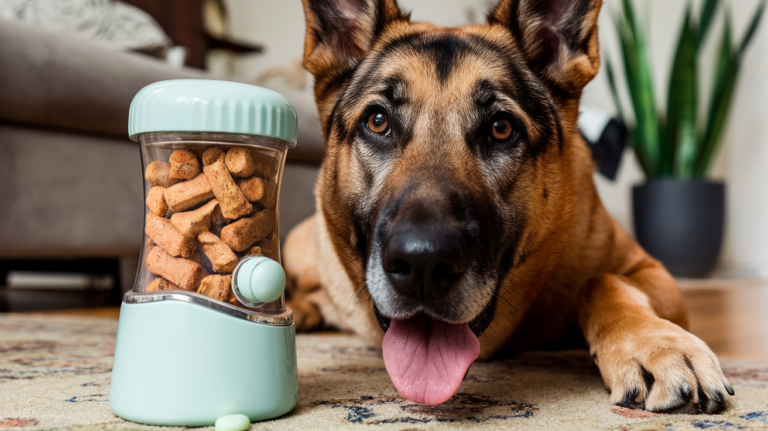
German Shepherds are big dogs with big appetites, but training treats need to be tiny. Think pea-sized portions of something absolutely irresistible. Your regular kibble won’t cut it here. We’re talking about the good stuff: small pieces of cheese, hot dogs, freeze-dried liver, or commercial training treats.
The treat needs to be something your dog goes absolutely bonkers for, yet small enough that you can reward fifty times without causing a stomachache. Variety helps too. Rotate between different treats to maintain high interest throughout training sessions.
Step Two: Creating the Click-Treat Association
The Charging Process
Before your German Shepherd can understand what earns a click, they need to understand that clicks equal treats. This foundation step, called “charging the clicker,” takes about five to ten minutes but changes everything.
Find a quiet spot with minimal distractions. Click once, immediately give a treat. Wait a few seconds. Click, treat. Repeat this sequence fifteen to twenty times. You’re not asking for any behavior yet. Your dog doesn’t need to sit, stay, or do anything except exist and receive treats after clicks.
Watch for the magic moment: your German Shepherd’s head whips toward you when they hear the click, before you’ve even reached for the treat. That’s when you know the association is locked in. The click has become a conditioned reinforcer, as powerful as the treat itself.
Common Mistakes to Avoid
New clicker trainers often fumble the timing. They click, then fumble around for a treat while their dog wonders what’s happening. Practice your mechanics before involving your German Shepherd. Click with one hand, deliver treats smoothly with the other. Make it fluid.
Another pitfall: clicking multiple times. One click equals one reward, period. Rapid-fire clicking dilutes the meaning and confuses your dog about which specific action earned the reinforcement. Keep it simple and consistent.
Step Three: Capturing Your First Behaviors
Starting with Natural Actions
Now comes the fun part. Watch your German Shepherd closely and click the instant they do something you like. Did they glance at you? Click and treat. Butt hit the ground? Click and treat. You’re “capturing” behaviors that happen naturally and marking them for repetition.
This approach feels almost magical. Your dog will start offering behaviors intentionally, trying to figure out what earns that precious click. German Shepherds, being the problem-solvers they are, will experiment enthusiastically. You might see them sit, then lie down, then sit again, working through options like a scientist testing hypotheses.
Clicker training transforms your German Shepherd from a passive recipient of commands into an active participant who thinks, experiments, and problem-solves their way to success.
Building a Click-Worthy Sit
Let’s tackle a basic sit using pure clicker methodology. Don’t say anything. Don’t push their butt down. Just wait with your clicker ready. The moment your German Shepherd’s rear end touches the ground (for any reason), click and toss a treat.
Your dog will stand to get the treat. Perfect. Now wait again. Most German Shepherds will sit again within thirty seconds, curious about whether that action triggers another click. When they do, click immediately and reward. Repeat ten times.
After several repetitions, you’ll notice your dog sitting faster and more deliberately. They’ve connected the dots. Now you can add the verbal cue “sit” just before they lower themselves, pairing the word with the action they’re already performing.
Step Four: Shaping Complex Behaviors
Understanding the Shaping Process
Shaping means breaking a complex behavior into tiny, achievable steps and rewarding incremental progress. German Shepherds excel at shaping exercises because their intelligence allows them to recognize patterns and build on previous learning.
Want to teach your dog to close a door? Start by clicking when they look at the door. Then click only when they move toward it. Next, click for touching the door with their nose. Then for pushing it slightly. Each click and reward builds toward the final behavior without force or frustration.
Practical Example: Teaching “Touch”
The “touch” command (where your dog touches their nose to your hand) demonstrates shaping beautifully. Hold your hand out. Your curious German Shepherd will probably sniff it. Click that sniff! Treat!
Repeat until your dog intentionally reaches out to touch your hand. Now you can start moving your hand to different positions: higher, lower, to the side. Each successful touch gets clicked. This simple behavior becomes the foundation for dozens of advanced tricks and real-world applications.
Step Five: Adding Duration and Distance
Extending Time Between Click and Behavior
Once your German Shepherd reliably performs a behavior, you can start asking for longer duration. Using “stay” as an example, click and reward initially when your dog remains in position for just two seconds. Then three. Then five.
Gradually increase your expectations, but don’t jump from five seconds to thirty seconds. German Shepherds are smart enough to notice when you’ve moved the goalposts unfairly. Small increments maintain motivation and prevent frustration.
If your dog breaks the stay before you click, no problem. No punishment, no scolding. Just reset and try again with a slightly easier duration. This is one of clicker training’s greatest strengths: mistakes become information, not failures.
Working with Distance
Distance training follows the same gradual approach. Start clicking successful behaviors when you’re right next to your German Shepherd. Then step one foot away. Then two feet. Then across the room.
Your dog learns that commands work regardless of your proximity. This creates reliability in real-world situations where you might need to recall your German Shepherd from a distance or ask for a behavior while you’re busy elsewhere.
Step Six: Fading the Clicker (Eventually)
When to Reduce Clicker Dependency
Here’s something many trainers don’t explain well: the clicker is a teaching tool, not a permanent fixture. Once your German Shepherd has mastered a behavior and performs it reliably on verbal cue alone, you can phase out the clicker for that specific action.
This doesn’t mean abandoning the clicker entirely. Keep using it for teaching new behaviors, refining existing ones, or re-energizing behaviors that have become sloppy. The clicker remains your precision communication device for active learning.
Transitioning to Variable Reinforcement
Professional trainers use something called a variable reinforcement schedule. Instead of clicking every single sit, you click randomly: maybe the second sit, then the fifth, then the third. This actually strengthens the behavior because your German Shepherd never knows which repetition will earn the reward.
Think of slot machines. People keep pulling that lever because they might win, even though they don’t win every time. Variable reinforcement creates the same compelling motivation in your dog, making behaviors incredibly resistant to extinction.
Step Seven: Troubleshooting Common German Shepherd Challenges
Addressing Overexcitement
German Shepherds can get really excited about training. Your dog might start barking, jumping, or spinning with enthusiasm. While this energy is wonderful, it can make precision training difficult. The solution? Click and reward calm behavior specifically.
If your dog is bouncing off the walls, wait. Don’t engage. The instant they pause or settle even slightly, click that calmness. You’re teaching that composure earns rewards just as much as active behaviors do. This becomes especially important for working with German Shepherd reactivity or impulse control.
Managing Frustration
Smart dogs get frustrated when they can’t figure out what you want. You’ll see signs: your German Shepherd might bark, paw at you, or try behaviors rapidly without thought. When this happens, make the task easier immediately.
Go back to a step they could do successfully. End that session on a win. German Shepherds have excellent memories; a frustrating session can create negative associations that hamper future training. Keep sessions short (five to ten minutes), upbeat, and successful.
Training should feel like a game you’re both winning, not a test your dog keeps failing. Adjust your expectations to match your German Shepherd’s current skill level, then gradually raise the bar.
This clicker training journey with your German Shepherd isn’t about perfection. It’s about building communication, trust, and a working relationship that makes both of you better partners. Every click is a conversation. Every treat is an investment. And every training session brings you closer to having that dog who actually listens, not because they have to, but because you’ve made learning the most rewarding game in their world.