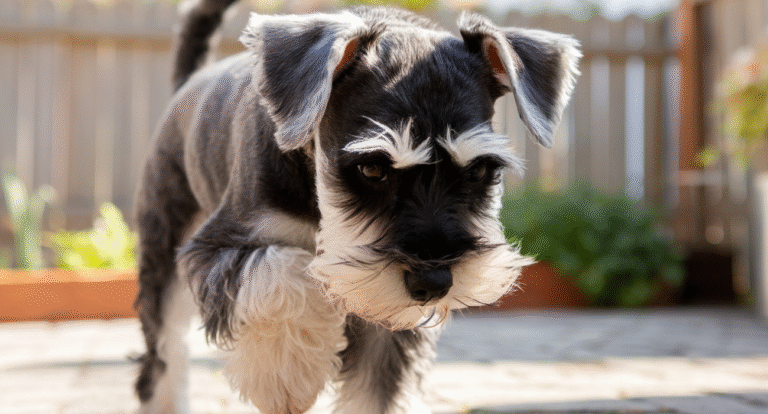
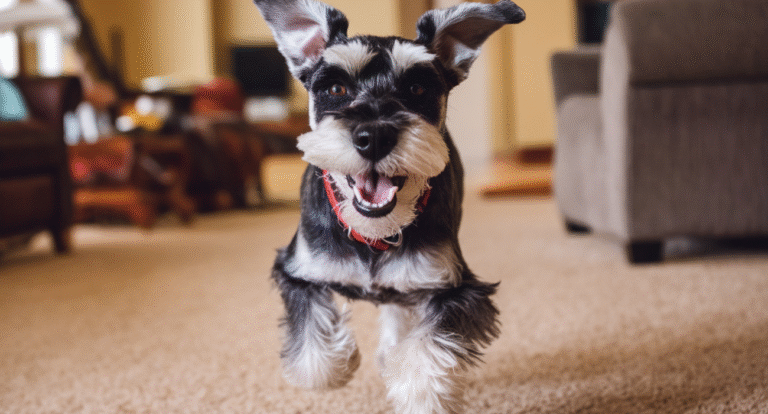
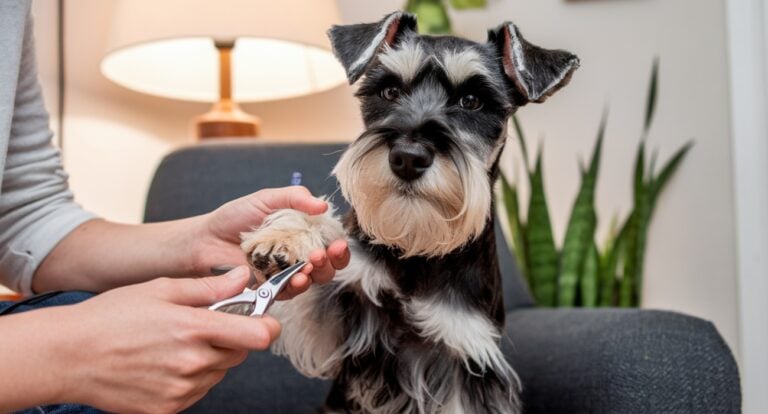
These training tips set your Schnauzer up for a lifetime of good behavior. Kind, effective steps make teaching fun and rewarding for both of you.
Miniature Schnauzers strut around like they own the place because, in their minds, they absolutely do. These terriers were bred to be farm dogs and ratters, which means they came into this world ready to make executive decisions. Training them means working with their confident nature, not against it.
You’ve probably noticed your Schnauzer has opinions about everything from dinner time to who’s allowed on the front porch. That assertiveness is part of their charm, but it’s also why they need consistent training from day one. Left to their own devices, they’ll happily become tiny tyrants. Properly trained? They’re protective, playful, and downright delightful.
1. Start Early and Stay Consistent
The moment your Miniature Schnauzer puppy waddles into your home, training begins whether you’re ready or not. These dogs form habits quickly, and bad ones stick like glue. Waiting until they’re older to address behavioral issues is like trying to redirect a train that’s already left the station.
Consistency matters more than intensity with this breed. Mini Schnauzers thrive on routine and predictable boundaries. If jumping on the couch is allowed on Tuesday but forbidden on Wednesday, you’ve just created a confused (and frustrated) dog who’ll keep testing the rules. Everyone in your household needs to enforce the same commands and expectations, or your clever schnauzer will figure out who’s the pushover in about five minutes.
Training isn’t something you do FOR fifteen minutes a day. It’s something you practice in every interaction, every moment you spend together. Your Schnauzer is always learning from you.
Puppy classes provide structure, but the real training happens during daily routines. Use meal times to practice “sit” and “wait.” Turn doorway exits into opportunities for impulse control. Transform walks into moving classrooms where loose leash walking becomes second nature. The mundane moments matter most because they happen repeatedly, cementing behaviors through sheer repetition.
2. Master the Art of Positive Reinforcement
Miniature Schnauzers respond beautifully to rewards but shut down completely with harsh corrections. Their terrier pride means they’ll dig in their heels if they feel bullied or disrespected. Positive reinforcement isn’t about being soft; it’s about being strategic.
Find what motivates your specific dog. Some Mini Schnauzers would sell their souls for freeze-dried liver treats. Others care more about squeaky toys or enthusiastic praise. Food typically works best during initial training stages, but mixing up rewards keeps things interesting and prevents your schnauzer from becoming a treat-demanding machine.
Timing makes or breaks your training efforts. The reward must come within seconds of the desired behavior, or your dog won’t connect the dots. Clicked too late? You just rewarded whatever they did most recently, which might have been sniffing the ground or looking at a squirrel. Precision matters, especially with a breed this smart.
| Reward Type | Best Used For | Effectiveness | When to Avoid |
|---|---|---|---|
| High-value treats | Teaching new commands, difficult behaviors | Excellent for motivation | When dog is already overexcited |
| Standard kibble | Reinforcing known behaviors | Good for practice sessions | When introducing challenging tasks |
| Toys and play | Recall training, building drive | Outstanding for active dogs | During calm, focus-required training |
| Verbal praise | Maintaining behaviors, real-world scenarios | Moderate alone, powerful combined | Never (always appropriate) |
3. Socialize Like Your Sanity Depends On It
Because it does. Miniature Schnauzers can develop suspicion toward strangers and aggression toward other dogs if they’re not properly socialized early. That territorial instinct served them well on farms but makes for awkward encounters at the dog park.
Exposure needs to happen during the critical socialization window, roughly between 3 and 14 weeks of age. After that, new experiences become scarier instead of exciting. Introduce your puppy to different people (tall, short, wearing hats, using wheelchairs), various environments (busy streets, quiet parks, pet stores), and friendly, vaccinated dogs of all sizes.
Quality beats quantity every time. One positive interaction with a gentle Golden Retriever beats ten scary encounters with poorly behaved dogs. Watch your puppy’s body language obsessively. If they’re cowering or overly stressed, remove them from the situation before it becomes traumatic. You’re building confidence, not forcing exposure.
A well socialized Miniature Schnauzer sees the world as full of friends they haven’t met yet. A poorly socialized one sees threats everywhere. The difference is entirely in your hands during those crucial early months.
Keep socializing throughout adulthood too. Dogs who stop meeting new people and animals often regress, becoming increasingly reactive and anxious. Monthly play dates, regular walks in new locations, and occasional trips to dog-friendly businesses maintain those social skills.
4. Channel That Prey Drive Appropriately
Your Miniature Schnauzer’s ancestors hunted rats in German stables, and that instinct hasn’t gone anywhere. Squirrels, cats, moving leaves, your neighbor’s chihuahua… everything that moves becomes potential prey. You can’t eliminate prey drive, but you absolutely can redirect it.
Flirt poles and lure coursing give your schnauzer appropriate outlets for chase instincts. These activities satisfy the need to pursue moving objects while keeping everything under your control. Tug-of-war games (with rules and structure) also tap into that predatory sequence in safe, bonded ways.
Teaching a rock-solid recall becomes non-negotiable with prey-driven breeds. Practice the “come” command constantly, in various locations and with increasing distractions. Start in your boring living room, progress to the backyard, then try quiet parks before attempting recalls near actual distractions. Use an extra-long training leash during practice so your schnauzer can’t self-reward by successfully catching that squirrel while ignoring your calls.
The “leave it” command deserves special attention. This cue can prevent your dog from eating something dangerous, chasing animals into traffic, or harassing other pets. Begin with low-value items and gradually work up to seriously tempting scenarios. Eventually, your schnauzer should be able to walk past a dropped chicken nugget without breaking stride (okay, maybe that’s ambitious, but you get the idea).
5. Address Barking Before It Becomes a Lifestyle
Let’s be honest: Miniature Schnauzers are vocal. They bark at delivery drivers, falling leaves, suspicious clouds, and the audacity of neighbors existing near their territory. This breed was supposed to alert farmers to problems, and boy, do they take that job seriously.
Completely silencing a Mini Schnauzer isn’t realistic or even desirable. That alarm bark has value when someone actually approaches your home. The goal is teaching them to stop barking on command and reducing nuisance barking at non-threats.
The “quiet” command only works if you teach it during calm moments first. Wait until your dog barks naturally (won’t take long), say “quiet,” and immediately reward when they stop. Gradually increase the duration of silence required before treats appear. Trying to teach this command mid-barking frenzy never works; they’re too amped up to learn anything.
Barking is communication, not misbehavior. Your job is teaching your Schnauzer which messages need to be shared and which can be kept as inside thoughts.
Management strategies help tremendously. Close curtains so your dog can’t patrol windows all day. Provide puzzle toys and mental enrichment to reduce boredom barking. Sometimes addressing the root cause (insufficient exercise, anxiety, loneliness) matters more than any training command.
6. Exercise Both Body and Brain Daily
A tired Miniature Schnauzer is a well-behaved Miniature Schnauzer. These dogs need significant physical and mental exercise, despite their compact size. Thirty minutes of walking barely takes the edge off their energy. They need running, playing, sniffing adventures, and problem-solving activities.
Interactive toys like puzzle feeders turn meal times into brain workouts. Hide-and-seek games (with treats or toys) engage their natural hunting instincts while burning mental energy. Trick training sessions teach fun behaviors like “spin,” “shake,” and “play dead” while strengthening your bond and keeping that clever brain engaged.
Agility training suits Miniature Schnauzers beautifully. They’re athletic, driven, and love showing off. Even setting up a few DIY obstacles in your backyard provides excellent exercise and training opportunities. The combination of physical exertion and mental focus from navigating courses creates the perfect tired-but-happy schnauzer.
7. Maintain Your Leadership Without Being a Jerk
Miniature Schnauzers respect leaders, not tyrants. They need you to set clear boundaries and enforce them fairly, but they’ll absolutely rebel against heavy-handed techniques. Think “benevolent guide” rather than “strict disciplinarian.”
Structure provides security for these dogs. They should eat after you do, enter doorways after you’ve given permission, and understand that good things come from following your lead. This isn’t about dominance theory nonsense; it’s about creating predictable patterns that reduce anxiety and build trust.
Ignoring unwanted behaviors often works better than corrections. Your Miniature Schnauzer craves attention, and even negative attention rewards the behavior. Jumping on guests? Turn away and ignore. Whining for food? Pretend they don’t exist until they’re quiet. Then reward calm behavior enthusiastically. They’ll quickly figure out which actions get them what they want.
Training never truly ends with intelligent breeds like Mini Schnauzers. They need ongoing mental challenges and periodic refreshers on old commands. Keep sessions short (5 to 10 minutes), end on success, and practice in different locations to proof behaviors. The dog who sits perfectly in your kitchen might act like they’ve never heard the command at the busy park without this generalization work.
Your Miniature Schnauzer came equipped with personality, intelligence, and enough stubbornness to test a saint’s patience. But underneath that independent streak is a dog who genuinely wants to be your partner in crime. These training tips give you the framework; your consistency, patience, and humor supply the rest. Before long, that bearded little troublemaker will transform into the well-mannered companion you always knew they could be.