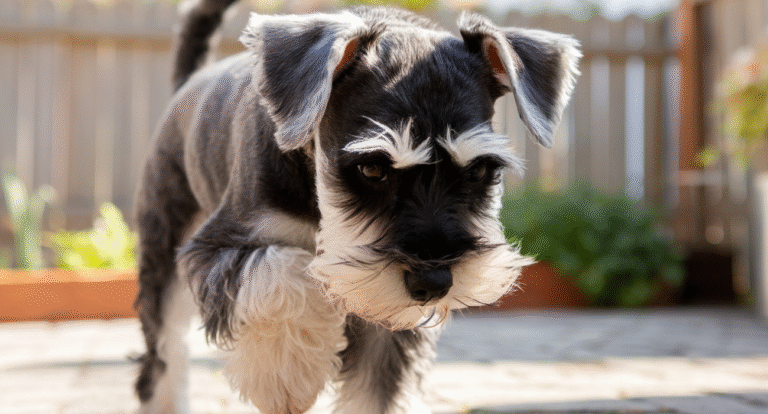
Digging up the yard can be stopped with clever redirection. These handy tricks keep your Schnauzer entertained above ground.
Your beautiful yard looks like a battlefield, and your Schnauzer is the proud general surveying their handiwork. Those perfectly manicured flowerbeds? Now they’re archaeological dig sites. Your lawn? Swiss cheese would be jealous of all those holes. If you’re tired of watching your bearded little excavator turn your backyard into the surface of the moon, you’re not alone. Thousands of Schnauzer owners wake up every morning wondering if their yard will survive another day.
The good news is that your Schnauzer isn’t digging just to spite you (even though it might feel that way when you’re filling in the tenth hole of the week). There are real reasons behind this behavior, and even better, there are proven solutions that actually work. Let’s dig into how you can reclaim your yard without losing your mind or your relationship with your furry friend.
The Real Reasons Behind the Digging
Before we jump into solutions, you need to understand why your Schnauzer is channeling their inner excavator. These dogs don’t dig randomly. There’s always a motivation, even if it seems completely bizarre to us humans.
Boredom tops the list for most Schnauzers. These are working dogs with serious brains and energy to burn. When they don’t have enough mental and physical stimulation, they create their own entertainment. And guess what? Digging is incredibly entertaining for a dog. It engages their sense of smell, provides a physical workout, and offers instant gratification.
Schnauzers might also dig to hunt prey. Remember, these dogs were originally bred to hunt rats and other vermin on German farms. That instinct doesn’t just disappear because they now live in suburbia. If your yard has moles, voles, or even interesting insect activity underground, your Schnauzer’s prey drive kicks into high gear.
Temperature regulation is another common culprit. Dogs dig to create cool spots in summer or warm burrows in winter. Your Schnauzer might be trying to beat the heat by lying in the cool earth they’ve just exposed. Finally, some dogs dig to escape (if they’re anxious or under-stimulated), to bury treasures, or simply because it’s become a rewarding habit.
| Common Digging Triggers | Why It Happens | Signs to Look For |
|---|---|---|
| Boredom & Excess Energy | Lack of physical/mental stimulation | Multiple holes, digging when left alone, high energy indoors |
| Prey Drive | Hunting instinct triggered by underground creatures | Focused digging in specific spots, intense sniffing, alert behavior |
| Temperature Control | Seeking comfort from heat or cold | Lying in holes, digging in shaded areas (summer) or sunny spots (winter) |
| Anxiety or Stress | Coping mechanism for separation anxiety | Digging near exits, destructive behavior indoors, excessive barking |
| Habit & Fun | Behavior has become self-rewarding | Playful digging, often happens during active play time |
1. Exercise Your Schnauzer Into Exhaustion (The Good Kind)
A tired Schnauzer is a good Schnauzer. This might sound overly simple, but it’s the foundation for solving almost every behavioral problem these dogs develop. Schnauzers are bundles of condensed energy wrapped in wiry fur, and if you don’t help them burn that energy appropriately, they’ll find their own ways to do it.
We’re not talking about a leisurely stroll around the block here. Your Schnauzer needs real exercise. Aim for at least 60 minutes of vigorous activity daily, split into multiple sessions if needed. This could include brisk walks, jogging, fetch sessions, or even swimming if you have access to a dog-friendly pool.
The equation is simple: More appropriate exercise equals less destructive digging. Your Schnauzer has a fixed amount of energy that needs to go somewhere. Make sure it goes into activities you approve of.
But physical exercise is only half the battle. Mental stimulation matters just as much for these intelligent dogs. Puzzle toys, training sessions, hide and seek games, and scent work can tire out your Schnauzer’s brain just as effectively as running tires out their body. Try hiding treats around the yard (in spots where digging is allowed) and letting your dog sniff them out. This redirects their natural digging and hunting instincts into a game with rules.
2. Create a Legal Digging Zone
Fighting your Schnauzer’s natural instincts is like swimming against a riptide. Sometimes the smarter approach is to work with their nature instead of against it. Enter the designated digging area, also known as giving your dog a legal outlet for their excavation obsession.
Choose a corner of your yard that you don’t mind sacrificing to the cause. It doesn’t need to be huge; a 4×4 foot area is plenty for most Schnauzers. Fill this zone with loose dirt or sand (sand is great because it drains well and won’t turn into a mud pit). You can even buy a plastic kiddie pool, fill it with sand, and create a contained digging pit.
The trick is making this spot more appealing than everywhere else. Bury toys, treats, and interesting objects just beneath the surface. When you catch your Schnauzer digging somewhere they shouldn’t, interrupt the behavior with a firm “no,” then immediately lead them to their designated digging area. When they dig there instead, praise them enthusiastically. You’re essentially teaching them that digging itself isn’t bad; digging in the wrong place is the problem.
Consistency is crucial here. Every single time your Schnauzer digs in an unapproved spot, redirect them to their legal zone. Every single time they use their designated area, make it rain praise and treats. Most Schnauzers catch on within a few weeks if you’re persistent.
3. Make Forbidden Areas Unpleasant
While you’re creating positive associations with approved digging spots, you should simultaneously make the forbidden zones less appealing. This doesn’t mean punishing your dog; it means making the experience of digging in those spots unrewarding or mildly unpleasant.
There are several harmless deterrents you can try. Many Schnauzers dislike the smell of citrus, so scattering orange or lemon peels around vulnerable areas can work. Commercial dog repellent sprays are available at pet stores. You can also try sprinkling cayenne pepper (very lightly) in problem areas, though this can be inconsistent, especially after rain.
Physical barriers work well too. Placing large rocks, chicken wire buried slightly underground, or prickly pinecones in favorite digging spots makes those areas less satisfying to excavate. If your Schnauzer is digging along fences (potentially trying to escape), bury chicken wire along the fence line or place large rocks there.
Motion-activated sprinklers are the nuclear option and can be incredibly effective for persistent diggers. These devices detect movement and release a harmless but startling spray of water. Most dogs learn very quickly that certain areas trigger this unwelcome surprise and steer clear. Just make sure you remember to turn them off before you go into the yard yourself!
4. Address the Root Cause: Environmental Factors
Sometimes the solution isn’t about training at all; it’s about fixing problems in your yard that encourage digging. Is your Schnauzer digging in the same spots repeatedly? There might be something under that soil that you can’t smell but your dog absolutely can.
If you suspect underground pests, it’s time to call pest control. Moles, voles, and grubs can drive a terrier absolutely crazy. Getting rid of these critters removes the motivation for digging in those specific spots. This is especially important because no amount of training will override a Schnauzer’s prey drive when they know something is down there.
Temperature issues need addressing too. If your Schnauzer is digging to stay cool, they need better options. Provide shaded areas, a kiddie pool filled with water, cooling mats, or ensure they have access to air conditioning during hot weather. If they’re digging to stay warm in winter, they might need a warmer outdoor shelter or simply more time indoors.
Environmental modifications can eliminate digging triggers entirely. Sometimes the best behavioral solution is changing the environment, not the dog.
Also consider your yard’s drainage. Dogs often dig in areas where water pools because the soil is softer and cooler. Improving drainage might eliminate those attractive digging spots naturally.
5. Supervise and Interrupt
You cannot train your Schnauzer out of digging if you’re not there to correct the behavior when it happens. This is harsh but true: many digging problems persist simply because owners let their dogs out unsupervised and only discover the holes later. At that point, correction is meaningless because dogs don’t connect consequences with actions that happened even minutes earlier.
During the training phase, your Schnauzer should never be alone in the yard. Yes, this is inconvenient. Yes, it requires effort. But it’s temporary and absolutely necessary. When you can’t supervise, your dog should be indoors or in a secure area where digging isn’t possible.
The moment you see your Schnauzer start to dig in a forbidden area, interrupt immediately with a firm “no” or “leave it.” The key is catching them during the act, not after. Then redirect to an appropriate activity, whether that’s their designated digging zone, a game, or asking them to perform a trained command. Reward the redirection generously.
Some owners find it helpful to stay near a window where they can watch their dog. Others spend time outside with their Schnauzer, gardening or reading while keeping one eye on their furry companion. Whatever works for your lifestyle, commit to it for at least a month. Consistency during this period builds the foundation for lifelong good habits.
6. Increase Mental Enrichment Dramatically
A bored Schnauzer brain is a destructive Schnauzer brain. These dogs were bred to work, problem solve, and stay busy throughout the day. Modern pet life, where dogs are left alone for eight hours while owners work, is the complete opposite of what their genetics prepared them for.
Mental enrichment is anything that makes your dog think and problem solve. Puzzle feeders are fantastic. Instead of putting kibble in a bowl, make your Schnauzer work for every meal using treat-dispensing toys, snuffle mats, or puzzle boards. This transforms eating from a 30 second activity into a 20 minute mental workout.
Training new tricks regularly keeps your Schnauzer’s mind engaged. These dogs are incredibly smart and love learning. Teach them to find specific toys by name, navigate obstacle courses, or perform complex command sequences. The actual tricks don’t matter; the mental effort does.
Rotate toys regularly so there’s always something “new” to investigate. Introduce new smells by bringing home cardboard boxes from different places, letting your dog explore them (supervision required to prevent eating cardboard). Take different routes on walks so your Schnauzer encounters new sights and smells.
Doggy daycare or regular playdates with other dogs provide both physical and mental stimulation. Social interaction with other canines is enriching in ways that humans simply cannot replicate. If your Schnauzer gets along with other dogs, this option is worth serious consideration.
7. Be Patient and Realistic About Expectations
Here’s the uncomfortable truth: you probably won’t eliminate digging entirely, and that’s okay. Schnauzers are terriers. Digging is embedded in their DNA. What you can do is reduce unwanted digging by about 90%, redirect it to appropriate outlets, and create a peaceful coexistence with your slightly less destructive companion.
Success doesn’t mean zero holes ever. Success means fewer holes, quicker responses to corrections, and more time spent on approved activities. Adjust your expectations and celebrate progress.
This training process takes weeks, sometimes months. There will be setbacks. Your Schnauzer will have bad days where they seem to forget everything they learned. That’s normal. Stay consistent, don’t give up, and remember that every interaction is a training opportunity.
Also recognize that some life stages are worse than others. Puppies and adolescent Schnauzers (roughly 6 months to 2 years old) have more energy and less impulse control. Senior dogs typically dig less. If you’re dealing with a young, energetic Schnauzer, understand that time is partially on your side. They will calm down eventually.
Consider working with a professional dog trainer if you’re struggling. Sometimes an outside perspective and hands-on guidance make all the difference. There’s no shame in asking for help, especially with stubborn behaviors that have become deeply ingrained habits.
Your yard might never look like it belongs in a magazine spread, and you know what? That’s the price of sharing your life with an energetic, intelligent, wonderful Schnauzer. The holes will eventually stop (mostly). Your sanity will return (probably). And your bond with your dog will be stronger because you put in the effort to understand and work with their natural instincts rather than simply punishing behavior you didn’t like.