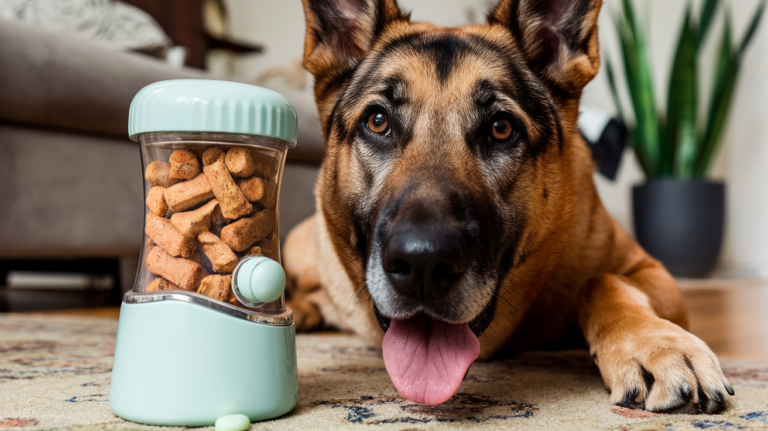
This one simple trick can transform your shepherd’s confidence, behavior, and overall happiness. It is easy to start and makes a huge difference fast.
Stop Googling “why is my German Shepherd so crazy” at 2 AM. I see you. I know you’re tired of the chaos, the destruction, and that guilty feeling that maybe you’re failing your four-legged best friend. Your GSD isn’t broken, and you’re not a terrible dog parent.
What you’re missing is so obvious that it’s hiding in plain sight. German Shepherds are basically professional athletes in dog form, and you’ve been treating yours like a couch potato. The fix is almost embarrassingly simple, but the results? Absolutely life changing. Ready to unlock your dog’s full potential and finally get some peace in your household?
The Secret Nobody Talks About
Mental stimulation. That’s it. That’s the trick.
I know what you’re thinking. “Wait, I already walk my dog!” Sure, you do. But here’s what most German Shepherd owners get wrong: they confuse physical exercise with mental exercise. Your GSD can run five miles and still destroy your kitchen cabinets because their brain is bored out of its mind.
German Shepherds were originally bred as herding dogs in, you guessed it, Germany. These working dogs needed to make split second decisions, solve problems, and stay mentally engaged for hours. Fast forward to today, and most GSDs are just… waiting around. They’re intelligent enough to be police dogs, search and rescue heroes, and service animals, but instead they’re staring at your wall wondering when something interesting will happen.
Your German Shepherd’s brain is their most powerful tool, and it’s probably gathering dust.
Think about it this way: if you spent all day sitting in a room with nothing to do, no books, no phone, no conversation, you’d probably start acting pretty weird too. You might pace around. Maybe start rearranging furniture just for something to do. That’s essentially what your understimulated German Shepherd is experiencing every single day.
Why Mental Stimulation Changes Everything
When you properly engage your German Shepherd’s brain, something magical happens. That anxious energy transforms into focused calm. The destructive behaviors start disappearing. Your dog becomes more obedient, more connected to you, and genuinely happier.
The science backs this up completely. Studies on canine cognition show that mental exercise can tire a dog out much faster than physical exercise alone. Fifteen minutes of problem solving can equal an hour of fetch. Your German Shepherd’s brain uses a massive amount of energy when it’s actually working, which means a mentally stimulated dog is a tired, content dog.
Here’s what changes when you prioritize mental stimulation:
Behavioral improvements happen almost immediately. Dogs with adequate mental enrichment show significantly less destructive behavior, reduced anxiety, and better impulse control. That couch you’ve been worried about? Suddenly much safer.
Your bond strengthens in ways you didn’t expect. Mental stimulation activities often involve interaction between you and your dog. This collaboration builds trust and communication. Your GSD starts seeing you as their partner, their team leader, rather than just the person who fills the food bowl.
Physical health benefits tag along for the ride. A mentally satisfied dog is more likely to rest properly, which means better recovery, lower stress hormones, and overall improved wellbeing. Plus, many mental stimulation activities involve at least some physical movement, giving you a perfect combination.
How to Actually Implement This
Let’s get practical. You don’t need fancy equipment or a PhD in animal behavior. You just need to understand what makes your German Shepherd’s brain light up.
Puzzle Toys and Food Dispensers
Start here because it’s easy and effective. Instead of dumping your dog’s breakfast into a bowl, put it inside a puzzle toy or snuffle mat. Suddenly, mealtime becomes a twenty minute brain workout. Your GSD has to figure out how to manipulate the toy, use their nose, and problem solve to get each piece of kibble.
There are puzzle toys at every difficulty level. Start with simple ones and gradually increase the challenge as your dog masters each level. This progression keeps things interesting and prevents boredom.
Training Sessions with a Twist
Forget boring sit/stay drills. Teach your German Shepherd actually cool stuff. Here are some ideas that provide serious mental stimulation:
| Activity Type | Mental Challenge Level | Time Investment | Equipment Needed |
|---|---|---|---|
| Scent Work | High | 15-30 minutes | Treats, containers |
| Trick Training | Medium to High | 10-20 minutes | Treats, patience |
| Hide and Seek | Medium | 10-15 minutes | None |
| Name Recognition | High | 15-25 minutes | Multiple toys |
Teach them to identify their toys by name. Yes, seriously. German Shepherds can learn dozens of words. Start with two toys, name them consistently, and reward your dog when they bring the correct one. Gradually add more toys. Before you know it, your dog has a vocabulary that would impress your neighbors.
The Power of Scent Work
This deserves its own section because it’s that good. A German Shepherd’s nose is approximately 100,000 times more sensitive than yours. When you engage their sense of smell, you’re tapping into their strongest natural ability.
Scent work isn’t just an activity; it’s fulfilling your dog’s biological purpose.
Start simple: hide treats around your house and encourage your dog to find them. Use a command like “find it!” and watch as your GSD transforms into a focused, determined detective. As they improve, make it harder. Hide treats in more challenging locations. Put them inside boxes or under obstacles.
You can level this up to competitive nosework, which has become hugely popular. Dogs search for specific scents (like birch, anise, or clove) hidden in various environments. It’s basically the dog sport version of a treasure hunt, and German Shepherds excel at it.
Interactive Games That Build Brainpower
The shell game works wonderfully with German Shepherds. Put a treat under one of three cups, shuffle them around, and let your dog choose. This simple game teaches focus, patience, and problem solving.
Create an obstacle course in your backyard or living room. Not just for physical exercise, but incorporating commands and choices. Your dog has to decide which path to take, wait for your signal, and navigate challenges. The mental processing required is substantial.
Common Mistakes to Avoid
People get excited about mental stimulation and then accidentally mess it up. Don’t be that person.
Overwhelming your dog is the number one mistake. If you suddenly introduce five new puzzle toys and three training sessions in one day, your German Shepherd might actually get more stressed. Start slow. Add one new mentally stimulating activity and see how your dog responds.
Making it too easy defeats the purpose. Yes, your dog should be able to solve the puzzle or game, but it should take some effort. If your GSD figures it out in thirty seconds, increase the difficulty. The sweet spot is challenging but achievable.
Forgetting consistency will sabotage your progress. Mental stimulation isn’t a weekend activity. It needs to be part of your daily routine. Even ten minutes every day beats an hour once a week.
The goal isn’t to exhaust your dog’s brain; it’s to satisfy their natural need to think and problem solve.
What to Expect in the First Month
Week one: Your German Shepherd might seem confused or even frustrated at first. They’re not used to working for things or solving problems. Stay patient and encouraging. You’ll probably notice them sleeping more soundly after mental stimulation sessions.
Week two: Things start clicking. Your dog begins to understand that using their brain is fun. You might notice them bringing you puzzle toys or waiting expectantly for training time. Destructive behaviors should be noticeably decreasing.
Week three: The transformation becomes obvious. Your GSD is calmer, more focused, and genuinely happier. Other people start commenting on how well behaved your dog is. You’re wondering why nobody told you about this sooner.
Week four: Mental stimulation is now part of your routine. Your German Shepherd has learned multiple new skills, your house is still intact, and that anxious energy has been channeled into something productive. Your dog looks at you with focus and engagement instead of frantic neediness.
Taking It Further
Once you’ve mastered the basics, there’s so much more you can explore. Consider enrolling in classes specifically designed for mental enrichment. Many dog training facilities now offer nosework classes, agility (which is as much mental as physical), and advanced obedience that challenges your dog’s problem solving abilities.
Join online communities of German Shepherd owners who prioritize mental stimulation. You’ll get new ideas, troubleshooting help, and inspiration to keep things fresh. These communities often share DIY puzzle toy ideas, training techniques, and success stories that motivate you to keep going.
Document your journey. Take videos of your German Shepherd learning new skills or solving puzzles. Not only will you have amazing memories, but you’ll also be able to see the incredible progress your dog makes. The before and after difference is usually stunning.
The beauty of mental stimulation is that it grows with your dog. There’s no ceiling to how much they can learn or how complex the challenges can become. Your German Shepherd’s capacity for learning and problem solving is far greater than most people realize. By committing to regular mental enrichment, you’re not just changing behaviors. You’re unlocking your dog’s full potential and giving them the fulfilling, purposeful life they were bred to live.
Your German Shepherd isn’t a problem that needs fixing. They’re a brilliant working dog that needs a job. Give their brain something to do, and watch everything else fall into place.