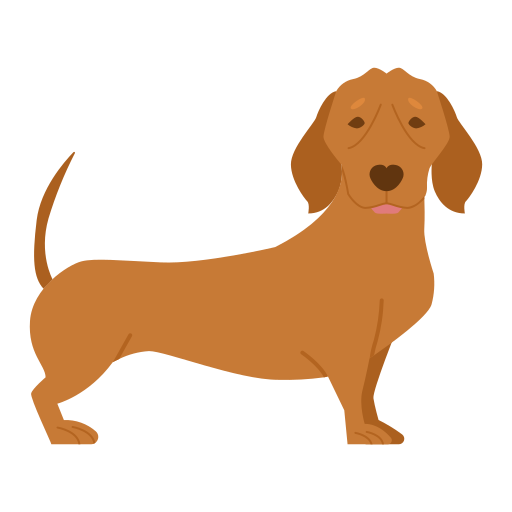
 Dachshund
 Owners who keep their dachshund lean and owners who lose that battle year after year almost never differ in how much they love the dog. They differ in one small, boring habit that takes about eleven seconds a day.
That’s the whole gap. Eleven seconds.
One group measures the food. The other group eyeballs it, tops off the bowl when it looks a little sad, and hands over a bite of cheese every single time those eyebrows do the thing.
The eyebrows are a legitimately powerful weapon. Nobody is disputing that.
But here is what the research keeps pointing at: the most effective thing you can do for a long, mobile, comfortable life for your sausage dog has almost nothing to do with supplements, grain free formulas, or the fresh food subscription your neighbor swears by. It’s how much ends up in the bowl.
The Change Itself, Said Plainly
Feed a measured portion, twice a day, sized to keep your dachshund visibly lean. Count treats as part of that total, not on top of it.
That’s the change. Unglamorous, free, and staggeringly effective.
Notice what it isn’t. It isn’t switching brands, it isn’t adding a scoop of something powdered, and it isn’t a 30 day detox for an animal that eats out of a bowl on the floor.
A lean dachshund is not a deprived dachshund. A lean dachshund is a dachshund with a much longer lease on its own spine.
Why This Matters More for a Doxie Than Almost Any Other Dog
Extra weight is bad news for every breed. On a dachshund, it’s a structural problem.
The Famously Ridiculous Back
Dachshunds are chondrodystrophic, which is a long word meaning their cartilage develops differently and their spinal discs age faster and harder than a normal dog’s. Some estimates put the lifetime risk of intervertebral disc disease in the breed at roughly one in four.
Now add a few extra pounds to the middle of that long, unsupported bridge of a torso.
Every pound of belly is leverage. It pulls, it strains, and it asks discs that are already fragile to do more work forever.
Everything Else Notices Too
Heavier dogs overheat faster, which matters if you live somewhere with real summers. They tire on walks, so they move less, so they gain more, and the loop tightens.
Fat tissue is metabolically active and quietly inflammatory, which nudges the odds on diabetes, pancreatitis, and a rougher recovery if surgery ever becomes necessary.
And a chunky dachshund on the operating table for a back injury is a harder case than a lean one. Ask any vet who does spinal work and watch their face.
The Study That Changed What Vets Say Out Loud
Purina ran a lifelong study on 48 Labrador Retrievers, paired up as littermates. Same genetics, same food, same everything, with one difference: half the dogs ate about 25 percent less than their sibling.
The study ran for 14 years.
The lean fed dogs had a median lifespan of around 13 years. Their well fed siblings landed closer to 11.2. Signs of arthritis showed up years later in the lean group, and they needed medication for it much later in life.
Nearly two extra years. No pill, no procedure, no proprietary ingredient. Just a smaller scoop, repeated for a lifetime.
Labradors aren’t dachshunds, and no single study settles anything forever. But the finding has held up well enough that "keep them lean" is now standard advice from basically every veterinary body that has bothered to weigh in.
How to Actually Do This Without Becoming a Food Monster
The concept is easy. The execution is where people quietly give up.
Use a Scale, Not a Scoop
Those plastic cups that come with the food bag are wildly inaccurate. Studies on portioning with cups have found errors ranging from significant underfeeding to overfeeding by 80 percent or more.
On a 60 pound dog, a sloppy scoop is a rounding error. On an 11 pound dachshund, it’s a second breakfast.
A cheap kitchen scale fixes this permanently. Weigh the food in grams, write the number on a sticky note, stick it on the bin, and stop thinking about it.
Do the Treat Math (It’s Ugly)
Treats should stay under 10 percent of daily calories. For a small dachshund eating somewhere around 400 calories a day, that’s about 40 calories total.
One dental chew can eat that entire budget. One.
Break treats into halves and thirds. Your dog cannot count and has never once complained about the size of a piece of chicken, only about the absence of one.
The Rib Test Takes Ten Seconds
Run your flat hand along your dog’s side. Ribs should feel like the back of your knuckles, easy to find under a thin layer.
If it feels like the soft back of your palm, there’s work to do.
Then look down from above. You want a visible waist behind the ribs, and from the side you want the belly to tuck up rather than run flat and level to the back legs.
The First Two Weeks Are the Worst Part
Let’s be honest about what happens when you cut portions.
The Staring
Your dachshund will look at you like you have personally betrayed the relationship. They will sit near the bowl. They will sigh with theatrical intensity.
They are fine. Hunger signals adjust within a couple of weeks, and dachshunds are outrageously good actors.
What Actually Helps
Split the daily ration into three smaller meals instead of two, so the day feels busier.
Bulk the food up with a spoonful of plain canned pumpkin or a handful of green beans, which adds volume and almost no calories.
A slow feeder bowl or a snuffle mat turns a 90 second meal into a ten minute activity, and a dog who worked for dinner acts noticeably more satisfied afterward.
What a Realistic Timeline Looks Like
Aim for weight loss of about one to two percent of body weight per week. That is genuinely slow, and it should be.
On a 14 pound dachshund carrying two extra pounds, you’re looking at a couple of months.
Two pounds sounds trivial until you scale it. On a small dachshund, two extra pounds is roughly the equivalent of a 150 pound person carrying an extra 25, all of it slung under a spine that was never engineered for it.
Weigh monthly, same scale, same time of day. Written numbers beat memory every time, because your eyes adjust to your own dog and stop being reliable witnesses.
Making It Stick Past Month Three
This is where good intentions usually go to die.
One Person Owns the Bowl
In a multi person household, food creep is inevitable. Someone gives a second dinner because nobody mentioned the first one.
A whiteboard on the fridge with two checkboxes solves a problem that has otherwise ruined a thousand diet plans.
Brief Your Guests
Say it out loud when people come over: the dog has already eaten, and she is lying about it.
Hand visitors a few pieces of the dog’s own kibble if they need something to give. The dachshund gets the ritual, you keep the math.
Recheck After Life Changes
Calorie needs drop after spay or neuter, drop again around age seven or eight, and drop hard if activity decreases over winter.
The portion that was perfect last year may be quietly too much now. Reweigh, adjust, move on.
None of this is dramatic. It’s a scale, a sticky note, and the willingness to lose a staring contest with a small determined animal roughly twice a day.
The scoop gets smaller. The lifespan, quite possibly, does not.