Say goodbye to guilt and destruction. Learn how to prevent separation anxiety before it starts and create a confident, relaxed German Shepherd.
Your German Shepherd is sitting by the door again, those soulful eyes tracking your every move as you grab your keys. You know what’s coming: the whining, the pacing, maybe even some destructive behavior once you’re gone. Sound familiar? You’re not alone in this struggle.
Separation anxiety in German Shepherds isn’t just about a dog missing their owner. It’s a genuine psychological condition that can turn your loyal companion into an anxious wreck the moment you step out. But here’s the good news: with the right approach, you can help your furry friend feel secure even when you’re not around.
Why German Shepherds Are Prone to Separation Anxiety
German Shepherds weren’t designed to be left alone. Their entire genetic makeup screams “working dog,” bred specifically to bond intensely with their handlers and perform tasks alongside humans. This incredible loyalty becomes a double-edged sword when modern life demands we leave them home alone for hours.
Their intelligence works against them here. A German Shepherd’s brain is constantly processing, analyzing, and anticipating. When you leave, they’re not just sad; they’re running through worst-case scenarios. Will you come back? Did something happen to you? What if you never return? This cognitive whirlwind transforms into physical symptoms of distress.
The Early Warning Signs You Shouldn’t Ignore
Separation anxiety doesn’t always announce itself with destroyed doors and frantic howling. Sometimes it whispers before it screams. Watch for these subtle indicators:
Behavioral red flags include following you from room to room (even to the bathroom), excessive excitement when you return home, and starting to act anxious when you pick up your keys or put on shoes. Your dog is reading your “leaving” routine and panicking before you’re even gone.
Physical symptoms matter too. Some German Shepherds will drool excessively, pace relentlessly, or refuse to eat when left alone. Others might have accidents in the house despite being fully housetrained. These aren’t acts of rebellion; they’re stress responses as real as a human’s anxiety attack.
When your German Shepherd’s world revolves entirely around your presence, every departure feels like abandonment. Understanding this isn’t weakness on their part; it’s the flip side of their extraordinary capacity for loyalty.
The Foundation: Building Independence From Day One
Prevention beats cure every single time, and this is especially true for separation anxiety. Whether you’re bringing home a puppy or adopting an adult, establishing healthy independence habits immediately will save you months or years of heartache.
Start small, ridiculously small. Leave the room for thirty seconds. Come back. No fanfare, no dramatic reunions, just casual normalcy. Gradually extend these micro-absences until your dog realizes that your disappearance is both temporary and boring.
The Crate Training Advantage
Crate training gets a bad rap from people who anthropomorphize it as “caging” a dog, but German Shepherds often thrive with a designated den space. When introduced properly, a crate becomes a security blanket rather than a prison.
The magic lies in making the crate the best place in the house. Feed meals inside. Toss treats in randomly throughout the day. Put the comfiest bed you can find in there. Never use it for punishment. Over time, your German Shepherd will voluntarily retreat to this space because it represents safety and calm.
Start with the crate door open. Let your dog explore and exit freely. Once they’re comfortable hanging out inside, begin closing the door for brief periods while you’re still in the room. The goal is teaching them that confinement doesn’t equal abandonment.
| Training Phase | Duration | Your Location | Goal |
|---|---|---|---|
| Introduction | 3-7 days | In sight of crate | Positive association with space |
| Door Closure | 1-2 weeks | Same room | Comfort with brief confinement |
| Distance Building | 2-3 weeks | Different room | Calm behavior while separated |
| Departure Practice | 3-4 weeks | Leaving house briefly | No anxiety during actual absences |
Creating a Bulletproof Departure Routine
Your German Shepherd is a pattern recognition genius. They know the difference between you grabbing the remote and grabbing your work bag. This intelligence means you need to deliberately scramble their anxiety triggers.
Practice “fake departures” regularly. Put on your coat, pick up your keys, then sit down and watch TV. Open and close the front door without leaving. Drive your car out of the garage and back in. These exercises desensitize your dog to the signals that previously meant panic time.
The Art of the Boring Goodbye
This might be the hardest thing you’ll do: ignore your dog when leaving and returning. I know, I know, those puppy eyes make you want to deliver a ten-minute goodbye speech. Resist this urge with everything you have.
Emotional departures and arrivals teach your German Shepherd that these transitions are huge deals worthy of intense feelings. Instead, treat leaving like you’re walking to another room. No eye contact, no petting, no baby talk. Just leave. When you return, wait until your dog is calm before acknowledging them.
The first few times feel cold and heartless. But you’re actually giving your dog an incredible gift: the message that your comings and goings are completely mundane, not worth getting worked up about.
The most loving thing you can do is teach your German Shepherd that your absence is unremarkable. Every dramatic goodbye reinforces the idea that separation is traumatic.
Mental and Physical Exercise: The Secret Weapons
A tired German Shepherd is a calm German Shepherd. These dogs were bred to work cattle and patrol borders, not to lounge on couches for eight hours. Without adequate physical and mental stimulation, anxiety finds fertile ground to grow.
Physical exercise needs to be substantial. We’re not talking about a leisurely ten-minute stroll around the block. German Shepherds need real exercise: running, hiking, swimming, or vigorous play sessions. Aim for at least an hour of solid activity daily, and consider increasing this if anxiety persists.
But here’s what most people miss: mental exercise matters just as much. A thirty-minute training session can tire your German Shepherd more effectively than an hour of walking. Their brains crave jobs, problems to solve, skills to master.
Enrichment Activities That Actually Work
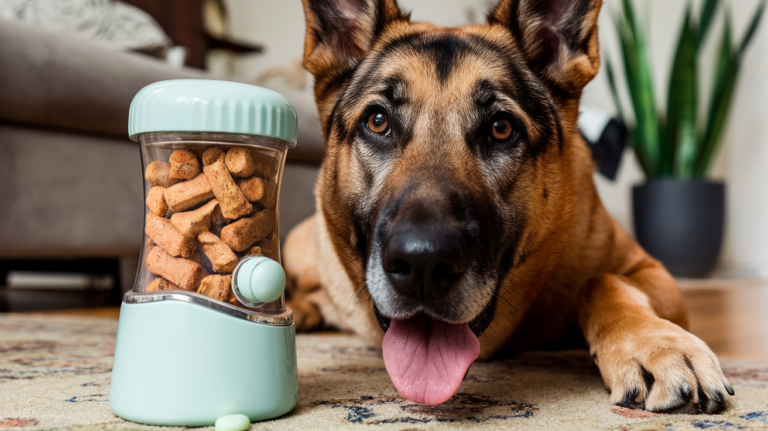
Food puzzle toys become your best friend. Kong toys stuffed with frozen peanut butter or kibble mixed with yogurt can occupy your dog for extended periods. Rotate several different puzzle feeders to maintain novelty and challenge.
Scent work taps directly into your German Shepherd’s natural abilities. Hide treats around the house before you leave. Your dog spends their alone time hunting rather than stressing. Start easy and gradually increase difficulty as they get better at the game.
Training shouldn’t stop once your dog knows “sit” and “stay.” Teach new tricks constantly: roll over, play dead, put toys in a basket, close doors, anything that engages their problem-solving abilities. Record training sessions on your phone and work on new skills for ten minutes multiple times per day.
Desensitization: Gradual Exposure Done Right
Systematic desensitization sounds technical, but it’s basically exposure therapy for dogs. You gradually increase the difficulty of separations in tiny increments, always staying below your dog’s panic threshold.
Begin by identifying your dog’s tolerance baseline. Can they handle you being in another room for five minutes? One minute? Thirty seconds? Start wherever they remain calm and build from there microscopic step by microscopic step.
The progression might look like this: same room but ignoring them, different room with door open, different room with door mostly closed, different room with door fully closed, outside the house for thirty seconds, outside for one minute, and so on. Each stage might take days or weeks.
Common Mistakes That Sabotage Progress
Pushing too fast is the number one killer of desensitization training. Your timeline doesn’t matter; your dog’s emotional state does. If they show anxiety at any stage, you’ve moved too quickly. Drop back to the previous level and rebuild confidence there.
Inconsistency destroys progress almost as effectively. You can’t practice gradual departures on weekdays then leave your German Shepherd alone for eight hours on Saturday. Find solutions: doggy daycare, pet sitters, bringing your dog along, or taking time off during the critical training period.
Punishing anxious behavior makes everything worse, not better. Your German Shepherd isn’t being destructive to spite you. They’re having a genuine panic attack. Responding with anger teaches them that being alone is even scarier because you’ll be mad when you return.
The Role of Professional Help and Medication
Sometimes love and training aren’t enough, and that’s okay. Severe separation anxiety might require professional intervention from a certified dog behaviorist or veterinary behaviorist. These experts can design customized protocols and identify factors you might miss.
Medication isn’t failure; it’s a tool. Anti-anxiety medications can lower your German Shepherd’s baseline stress enough that training becomes possible. Some dogs need medication temporarily during the training period. Others require longer-term management. Both scenarios are completely valid.
Supplements like CBD oil, calming pheromone diffusers, or anxiety wraps (like Thundershirts) work for some dogs. Results vary wildly between individuals, so approach these with appropriate skepticism while remaining open to trying them under veterinary guidance.
Environmental Modifications That Make a Difference
Your home environment dramatically impacts anxiety levels. Background noise can be surprisingly soothing. Leave a TV or radio playing with calm, steady audio. Many dogs respond well to classical music or specially designed “dog relaxation” playlists.
Visual access matters too. Some German Shepherds feel more secure when they can see outside; others become more anxious watching the world without you. Experiment with window access to determine what works for your individual dog.
Temperature control might seem trivial, but discomfort amplifies anxiety. Ensure your German Shepherd has access to both warm and cool spots. Fresh water should be available in multiple locations.
Your German Shepherd’s physical comfort directly affects their emotional state. An uncomfortable dog cannot be a calm dog, no matter how perfect your training.
Building Confidence Through Success Experiences
Confidence and anxiety exist on opposite ends of a spectrum. Every positive experience where your German Shepherd successfully handles your absence builds a deposit in their confidence bank account. Every panic episode makes a withdrawal.
Structure experiences to guarantee success, especially early in training. This means keeping initial separations shorter than your dog’s tolerance limit. If they can handle five minutes, leave for three. Build that success history aggressively.
Vary your departure patterns once basic confidence is established. Leave for two minutes, then twenty, then five, then thirty. This unpredictability teaches your dog that duration doesn’t matter because you always return eventually.
Celebrate calm behavior, but do so subtly. A calm treat delivery when you return (after your dog has settled) reinforces that relaxed departures earn rewards. Anxious departures earn nothing; calm departures earn good things.
The Long Game: Patience and Realistic Expectations
Separation anxiety doesn’t resolve overnight, and anyone promising a quick fix is selling something. Meaningful change typically requires weeks or months of consistent effort. Some dogs improve dramatically in a month; others need six months or longer.
Progress isn’t linear. You’ll have setbacks. Life will interfere with training plans. Your German Shepherd might regress after moving homes, schedule changes, or other stressors. This doesn’t mean failure; it means you need to temporarily return to earlier training stages.
The relationship you’re building through this process transcends the immediate problem. You’re teaching your German Shepherd emotional resilience, self-soothing skills, and confidence that extends far beyond separation situations. These lessons enhance their entire quality of life.
Your commitment to working through this challenge demonstrates the depth of your bond. German Shepherds are extraordinary dogs capable of extraordinary things, including learning to feel secure in your absence. With patience, consistency, and genuine understanding of their emotional needs, you can transform anxiety into confidence.