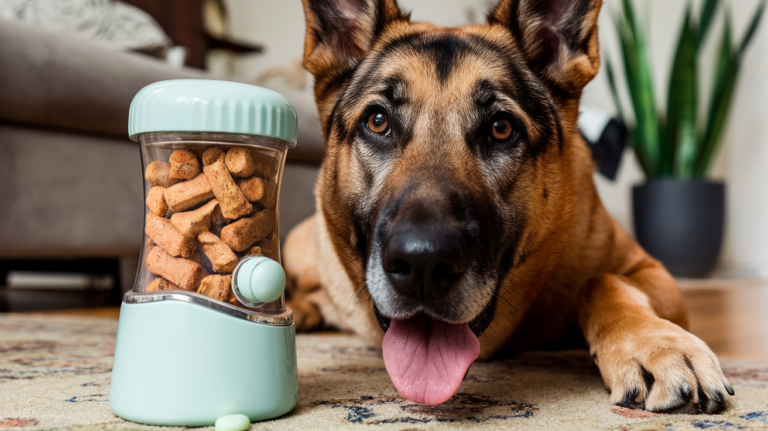
That bark has a reason. This explanation reveals what your German Shepherd is really reacting to every delivery day.
Your German Shepherd goes absolutely berserk every single day at 2:47 PM. Like clockwork. The mailman hasn’t even stepped onto your property yet, but somehow your furry alarm system already knows. You’ve tried treats, training, even those ultrasonic devices that promised miracle results. Nothing works.
But here’s the thing: your GSD isn’t being stubborn or badly behaved. They’re doing exactly what thousands of years of evolution designed them to do, and understanding the why behind this behavior might just change everything about how you approach it.
The Ancient Guardian Instinct
German Shepherds weren’t bred to be couch potatoes. These magnificent dogs were specifically developed in Germany during the late 1800s to guard and herd flocks, which means protection is literally encoded in their DNA. When your GSD barks at the mailman, they’re tapping into thousands of years of selective breeding that rewarded dogs for being vigilant, territorial, and protective.
Your dog doesn’t see a harmless postal worker delivering bills and Amazon packages. They see an unfamiliar person repeatedly approaching their territory with suspicious regularity. From your GSD’s perspective, they’re doing their job perfectly. After all, every single time they bark, the “intruder” leaves. In your dog’s mind, this is a 100% success rate at protecting the home.
The Reinforcement Cycle Nobody Talks About
Here’s where things get psychologically interesting. Every day, this scenario plays out:
- Mailman approaches
- Dog barks aggressively
- Mailman delivers mail and leaves
- Dog believes their barking made the threat disappear
This creates one of the most powerful reinforcement loops in animal behavior. Your German Shepherd genuinely believes their defensive display is what drives the mailman away. They don’t understand that the mail carrier was always going to leave after making the delivery. All they know is that they barked, and the “threat” retreated. Mission accomplished.
This cycle repeats daily, making the behavior stronger and more ingrained each time. It’s like if you pressed a button and money appeared. You’d press that button every single time, right? Your dog is doing the same thing, except their “button” is barking, and their “reward” is the perceived victory of defending their territory.
The Sensory Superpowers Working Against You
Let’s talk about what your German Shepherd actually experiences when the mail carrier approaches, because it’s wildly different from your experience. While you might hear the mail truck when it’s already on your street, your GSD probably detected it several blocks away.
| Sense | Human Capability | German Shepherd Capability | Impact on Mailman Situation |
|---|---|---|---|
| Hearing | Can hear up to 20 kHz | Can hear up to 65 kHz | Detects mail truck from blocks away |
| Smell | 5 million scent receptors | 225 million scent receptors | Identifies specific mail carrier’s scent |
| Pattern Recognition | Good | Exceptional | Memorizes exact delivery schedule and route |
Your dog isn’t just reacting to what they see in the moment. They’re processing an overwhelming amount of sensory information that you’re completely unaware of. The distinctive sound of that particular mail truck engine, the specific scent of the mail carrier (which clings to all those envelopes and packages), even the subtle changes in neighborhood sounds that signal the approach of mail time.
The Territory Factor
German Shepherds have what behaviorists call a “strong territorial drive.” Your house, your yard, even the sidewalk in front of your property? Your GSD has mentally marked all of it as their domain. Some dogs have a territory that extends to what they can see from windows. Others consider the entire block their responsibility.
The mailman commits the ultimate territorial offense: they enter this sacred space repeatedly, following the same pattern, carrying unfamiliar scents from hundreds of other homes. To your German Shepherd, this isn’t just a minor annoyance. It’s a deliberate, daily invasion that must be addressed with maximum vocal force.
The territorial instinct isn’t something you can simply train away. It’s as fundamental to your GSD as breathing.
The Uniform Effect
Here’s something most people never consider: that uniform matters. A lot. Dogs are incredibly visual when it comes to pattern recognition, and the mail carrier’s consistent appearance creates a powerful association. Your GSD isn’t barking at Bob the person. They’re barking at Bob the Uniformed Mail Carrier Who Invades Territory Daily.
This is why many German Shepherds are perfectly friendly with the same person when they encounter them at the park or in civilian clothes. Strip away the uniform and the mail bag, and suddenly the “threat” disappears. The uniform has become a trigger all on its own, a visual cue that signals “threat approaching” to your dog’s brain.
The Stranger Danger Element
Unlike some breeds that assume every human is a potential friend, German Shepherds tend to be naturally aloof with strangers. This wariness isn’t unfriendly; it’s cautious. Your GSD needs time to assess whether someone is safe or not. The problem? The mailman never sticks around long enough for your dog to complete this assessment.
Every interaction is brief, business-like, and lacks the social elements that would allow your German Shepherd to relax. There’s no friendly greeting, no extended conversation, no opportunity for your dog to sniff and gather information. Just approach, deliver, leave. From your dog’s perspective, this is exactly how a threat would behave: quick, efficient, and avoiding direct engagement.
The Sound and Movement Triggers
Movement patterns matter enormously to dogs, and mail carriers move in ways that can trigger predatory or defensive instincts. Think about it: the mailman walks up your driveway with purpose, reaches toward your house (to put mail in the box), then quickly retreats. This advance and retreat pattern can trigger your GSD’s instinct to chase or confront.
The sounds matter too. The creak of the mail truck door, the shuffle of packages, the clang of the mailbox lid. These aren’t random noises to your dog. They’re part of an acoustic pattern that signals the arrival of the daily “intruder.” Your German Shepherd has memorized this entire symphony of sounds and reacts before the mailman is even visible.
Your dog isn’t overreacting. They’re reacting perfectly to what they perceive as a genuine threat, using the exact behaviors that evolution designed to keep their pack safe.
The Pack Protection Mentality
Here’s something beautiful and frustrating about German Shepherds: they take their role as family protector seriously. You are their pack. Your home is the den. Every family member, human or otherwise, falls under their protective umbrella. When the mailman approaches, your GSD isn’t just defending property. They’re defending their loved ones from what they perceive as potential danger.
This protective instinct is strongest when pack members (that’s you) are home. Notice how the barking might be even more intense when you’re present? Your dog is literally saying, “Don’t worry, I’ve got this threat handled!” They’re trying to protect you, even though you don’t need or want this particular protection.
The Frustration Component
There’s another layer here that people often miss: frustration. Your German Shepherd can see and smell this person, knows exactly when they’re coming, but cannot directly interact with or investigate them properly. This creates what animal behaviorists call “barrier frustration.”
Windows and doors prevent your dog from doing what their instincts scream at them to do: approach, assess, and either accept or reject the stranger. This inability to follow through on their instincts amps up the anxiety and excitement, resulting in louder, more frantic barking. Your dog is essentially stuck in a loop of “I need to deal with this threat but I can’t get to it!”
Understanding that your GSD’s barking comes from a place of protection, not aggression, changes everything about how you respond to the behavior.
The Predictability Problem
Ironically, one thing that makes the mailman such a consistent target is their predictability. Your German Shepherd loves routine and pattern recognition. They know exactly when mail delivery happens, which route the carrier takes, and precisely how long the interaction lasts. This predictability doesn’t reduce the behavior; it amplifies it.
Your dog has time to anticipate, prepare, and work themselves into an alert state before the mailman even arrives. By the time the actual delivery happens, your GSD has been mentally rehearsing their defensive display for minutes or even hours. The adrenaline is already pumping, the focus is locked on, and the barking is inevitable.
Why Your Training Hasn’t Worked
If you’ve tried training techniques without success, you’re not alone. Here’s the uncomfortable truth: most basic training approaches fail with this specific scenario because they don’t address the root cause. Teaching “quiet” or “settle” works great for random barking, but when your German Shepherd believes they’re defending against a genuine threat? Those commands get overridden by much more powerful instincts.
The behavior is self-rewarding (the mailman always leaves), it’s rooted in deep genetic programming (guarding instinct), and it’s reinforced daily through repetition. That’s a tough combination to overcome with simple obedience commands. You’re essentially asking your dog to ignore every fiber of their being that’s screaming “PROTECT THE PACK!”
Most training fails because it treats the symptom (barking) rather than addressing the underlying drives (territory, protection, frustration).
Successful modification of this behavior requires understanding all these components and working with your dog’s instincts rather than against them. But that’s a topic for another discussion. For now, at least you understand why your German Shepherd has declared war on your postal carrier. Spoiler: it’s not personal, it’s just biology.