Structure keeps Schnauzers happy. Discover the perfect routine that balances play, training, rest, and bonding every day.
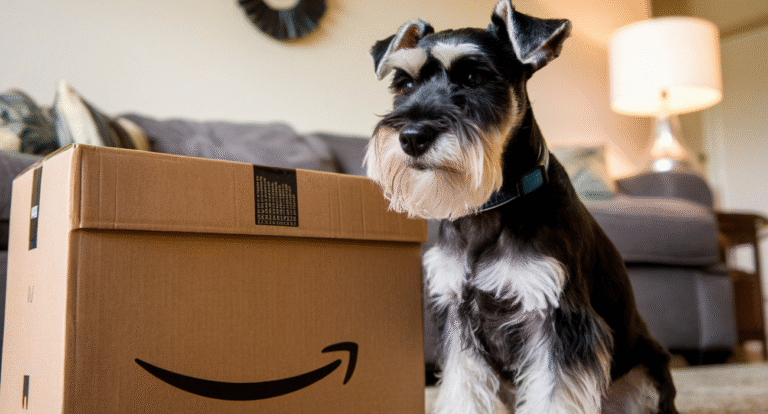
Ever notice how your Schnauzer seems to know exactly when dinner should happen? Like down to the minute? That’s not coincidence. These wonderfully stubborn pups have internal clocks that would make a Swiss watchmaker jealous.
Creating the ideal daily routine for your Schnauzer isn’t about being rigid or boring. It’s about respecting their need for predictability while keeping things interesting enough to challenge that famous Schnauzer brain. Get it right, and you’ll have a confident, happy dog who’s an absolute dream to live with. Get it wrong, and well… let’s just say barking and mischief await.
Morning: Starting Strong
The morning sets the tone for your entire day, and your Schnauzer knows it. These dogs wake up ready to go, and making them wait too long leads to pent-up energy that’ll express itself in creative (read: destructive) ways.
First thing first: the morning potty break. Your Schnauzer’s bladder has been holding it all night, so get outside within 15 minutes of waking up. This isn’t the time for a full walk; just a quick bathroom opportunity. Miniature Schnauzers especially need this prompt morning relief since their smaller size means smaller bladders.
Breakfast should happen at the same time every single day. Schnauzers are prone to becoming insistent about mealtimes if you’re not consistent. Feed adult Schnauzers twice daily, splitting their daily portion into morning and evening meals. Puppies need three to four smaller meals spread throughout the day.
After breakfast, wait at least 30 minutes before any vigorous activity. Schnauzers, particularly the Standard and Giant varieties, can be susceptible to bloat if they exercise immediately after eating. Use this downtime for some low-key bonding or basic training refreshers.
The Morning Walk: Physical and Mental Exercise
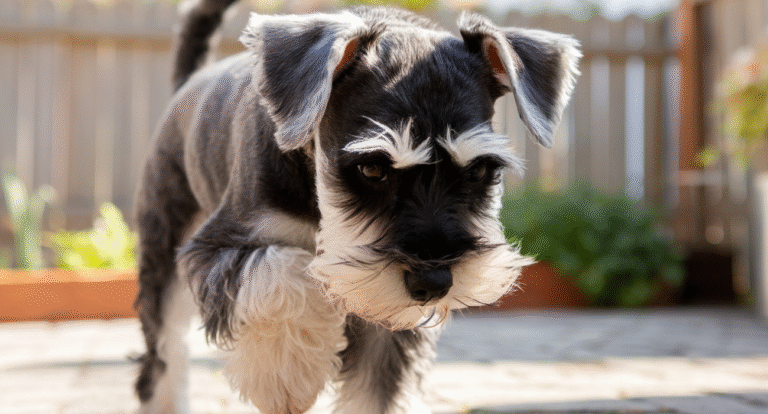
Around 7:00 or 8:00 AM (depending on your schedule) comes the main event: the morning walk. This is non-negotiable. Schnauzers were bred as working farm dogs, and that heritage demands daily exercise.
But here’s what makes Schnauzers different from your average energetic breed: they need mental stimulation just as much as physical exercise. A simple neighborhood loop won’t cut it. Change up your routes regularly. Let them sniff that suspicious mailbox for an extra minute. Play “find it” games with treats hidden along the path.
These dogs are thinkers. Their terrier heritage means they were bred to problem solve, hunt, and make independent decisions. A bored Schnauzer is a problem waiting to happen, usually involving your favorite shoes or that couch cushion you were fond of.
Your Schnauzer’s brain needs a workout just as much as their body. Mental exhaustion is the secret weapon for a calm, content companion.
Mid-Morning Through Afternoon: Quiet Time and Activities
After that morning walk, your Schnauzer should be ready to settle. This is prime time for you to work, run errands, or handle daily responsibilities while your pup relaxes. But “relaxing” doesn’t mean leaving them with nothing to do for six hours straight.
Enrichment activities are crucial. Rotate puzzle toys that dispense treats. Give them a stuffed Kong to work on. Hide small treats around the house for them to discover. Schnauzers have strong hunting instincts; satisfying this need through games prevents them from creating their own entertainment (like systematically dismantling your couch).
If you work from home, involve your Schnauzer in your routine. Let them hang out in your office space. Give them a specific mat or bed where they learn to settle while you’re busy. Training a solid “place” command pays massive dividends for a calm household.
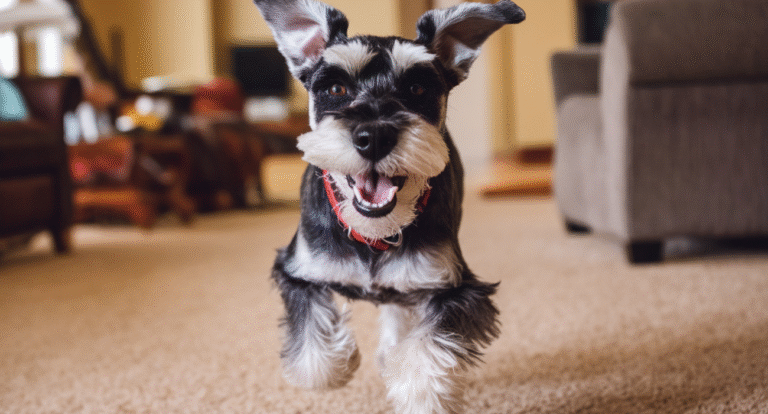
Mid-afternoon represents perfect timing for a second, shorter outing. This doesn’t need to be a full walk; 10 to 15 minutes of fetch in the yard or a quick neighborhood stroll keeps energy levels manageable. Standard and Giant Schnauzers particularly benefit from breaking exercise into multiple sessions rather than one marathon event.
Training Sessions: Short, Sweet, and Consistent
Schnauzers are whip smart, which is both delightful and challenging. They learn quickly but also get bored easily. Daily training sessions should be part of your routine, but keep them brief and rewarding.
Two to three training periods of 5 to 10 minutes each work far better than one long 30 minute session. Morning and evening are ideal times, preferably before meals when your Schnauzer is motivated by food rewards.
What should you practice? Everything from basic obedience to fun tricks. Schnauzers excel at:
- Advanced commands (heel, stay, wait)
- Trick training (spin, play dead, speak/quiet on command)
- Scent work and nose games
- Agility-style activities
The “speak” and “quiet” commands deserve special mention. Schnauzers are vocal dogs with strong territorial instincts. Teaching controlled barking prevents your intelligent pup from becoming the neighborhood nuisance who alerts you to every squirrel, delivery person, and leaf that dares to move.
Consistency trumps perfection. Training at the same times each day, even if the sessions are imperfect, builds better habits than sporadic marathon training sessions.
Evening: Winding Down the Right Way
As dinner time approaches, your Schnauzer’s internal alarm clock activates. These dogs take their meals seriously, so stick to your schedule. Feed dinner at the same time daily, typically between 5:00 and 6:00 PM for most households.
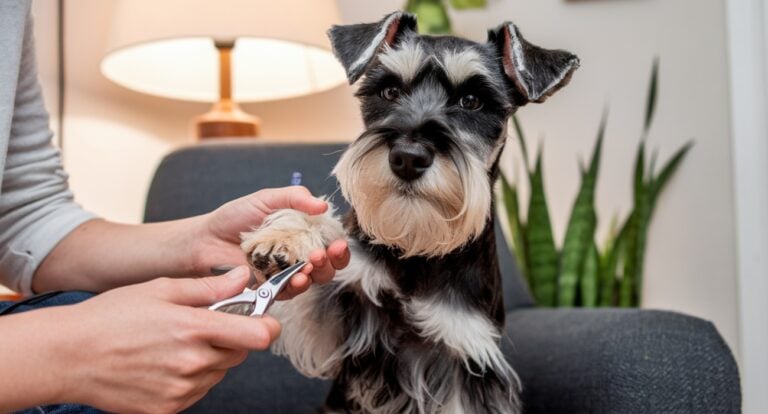
Post-dinner follows the same rule as breakfast: wait 30 minutes before vigorous play. This is perfect timing for grooming activities. Schnauzers require regular maintenance (their distinctive beards don’t stay magnificent by themselves), and establishing evening grooming as routine prevents battles later.
Brush their coat for 10 to 15 minutes. Check and clean their beard, removing trapped food particles. Wipe around their eyes. Check their ears. These small daily tasks prevent bigger grooming nightmares and help your Schnauzer accept handling calmly.
The evening walk happens after digestion settles, typically around 7:00 or 8:00 PM. This can be shorter than the morning expedition; 20 to 30 minutes gives your Schnauzer a chance to eliminate before bed and burn off any remaining energy. A tired Schnauzer is a sleeping Schnauzer, and everyone benefits from good sleep.
Nighttime: Setting Up for Success
The hour before bed should be progressively calmer. Avoid riling up your Schnauzer with intense play or training right before sleep time. Instead, this is bonding time: calm petting, gentle brushing, or just hanging out together while you watch TV.
Schnauzers often suffer from separation anxiety if not properly conditioned. Having a consistent bedtime routine helps your pup feel secure. Whether they sleep in your room, a crate, or their own bed elsewhere, the location and process should remain constant.
Final potty break happens right before you head to bed. Take your Schnauzer outside one last time, keeping it brief and businesslike. Then it’s off to sleep, ready to do it all again tomorrow.
The bedtime routine signals safety and security. Schnauzers who know what to expect sleep better and display less anxiety overall.
Adaptations for Puppies and Seniors
Puppies need more frequent bathroom breaks (every 2 to 3 hours initially), additional meals, and shorter but more numerous play sessions. Their attention spans are microscopic, and their energy comes in wild bursts followed by sudden naps. Maintain the basic structure but with more frequent intervals.
Senior Schnauzers require gentler handling. Walks might shorten, arthritis makes jumping difficult, and they need more rest. But don’t abandon the routine! Older dogs benefit even more from predictability. Adjust intensity while maintaining the familiar schedule that brings them comfort.
Flexibility Within Structure
Here’s the paradox: Schnauzers need routine, but they also need to handle changes gracefully. Build in small variations to prevent your dog from becoming so rigid they can’t cope with life’s inevitable disruptions.
Occasionally switch walking routes. Sometimes train before breakfast instead of after. Move grooming to morning on weekends. These minor changes, within an overall consistent framework, create a confident dog who trusts their routine without becoming a neurotic mess when something shifts.
The perfect daily routine for your Schnauzer balances their need for structure with sufficient mental stimulation and physical exercise. Get these elements right, and you’ll have a happy, healthy, magnificently bearded companion who’s an absolute joy to live with. Your Schnauzer will thank you with unwavering loyalty, minimal mischief, and maybe, just maybe, slightly fewer judgmental looks when you’re running five minutes late with dinner.