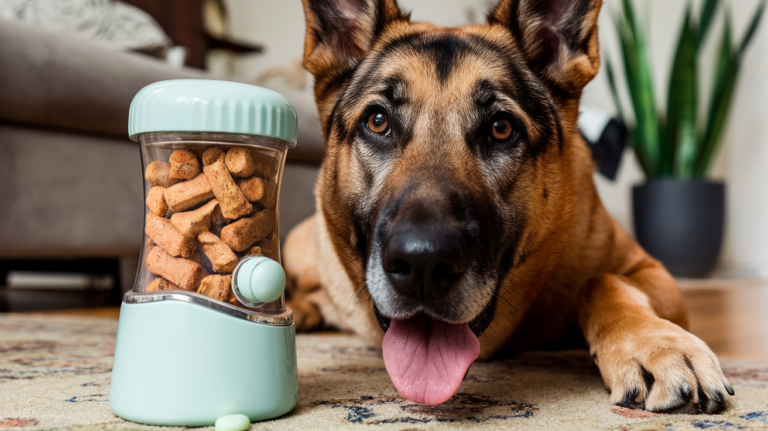
Miss this daily habit and problems add up fast. Learn the one small thing that makes a massive difference in your dog’s behavior.
You’ve read the breed guides, joined the Facebook groups, and maybe even consulted a trainer. Everyone has opinions about German Shepherds: exercise requirements, training methods, socialization windows. But here’s what the experts quietly agree on behind closed doors: there’s one non-negotiable daily practice that trumps everything else.
Miss this, and you’ll spend years trying to “fix” problems that never needed to exist. Get it right, and you’ll unlock the full potential of one of the world’s most capable breeds. Your neighbors will ask what your secret is. Your vet will compliment your dog’s demeanor.
The Non-Negotiable Daily Essential: Mental Stimulation
Here’s the truth that will transform your relationship with your German Shepherd: structured mental engagement is more important than physical exercise alone. Yes, you read that correctly. While your GSD absolutely needs physical activity (and plenty of it), the real game changer is challenging that brilliant mind every single day.
German Shepherds rank among the top three most intelligent dog breeds in the world. That massive brain needs a job. Without it, all that cognitive horsepower gets redirected into activities you definitely won’t appreciate: digging up your garden, redesigning your furniture through aggressive chewing, or developing anxiety-based behaviors that can take months to resolve.
Think about it this way: if you had the mental capacity to solve complex problems but spent your entire day staring at a wall, you’d go absolutely bonkers. Your German Shepherd feels exactly the same way.
Why Physical Exercise Alone Fails Spectacularly
Most German Shepherd owners focus exclusively on physical tiredness. They throw balls for an hour, go on long runs, or visit the dog park religiously. Then they’re shocked when their “exhausted” dog still tears through the house like a furry tornado.
Physical fatigue without mental satisfaction creates a fit, frustrated dog with even more stamina for destructive behaviors.
A tired body doesn’t equal a calm mind. In fact, building your GSD’s physical endurance without engaging their intellect often backfires spectacularly. You end up with an athlete who can go for hours and still has a brain buzzing with unused potential.
The Science Behind the Shepherd Brain
German Shepherds were selectively bred for working intelligence, which means problem solving, learning complex commands, and making independent decisions. According to canine intelligence research, GSDs can:
| Cognitive Ability | German Shepherd Capability |
|---|---|
| New command comprehension | Fewer than 5 repetitions |
| Command obedience rate | 95% or higher on first command |
| Problem-solving complexity | Can understand up to 250 words and gestures |
| Working memory | Remembers learned behaviors for years |
That’s not just impressive; it’s a responsibility. When you bring a German Shepherd into your life, you’re committing to nurturing one of the canine world’s most sophisticated minds.
What Mental Stimulation Actually Looks Like
Stop thinking of “mental stimulation” as some abstract concept. It’s concrete, achievable, and honestly pretty fun. The goal is creating situations where your German Shepherd must think, choose, and problem solve.
Training Sessions: The Foundation
Daily training isn’t optional; it’s essential. Even 15 minutes of focused training provides more mental exhaustion than an hour-long walk. But here’s the key: you need to keep evolving what you’re teaching.
Your GSD learned “sit” in three repetitions? Fantastic. Now they’re bored with it. Move on to:
- Complex command chains (sit, stay, come, down, executed in sequence)
- Distance commands where you’re across the room or yard
- Distraction training in progressively challenging environments
- New tricks that require multiple steps
- Scent work and object discrimination
The beauty of German Shepherds is their appetite for learning never diminishes. They want homework. They crave the challenge of mastering something new.
Puzzle Toys and Food Dispensing Games
Never, ever feed your German Shepherd from a regular bowl if you can avoid it. This is wasted opportunity on an epic scale. Every meal can become a 20-minute mental workout using:
Interactive feeders that require manipulation and problem solving. Watching your GSD figure out how to access their kibble engages multiple brain regions simultaneously. They’re using their nose, paws, mouth, and spatial reasoning all at once.
Snuffle mats replicate foraging behavior, tapping into instincts that have been honed over millennia. Your dog isn’t just eating; they’re hunting their food through texture and scent.
Frozen puzzle treats provide extended engagement, especially helpful for shepherds with separation anxiety or those who need to decompress after stimulating activities.
The Role of Job-Oriented Activities
Remember that Formula 1 race car analogy? German Shepherds need to feel useful. They’re happiest when they believe they’re contributing something meaningful to their pack (that’s you and your family).
A German Shepherd with a purpose is a German Shepherd at peace.
Create Meaningful “Work”
This doesn’t mean you need sheep to herd or property to guard (though if you have those, fantastic!). Modern jobs for GSDs include:
Fetch with intention: Not mindless ball chasing, but retrieving specific named items. Teach your dog the names of their toys, then ask them to bring you the “blue ball” or “rope toy.”
Household helper tasks: German Shepherds can learn to close doors, bring you items, carry their own leash, or even help sort laundry (seriously). These aren’t party tricks; they’re genuine contributions that satisfy their need to work.
Structured patrol walks: Instead of random wandering, teach your GSD to walk a specific route around your property at the same time daily. They’ll take this responsibility seriously, checking for changes and “abnormalities.”
Socialization as Mental Exercise
Here’s something many owners miss: proper socialization is intense mental work. Navigating social situations, reading other dogs’ body language, and maintaining self-control in exciting environments requires serious cognitive effort.
Strategic Social Engagement
Not all socialization is created equal. A chaotic dog park where your GSD gets overwhelmed or practices rude behaviors? That’s counterproductive. Instead, aim for:
| Type of Social Experience | Mental Benefits | Frequency |
|---|---|---|
| Controlled greetings with known dogs | Impulse control, social reading | 3-4 times weekly |
| Training classes with other dogs present | Focus amid distractions, delayed gratification | 1-2 times weekly |
| Novel environments with people | Confidence building, adaptability | Daily (can be brief) |
| Structured pack walks | Leadership response, group coordination | 1-2 times weekly |
Each of these situations forces your German Shepherd to think, assess, and respond appropriately. That’s exhausting in the best possible way.
Reading Your Dog’s Mental State
You’ll know you’re hitting the mark when your German Shepherd displays what trainers call “calm alertness.” This is distinct from physical tiredness. A mentally satisfied GSD will:
- Settle quickly after activities without restless behavior
- Show interest in their environment without hypervigilance
- Respond promptly to commands even when relaxed
- Engage in independent, appropriate activities (chewing their toys, watching the yard calmly)
- Sleep deeply rather than napping fitfully
Conversely, a mentally under-stimulated shepherd exhibits anxiety signals: pacing, whining without obvious cause, destructive chewing, excessive barking, or attention-seeking behaviors that feel desperate rather than playful.
The 15-Minute Minimum Rule
If you take nothing else from this article, remember this: fifteen focused minutes of mental engagement daily is non-negotiable. Not fifteen minutes of your dog being vaguely present while you do something else, but fifteen minutes of dedicated, progressive, challenging mental work.
Can’t find fifteen minutes? Then honestly, you’re not ready for a German Shepherd. These dogs were bred to work eight-hour days making complex decisions. Fifteen minutes is already a massive compromise with modern life; it’s the absolute floor, not the goal.
Sample 15-Minute Sessions
Morning session: Five new tricks or command refinements, five minutes of scent work (hide treats progressively harder), five minutes of obedience with distractions.
Evening session: Ten minutes of puzzle feeding, five minutes of household “job” practice.
Variation session: Fifteen minutes exploring a completely new environment, requiring your dog to process novel sights, smells, and sounds while maintaining focus on you.
The shepherd who works their mind daily is the shepherd who sleeps peacefully at night.
Beyond the Minimum: When to Level Up
Most German Shepherds need significantly more than fifteen minutes, especially during their adolescent phase (roughly six months to three years old). During this period, you might need:
- Two to three separate mental stimulation sessions daily
- Progressive difficulty increases weekly
- Integration of physical and mental challenges (agility, nose work, advanced obedience)
The beautiful part? As your GSD’s mental exercise increases, problematic behaviors decrease proportionally. It’s not magic; it’s meeting your dog’s fundamental needs.
Common Mistakes That Sabotage Mental Stimulation
Repetitive routines: Doing the same walk, same park, same training sequence daily. Your GSD memorizes it and disengages mentally. Variety isn’t just spice; it’s necessity.
Too much freedom too soon: An under-trained German Shepherd with free run of your house and yard isn’t enjoying freedom. They’re experiencing purposeless existence, which creates anxiety.
Confusing entertainment with engagement: Leaving your dog with a yard full of toys isn’t mental stimulation. That’s like giving a child a roomful of books and expecting them to educate themselves.
The difference between entertainment and engagement? Engagement requires your participation, progression, and challenge calibration.
Making It Sustainable
Here’s the reality check: if mental stimulation feels like a tedious chore, you won’t maintain it. The secret is integrating it seamlessly into your daily life.
Waiting for coffee to brew? Three-minute training session. Commercial break during your show? Hide-and-seek with treats. Walking to get the mail? Practice heel position and door manners. Cooking dinner? Your GSD can practice “place” command with extended duration.
The most successful German Shepherd owners don’t carve out huge blocks of time; they weave mental challenges throughout their entire day until it becomes automatic.
The Transformation Timeline
Week one: You’ll notice your GSD focuses on you more attentively, anticipating the next challenge.
Week three: Destructive behaviors diminish as their brain gets proper outlet. That chewed chair leg becomes a distant memory.
Week eight: Your neighbors comment on how “calm” and “well-behaved” your dog seems. You’re not doing anything magical; you’re just meeting their needs.
Six months: You have a genuinely balanced German Shepherd who’s both a reliable companion and an impressive working partner. This is what the breed was meant to be.
Your German Shepherd is waiting. That brilliant mind is ready. The question is: are you ready to provide what they truly need? Because once you commit to daily mental stimulation, you’ll wonder how you ever tried to raise this incredible breed any other way.