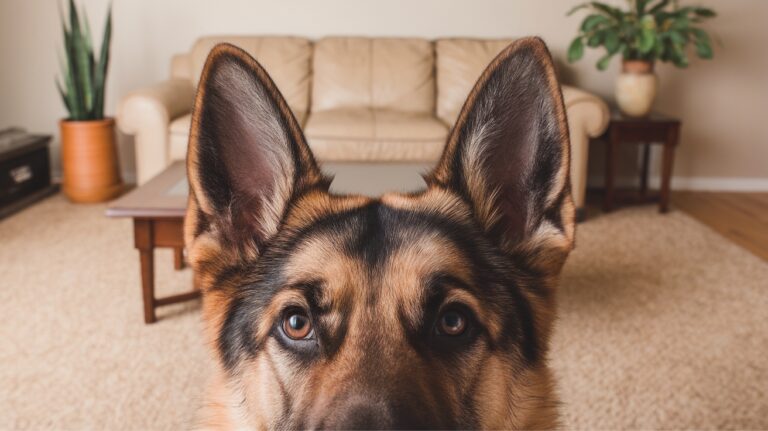
Nail trimming does not have to be chaos. Use these simple steps to keep your shepherd calm, confident, and drama free during every trim.
Your German Shepherd can clear a fence in a single bound, herd imaginary sheep around the backyard, and intimidate any package delivery person within a three-block radius. But pull out the nail clippers? Suddenly, this fearless working dog turns into a dramatic floor puddle.
Nail trimming doesn’t have to be a wrestling match. With the right approach, the right tools, and a little patience, you can make this a calm (maybe even pleasant) part of your routine.
Why Nail Care Actually Matters
Most people think of nail trimming as a cosmetic thing. It’s really not.
When a German Shepherd’s nails grow too long, they make contact with the ground in a way that forces the foot to splay outward. Over time, this puts stress on the joints, alters posture, and can even cause pain that travels all the way up into the shoulders and spine.
Long nails don’t just look bad. They quietly change the way your dog stands, walks, and feels every single day.
German Shepherds are especially prone to this because of their size and their naturally athletic build. A dog that’s constantly compensating for uncomfortable feet is a dog that may develop chronic issues down the road.
It’s worth taking seriously.
Understanding Why Your Dog Freaks Out
Before you can fix the problem, it helps to understand where the fear comes from. For most dogs, nail trimming anxiety isn’t random.
It usually traces back to one of three things: a painful experience with the quick being cut, a general sensitivity around their paws, or simply never being properly introduced to the process as a puppy.
German Shepherds, in particular, are highly intelligent and deeply sensitive dogs. They remember things. If one bad trim happened six months ago, your dog may still be carrying that memory into every session since.
The Quick: Your New Favorite Anatomy Term
The quick is the living part of the nail. It contains blood vessels and nerves, and cutting into it hurts, a lot, and bleeds dramatically.
In dogs with light-colored nails, you can often see the quick as a pinkish area inside the nail. In German Shepherds, who frequently have dark or black nails, it’s basically invisible, which is exactly why so many owners are nervous.
The key is to take small, incremental clips rather than one confident cut. You’re looking for a cross-section that shows a small dark dot in the center, which signals you’re getting close and should stop.
What Happens When You Avoid It
Avoidance feels like the safe option, but it creates a cycle that gets harder to break. The nails get longer, the quick grows longer with them, and now you have even less room to trim safely.
The longer you wait, the more complicated the fix becomes.
Gathering the Right Tools
You don’t need a lot, but what you do have should be good quality. Cheap clippers crush the nail instead of cutting cleanly, which adds pressure and discomfort.
Clippers Worth Buying
There are two main styles: guillotine clippers and scissor-style clippers. For a large breed like a German Shepherd, most groomers recommend a heavy-duty scissor style because it gives you more control and handles thick nails more cleanly.
Look for a pair with a safety guard if you’re a beginner. It limits how much nail you can take at once, which is honestly a feature, not a limitation.
Other Supplies to Have Nearby
Styptic powder is non-negotiable. If you nick the quick, this stops bleeding almost instantly.
A high-value treat, something your dog goes absolutely wild for, should be reserved only for nail trimming sessions. Think small pieces of chicken, cheese, or whatever makes your dog’s eyes light up like it’s their birthday.
The treat you use for nail trimming should be so good that your dog starts to think clippers are actually a pretty exciting accessory.
A lick mat spread with peanut butter or wet food is also a game changer. It keeps your dog’s brain occupied and their mouth busy while you work.
The Desensitization Approach (Yes, It’s Worth It)
If your dog currently panics at the sight of clippers, jumping straight into a full trim is going to backfire. Desensitization is the process of slowly introducing the tools and sensations over time until they lose their power.
This isn’t about being soft. It’s about being smart.
Step One: Introduce the Tools Without Using Them
Leave the clippers out on the floor for a few days. Let your dog sniff them, ignore them, walk past them.
When your dog approaches the clippers calmly, reward them. You’re building a new emotional association before the clippers ever touch a nail.
Step Two: Touch the Paws First
German Shepherds can be paw-sensitive, so spending time just handling the feet is worthwhile on its own. Gently hold each paw, press lightly on the toes, and reward generously.
Do this daily for a week if needed. There’s no timeline you have to meet here.
Step Three: Clip One Nail
Just one. Then stop, reward hugely, and call it a win.
This might feel absurd, but you’re teaching your dog that the clip sound is followed by something wonderful. One nail a day adds up faster than you’d think, and you’re building trust the whole time.
The Actual Trimming Process
Once your dog is comfortable enough to proceed, here’s how to approach the real thing. Good positioning matters more than most people realize.
How to Position a German Shepherd
Smaller dogs can often be cradled, but a German Shepherd needs a different approach. Many owners find it easiest to have the dog lying on their side on a non-slip surface.
Kneeling beside them while they’re in a calm down position also works well. The goal is to minimize how much the dog can scramble without you having to physically restrain them, which only increases anxiety.
The Actual Cut
Hold the paw firmly but gently. Clip small slivers of nail at a slight angle, following the natural curve.
After each snip, check the cross section of the nail. When you see a small dark circle starting to appear in the center, you’ve reached the safe limit. Stop there.
Reward between each nail if your dog needs it. There are no rules against taking a treat break after every single toe.
Don’t Forget the Dewclaws
German Shepherds typically have dewclaws on their front legs, and sometimes the back ones too. These don’t make ground contact, so they never wear down naturally.
Dewclaws can actually curl back and grow into the leg if left untrimmed, which is as unpleasant as it sounds. Check them every time and don’t skip them.
Keeping Up a Regular Schedule
Once you’ve done the hard work of getting your dog comfortable, consistency is what keeps it that way.
A nail trimming routine that happens every three to four weeks is infinitely easier than an emergency session every few months when things have gotten out of hand.
Most German Shepherds need a trim every three to four weeks, though active dogs who spend a lot of time on pavement may naturally wear their nails down a bit and need less frequent sessions.
Signs It’s Time for a Trim
You’ll hear the nails clicking on hard floors. That sound is your reminder.
You can also do a quick visual check: if the nail extends past the pad when the dog is standing, it’s time. Don’t wait for the click if you can prevent it.
Making It Part of Your Routine
Pair nail trimming with something your dog already enjoys. Do it after a long walk when they’re physically tired and mentally calmer.
Keep sessions short, keep rewards high, and keep your own energy relaxed. Dogs read their owners constantly, and if you walk in tense and braced for battle, your dog will pick that up before you’ve even reached for the clippers.