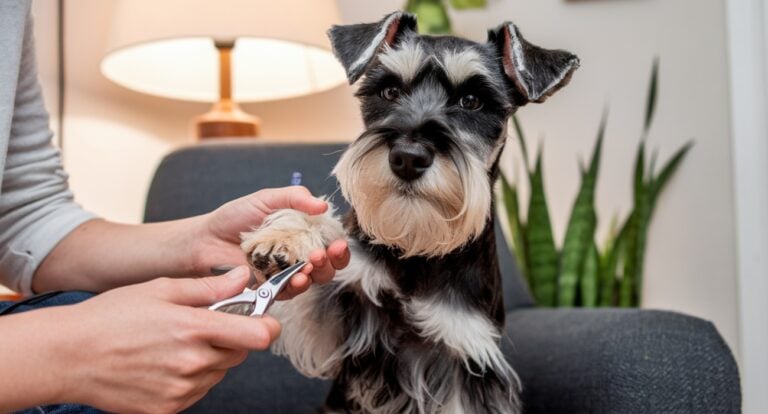
Leaving a Schnauzer alone is tough. Here’s how to make time apart easier for both you and your pup.
You’re already late, your Schnauzer is doing their signature “please don’t leave me” dance, and the guilt is eating you alive. Sound familiar? Welcome to the club. Every Schnauzer owner has been there, hand hovering over the doorknob, wondering if their dog will ever forgive them.
But separation doesn’t have to be traumatic for either of you. Schnauzers are intelligent, adaptable dogs who can learn to enjoy their alone time. Yes, really. The secret isn’t about making your exits less frequent (because, life). It’s about making those hours apart more comfortable for your whiskered companion.
Your Schnauzer’s Separation Reality
First things first: your Schnauzer isn’t actually dying when you leave. They just have a flair for the dramatic. These dogs are descendants of tough German ratters who worked independently on farms, so they’ve got the solo stamina in their DNA. The problem? They’ve also bonded with you like you’re the most important human who ever existed.
Schnauzers can typically handle 4 to 6 hours alone comfortably, with some well-adjusted adults managing up to 8 hours. Puppies and senior dogs need more frequent breaks, obviously. But the key word here is “well-adjusted,” which brings us to the real work: training your Schnauzer to see alone time as normal, not abandonment.
The guilt you feel? That’s real, but it’s not a reliable indicator of your dog’s actual wellbeing. Your Schnauzer reads your anxiety like a book, and if you act like leaving is a tragedy, they’ll believe you. The irony is delicious: your guilt might be creating the exact problem you’re worried about.
The Pre-Departure Setup That Changes Everything
Want to know the biggest mistake Schnauzer owners make? Treating their dog like a delicate flower instead of the sturdy terrier they are. Your preparation routine matters more than you think.
Physical Exercise Is Non-Negotiable
A tired Schnauzer is a happy Schnauzer. Before you leave, take your dog for a solid 20 to 30 minute walk or play session. We’re talking real exercise here, not just a quick lap around the block where they mostly sniff things. Get their heart rate up. Engage their prey drive with some fetch or tug of war.
When your Schnauzer is physically spent, they’ll naturally want to sleep while you’re gone. Sleep equals no destruction, no excessive barking, and no stress. It’s basically a cheat code.
Mental Stimulation Matters Just As Much
Physical tiredness is great, but mental exhaustion is the secret weapon. Schnauzers are wickedly smart, which means a bored Schnauzer is a destructive Schnauzer. Fifteen minutes of training before you leave can work wonders. Run through their tricks, practice new commands, or do some scent work games.
Here’s a comparison of activities and their effectiveness:
| Activity Type | Physical Benefit | Mental Benefit | Time Required | Best For |
|---|---|---|---|---|
| Long walk | High | Medium | 30-45 min | Daily routine |
| Fetch/Running | Very High | Low | 20-30 min | High energy days |
| Training session | Low | Very High | 15-20 min | Pre-departure prep |
| Puzzle toys | None | High | Variable | During alone time |
| Sniff walks | Medium | Very High | 20-30 min | Calming before exits |
Creating The Perfect Alone Time Environment
Your Schnauzer’s environment while you’re gone is crucial. This isn’t about spoiling them; it’s about setting them up for success.
The Safe Space Strategy
Designate a specific area where your Schnauzer stays while you’re gone. For some dogs, this might be a crate (if they’re crate trained and view it positively). For others, it could be a dog-proofed room or a gated section of your home. The key is consistency and safety.
Your Schnauzer needs boundaries, not the run of the house. Freedom without structure creates anxiety, not comfort.
Make this space boring in the best way possible. Remove anything they could destroy or that could hurt them. No shoes, no pillows, no random cables. Add what they should have: a comfortable bed, access to water, and appropriate toys.
The Toy Rotation Game
Don’t leave out all your Schnauzer’s toys all the time. That’s amateur hour. Instead, rotate toys and save the really good stuff for alone time only. Kong toys stuffed with frozen peanut butter or kibble can keep a Schnauzer occupied for 30 minutes or more. Puzzle feeders turn mealtime into an engaging activity.
The goal is for your Schnauzer to think, “Oh, you’re leaving? Cool, that means I get my special treat ball.” You’re literally conditioning them to associate your departure with good things. Classical conditioning for the win.
The Departure And Arrival Protocol
Here’s where most people completely sabotage themselves. Your goodbye and hello routines are programming your Schnauzer’s emotional response to your exits.
Boring Goodbyes Save Lives (Okay, Furniture)
Stop with the dramatic farewells. Seriously. No baby talk, no lengthy pets, no “mommy loves you so much and will miss you.” That emotional buildup tells your Schnauzer that leaving is a big deal, which creates anxiety.
Instead, be boring. Grab your keys, put on your shoes, and leave. Maybe toss a treat or puzzle toy as you go, but keep it casual. You’re not abandoning them; you’re just doing a normal thing that normal humans do. The more mundane you make it, the less stressed they’ll be.
The best goodbye is barely a goodbye at all. Calm exits create calm dogs.
The Calm Return
Same principle applies when you come home. Yes, your Schnauzer will be excited. Let them be excited for a minute, but don’t match their energy with your own frenzy. Wait until they’ve calmed down a bit before giving attention. This teaches them that calm behavior gets rewarded, not frantic jumping and barking.
If you come home to a mess, here’s the hard truth: punishment after the fact doesn’t work. Your Schnauzer won’t connect your anger to something they did hours ago. Clean it up, adjust your preparation for next time, and move on.
Building Alone Time Tolerance Gradually
You can’t just leave a Schnauzer who’s never been alone for eight hours and expect success. That’s setting everyone up for failure and probably a very angry neighbor complaint about barking.
Start Stupidly Small
Begin with absurdly short absences. We’re talking 30 seconds. Walk out the door, wait, come back in. Do this multiple times until your Schnauzer barely reacts. Then increase to one minute. Then five. Then ten.
This process is tedious, but it works. You’re teaching your dog that your leaving always results in your returning. Their nervous system learns to stay calm instead of panicking.
The Unpredictability Factor
Schnauzers are smart enough to pick up on your leaving patterns. If you only practice departures at 8 AM on weekdays, they’ll know what’s coming. Mix it up. Practice exits at random times, on weekends, when you’re just going to another room. Grab your keys and coat sometimes without leaving at all.
The more unpredictable your departure cues become, the less your Schnauzer will fixate on them. They can’t work themselves into a panic spiral if they don’t know a real exit is coming.
Technology And Tools That Actually Help
Modern pet ownership comes with modern solutions. Some of these gadgets are genuinely useful; others are overpriced nonsense. Let’s sort through them.
Cameras Give You Peace Of Mind (And Content)
Pet cameras let you check in on your Schnauzer without them knowing. You’ll quickly discover they mostly sleep, occasionally bark at imaginary threats, and sometimes do weird Schnauzer things when they think nobody’s watching. This visibility helps your anxiety as much as anything.
Some cameras include two-way audio and treat dispensers. These can be helpful, but don’t overuse them. If you’re constantly talking to your dog through the camera, you’re not really helping them be independent.
Background Noise Is Your Friend
Many Schnauzers do better with ambient sound. Leave the TV or radio on at a reasonable volume. Classical music or specific “dog calming” playlists can help. The goal is to mask sudden outside noises that might trigger barking and provide a sense of normalcy.
White noise machines work too, especially if you live in a noisy environment. The consistent sound can be soothing and help your Schnauzer settle into sleep mode faster.
When Alone Time Becomes A Real Problem
Sometimes, despite your best efforts, your Schnauzer genuinely struggles with separation anxiety. This is different from normal protest behavior or boredom destruction.
Red Flags To Watch For
True separation anxiety involves panic level distress. Signs include excessive drooling, pacing, destructive behavior focused on exit points (doors, windows), self-harm attempts, loss of house training, and symptoms that start the moment you leave or even when you’re preparing to leave.
Separation anxiety isn’t bad behavior. It’s a panic disorder that requires professional help, not punishment.
If your Schnauzer shows these severe symptoms, DIY solutions probably won’t cut it. This is when you need a veterinary behaviorist or certified dog trainer who specializes in anxiety cases. Sometimes medication combined with behavior modification is necessary, and that’s okay.
The Daycare And Dog Walker Options
Not every solution requires your Schnauzer to be completely alone. Dog daycare a few times a week can provide socialization and wear them out. A midday dog walker breaks up long stretches and provides a potty break.
These aren’t admissions of failure; they’re practical solutions that acknowledge reality. If you work long hours and your Schnauzer is young and high energy, professional help makes everyone’s life better. Your dog gets enrichment, you get peace of mind, and your furniture stays intact.
The Guilt Release
Let’s circle back to where we started: your feelings. Guilt is a useless emotion when it’s not proportional to actual harm. You’re not hurting your Schnauzer by going to work, running errands, or having a social life.
What would hurt your Schnauzer is never teaching them independence, hovering constantly, or structuring your entire existence around preventing them from ever experiencing mild discomfort. Dogs need to learn resilience, and that includes being okay without you sometimes.
Your Schnauzer loves you, yes. But they’re also perfectly capable of napping contentedly on the couch while you’re gone, dreaming about squirrels and whatever else Schnauzers dream about. Trust them a little. Trust yourself more. The guilt isn’t helping anyone, especially not your bearded little drama queen who’s probably fine.