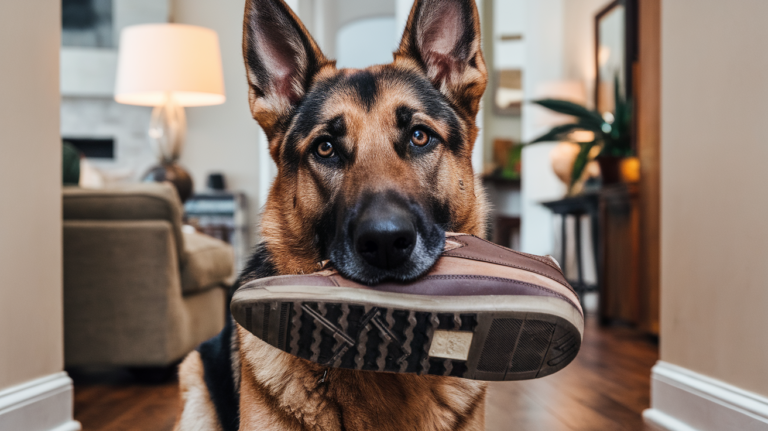
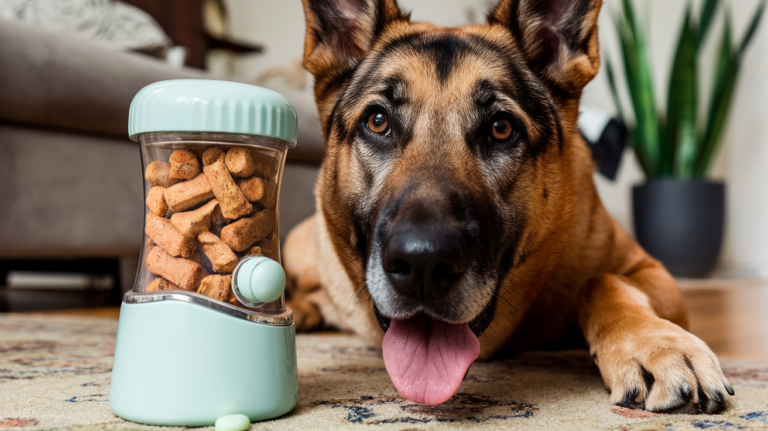
This classic game works wonders. It sharpens focus, boosts happiness, and channels energy into something positive.
Your German Shepherd is lying contentedly on the floor, mentally exhausted from fifteen minutes of play. No muddy paws, no trips to the dog park, no elaborate setup required. Sounds too good to be true? It’s not, and it all comes down to understanding how your dog’s brain works.
The Find It game is pure genius in its simplicity. By engaging your German Shepherd’s incredible nose and natural desire to hunt, you’re providing the kind of enrichment that satisfies them on an instinctual level. Ready to discover why trainers and behaviorists swear by this game?
Why German Shepherds Need the Find It Game
German Shepherds aren’t your average couch potato breeds. These dogs were developed to herd sheep across vast German farmlands, requiring sharp minds, quick decision making, and tireless work ethics. When you bring that heritage into a modern home without proper outlets, you’re basically asking for trouble.
Mental stimulation is just as important as physical exercise for this breed, and in many cases, it’s actually more crucial. A tired mind creates a peaceful dog, while a bored German Shepherd becomes a destructive force of nature. The Find It game addresses this need perfectly because it:
- Engages their powerful sense of smell (which is tens of thousands of times more sensitive than yours)
- Challenges their problem solving abilities
- Provides a healthy outlet for hunting instincts
- Builds confidence through successful searches
- Strengthens the bond between you and your dog
Think of it this way: running laps might tire your German Shepherd’s body, but solving scent puzzles exhausts their brain. A twenty minute Find It session can be more satisfying than an hour long walk.
Getting Started: The Basic Setup
What You’ll Need
The beauty of the Find It game lies in its simplicity. You probably have everything required already sitting in your home. Here’s your shopping list (spoiler: there’s no shopping involved):
| Item | Purpose | Notes |
|---|---|---|
| High value treats | Primary reward for finding | Use small, smelly treats your dog goes crazy for |
| Containers or boxes | Hiding spots for treats | Start with 3 to 5 containers |
| Towels or blankets | Create additional hiding challenges | Optional but great for progression |
| Quiet space | Minimize distractions initially | Can expand to other areas later |
Choosing the Right Treats
Not all treats are created equal when it comes to scent work. Your German Shepherd needs something powerful enough to grab their attention through various hiding spots. Soft, stinky treats work better than hard biscuits because they release more odor. Think small pieces of cheese, hot dogs, or commercial training treats with strong smells.
Keep the pieces tiny (about the size of your pinky fingernail). You’ll be using lots of them during training sessions, and you don’t want to overfeed your dog or kill their motivation by filling them up too quickly.
Step by Step: Teaching the Find It Command
Step 1: Introduce the Concept
Start ridiculously easy. And I mean ridiculously easy. Your German Shepherd needs to understand that “find it” means there’s a reward waiting to be discovered.
Hold a treat in your closed fist and let your dog sniff it. Say “find it” in an excited, encouraging voice, then immediately open your hand and let them take the treat. Repeat this five to ten times until you see that lightbulb moment where they connect the words with the action.
The first rule of Find It: Always set your dog up for success. If they’re confused or frustrated, you’ve made it too hard too fast.
Step 2: Add Distance (But Keep It Simple)
Now we’re going to make things slightly more challenging. With your dog watching, place a treat on the floor a few feet away. Say “find it” and encourage them to go get it. When they do, celebrate like they just won the lottery! Your enthusiasm matters here.
Gradually increase the distance, but keep the treat visible. You’re building their understanding that “find it” means searching for a reward, not just taking something from your hand.
Step 3: Introduce Container Searches
This is where the game really starts to shine. Set up three containers (cardboard boxes, plastic containers, or even overturned buckets work great) in a row. With your dog watching, place a treat under one container.
Give your “find it” command and let your German Shepherd investigate. They’ll likely check all three containers, using their nose to locate the treat. When they find it, let them have it and praise them enthusiastically!
Pro tip: If your dog tries to knock over or destroy the containers, you might need to start with heavier items or teach a gentler “show me” indication first.
Step 4: Increase Difficulty Gradually
Once your German Shepherd consistently finds treats under containers, start mixing things up:
Week 1 to 2: Keep treats visible or barely hidden
Week 2 to 3: Hide treats under one of multiple containers while dog watches
Week 3 to 4: Turn your dog away while hiding, then release them to search
Week 4+: Hide treats in different rooms, under furniture, in towel folds
The key word here is gradually. Your German Shepherd should succeed at least 80% of the time. If they’re struggling, you’ve jumped ahead too quickly. There’s no shame in going back a step or two.
Advanced Find It Variations
The Multi-Room Challenge
Once your dog masters single room searches, expand the game throughout your house. Start by hiding treats in adjacent rooms, then gradually increase the search area. This variation provides excellent physical exercise combined with mental stimulation as your German Shepherd navigates different spaces and processes multiple scent trails.
The Towel Roll Game
Take a towel and sprinkle treats along its length. Roll it up loosely and let your dog unroll it with their nose and paws to find the rewards. As they improve, roll it tighter or use multiple towels nested inside each other.
Scent work isn’t just a game. It’s a powerful tool for building confidence, reducing anxiety, and providing appropriate mental challenges for working breeds like German Shepherds.
The Muffin Tin Puzzle
Grab a muffin tin and place treats in some of the cups. Cover all the cups with tennis balls. Your German Shepherd has to remove the balls to find which cups contain treats. This combines scent work with physical problem solving, creating a more complex challenge.
Common Mistakes to Avoid
Moving Too Fast
The number one error people make with Find It is increasing difficulty before their dog has truly mastered the current level. Your German Shepherd might seem smart (and they are!), but scent work requires building specific skills. Each progression should be so easy that you almost feel like you’re insulting their intelligence. Trust the process.
Inconsistent Commands
Use the same phrase every single time. “Find it,” “search,” “go find” – pick one and stick with it. German Shepherds are literal creatures who thrive on consistency. Changing your cue words creates confusion and slows down learning.
Playing When Your Dog Is Overly Excited
The Find It game requires focus and problem solving. If your German Shepherd is bouncing off the walls, take them for a quick walk first to burn off that initial energy. The game works best when they can concentrate, not when they’re in full zoomie mode.
Forgetting to Celebrate Success
Your reaction to successful finds matters enormously. Every time your German Shepherd locates a hidden treat, respond with genuine excitement and praise. This positive reinforcement strengthens their desire to play and builds positive associations with using their nose.
Recognizing Success: What Progress Looks Like
After consistently playing Find It for a few weeks, you should notice some remarkable changes in your German Shepherd:
Behavioral improvements include decreased destructive behaviors, reduced anxiety during alone time, better focus during training, and calmer demeanor overall. Your dog is getting the mental workout they desperately need.
Skill development becomes obvious as search times decrease, your dog shows more systematic searching patterns (instead of random wandering), and they can work independently without constant encouragement. You’ll also notice they generalize the game to new environments more quickly.
The confidence boost is perhaps the most rewarding change. German Shepherds who regularly play Find It often show increased confidence in other areas of life. They’ve learned they can solve problems, and that knowledge transfers to handling new situations with less stress.
Troubleshooting Guide
My Dog Just Stares at Me
Your German Shepherd might not understand what you’re asking. Go back to Step 1 and rebuild the foundation. Make the game incredibly obvious, with treats in plain sight, and use extremely high value rewards.
My Dog Gets Frustrated and Gives Up
You’ve made it too difficult. The rule of thumb: if your dog fails more than twice in a row, the challenge is too advanced. Simplify immediately and rebuild their confidence with easier searches.
My Dog Uses Eyes Instead of Nose
This is common initially. To encourage nose use, hide treats in boxes or containers where visual cues don’t help. You can also play in dimmer lighting conditions (not dark, just less bright) to make scenting more advantageous than seeing.
Making Find It Part of Your Routine
The magic happens when Find It becomes a regular part of your German Shepherd’s life, not just an occasional activity. Consider these integration strategies:
Morning enrichment: Before you leave for work, set up a quick Find It game. This gives your dog something positive to focus on and helps prevent separation anxiety.
Mealtime replacement: Instead of feeding from a bowl, use your dog’s regular kibble for Find It sessions. This turns eating into an engaging activity that can take fifteen to twenty minutes instead of sixty seconds of inhaling food.
Rainy day solution: When weather prevents outdoor adventures, Find It provides essential mental stimulation without requiring you to step outside.
The best training happens in short, frequent sessions rather than marathon practices. Five minutes of focused Find It three times daily beats one exhausting thirty minute session.
The Science Behind Why This Works
German Shepherds possess approximately 225 million scent receptors compared to your measly 5 million. The portion of their brain devoted to analyzing smells is forty times larger than yours. When you engage this powerful biological system, you’re tapping into something fundamentally satisfying for your dog.
Scent work also releases mental energy differently than physical exercise. While running creates physical tiredness, scent work produces mental fatigue by requiring focus, decision making, and problem solving. For high energy, intelligent breeds like German Shepherds, this mental exhaustion is incredibly valuable.
Furthermore, successful searches trigger dopamine releases in your dog’s brain, creating natural feelings of satisfaction and happiness. You’re literally making your German Shepherd happier through this simple game.
Adapting Find It for Different Life Stages
Puppies (8 weeks to 6 months): Keep sessions very short (three to five minutes) and extremely easy. Focus on building positive associations and basic understanding. Puppies have short attention spans, so multiple brief sessions throughout the day work better than longer ones.
Adults (6 months to 7 years): This age group can handle increasingly complex challenges. Experiment with different environments, longer search times, and creative hiding spots. Adult German Shepherds in their prime can enjoy quite sophisticated Find It variations.
Seniors (7+ years): Older German Shepherds still need mental stimulation, but they might have mobility issues or reduced stamina. Adapt by keeping search areas smaller and hiding spots more accessible. The mental engagement remains crucial for cognitive health as they age.