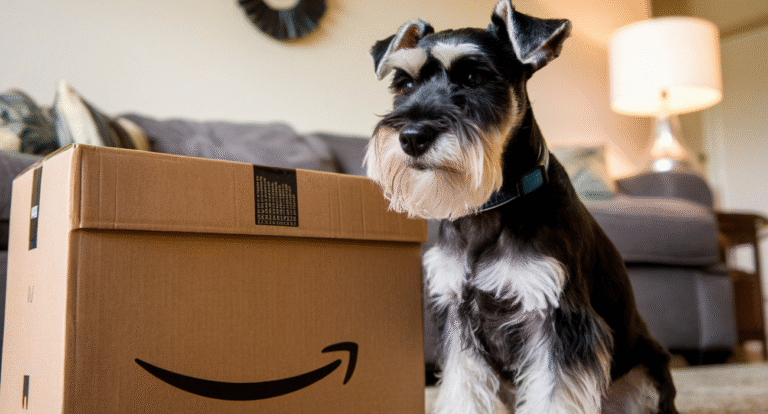
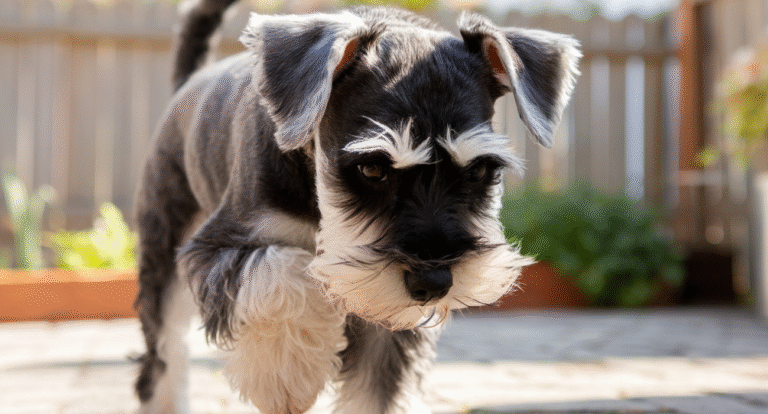
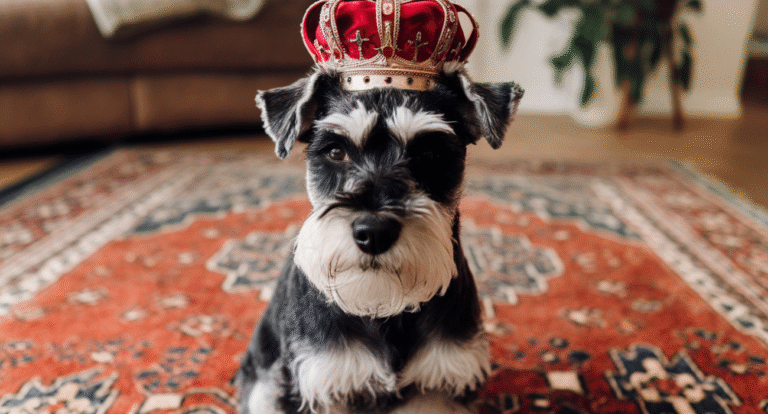
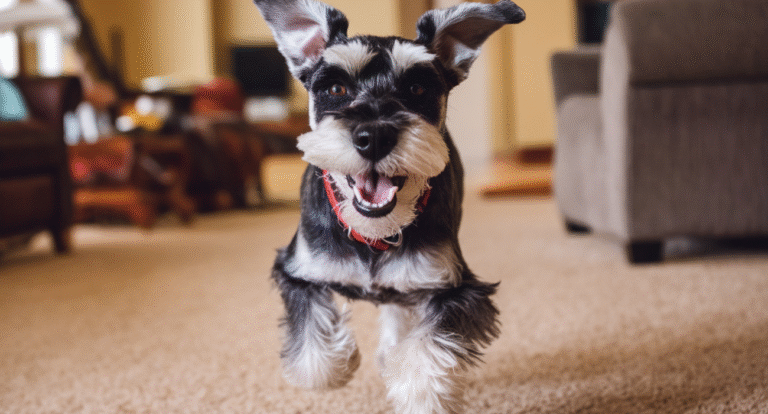
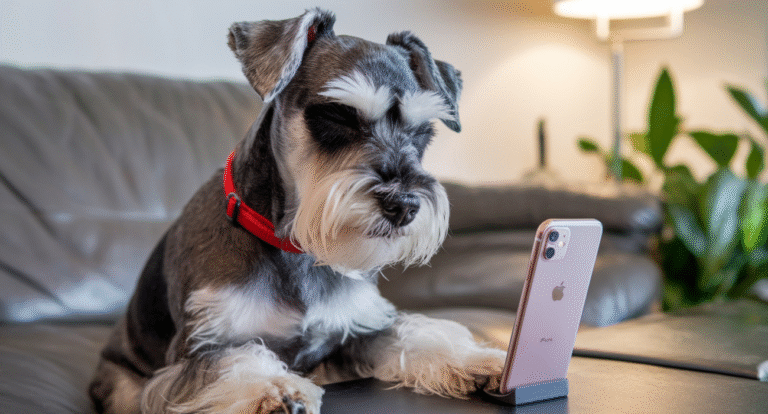
Take this fun intelligence test to find out if your Schnauzer is outsmarting kindergarteners. Their cleverness may surprise everyone in your house!
Your Schnauzer just figured out how to open the pantry door. Again. Meanwhile, your neighbor’s kindergartener is struggling with basic addition. Coincidence? Maybe not. The science of dog intelligence has exploded in recent years, revealing that our furry companions possess cognitive abilities that mirror young children in surprisingly specific ways.
But comparing species is tricky business. Dogs didn’t evolve to take spelling tests or share toys during circle time. They evolved to read our emotions, navigate social hierarchies, and yes, figure out where you hide the treats. Let’s explore what “smart” really means when we’re talking about Schnauzers versus tiny humans.
The Science Behind Dog Intelligence
When researchers talk about canine intelligence, they’re typically measuring three distinct types of smarts. Instinctive intelligence refers to what a dog was bred to do naturally. Adaptive intelligence involves problem-solving and learning from experience. Finally, working and obedience intelligence measures how quickly a dog learns commands and responds to training.
Schnauzers score particularly high in adaptive intelligence. These dogs were originally bred in Germany to guard farms and hunt vermin, which required independent thinking and decision-making skills. You can’t exactly ask a rat for permission before catching it, after all.
Intelligence isn’t just about following commands. It’s about understanding context, solving novel problems, and adapting to new situations with creativity and flexibility.
Stanley Coren, a professor and neuropsychological researcher, famously ranked dog breeds by intelligence in his book “The Intelligence of Dogs.” While Schnauzers didn’t crack the top ten (that honor goes to breeds like Border Collies and Poodles), they solidly landed in the above-average category. Standard Schnauzers ranked 18th, Miniature Schnauzers came in at 12th, and Giant Schnauzers placed around 28th out of 138 breeds tested.
What Can a Kindergartener Actually Do?
To make a fair comparison, we need to understand the cognitive abilities of a typical kindergartener. These five to six-year-olds are experiencing rapid brain development and acquiring new skills at lightning speed.
A kindergartener can typically:
- Count to 100 and recognize written numbers
- Identify letters and begin reading simple words
- Follow multi-step instructions
- Understand cause and effect relationships
- Engage in imaginative play
- Recognize and express emotions
- Solve simple puzzles and problems
They’re also developing theory of mind, the understanding that other people have thoughts, beliefs, and perspectives different from their own. This is a huge cognitive milestone that shapes social interactions for life.
The Schnauzer Skill Set
Now let’s look at what your whiskered companion brings to the table. Research suggests that dogs, including Schnauzers, have cognitive abilities roughly equivalent to a two to two-and-a-half-year-old human child. But here’s where it gets interesting: dogs excel in areas where even kindergarteners sometimes struggle.
Social Intelligence and Emotional Reading
Schnauzers are exceptionally good at reading human emotions and body language. They can detect subtle changes in your tone of voice, facial expressions, and even your stress levels through scent. Try hiding your disappointment when your kindergartener colors on the walls; your Schnauzer already knew you were upset before you opened your mouth.
Dogs can follow a human’s pointing gesture to find hidden food, a skill that even chimpanzees struggle with. This suggests that thousands of years of domestication have fine-tuned dogs’ ability to understand human communication in ways that surpass our closest genetic relatives.
Problem-Solving Abilities
When it comes to physical problem-solving, Schnauzers can be surprisingly crafty. They can learn to open doors, figure out puzzle toys, and even manipulate their humans into giving them what they want (we’ve all been there). However, their problem-solving approach differs from human children.
A kindergartener might use language and reasoning to work through a problem: “If I stack these blocks, I can reach the shelf.” A Schnauzer uses trial and error, observation, and sometimes sheer stubborn determination: “If I paw at this cabinet seventeen times while making pitiful noises, the food magically appears.”
The Intelligence Scorecard
Let’s break down how Schnauzers and kindergarteners compare across different cognitive domains:
| Cognitive Ability | Schnauzer | Kindergartener | Winner |
|---|---|---|---|
| Vocabulary comprehension | 150-200 words | 2,000-5,000 words | Kindergartener |
| Following commands | Excellent (if motivated) | Variable (also if motivated) | Tie |
| Reading emotions | Exceptional | Developing | Schnauzer |
| Mathematical reasoning | None | Basic counting/addition | Kindergartener |
| Problem-solving speed | Quick with physical tasks | Better with abstract concepts | Context dependent |
| Memory for routines | Excellent | Good | Schnauzer |
| Social manipulation | Master level | Advanced beginner | Schnauzer (unfortunately) |
Where Dogs Actually Outperform Kids
There are specific areas where your Schnauzer legitimately outsmarts a kindergartener. Spatial navigation is one of them. Dogs have an incredible ability to create mental maps of their environment and find their way home from unfamiliar locations. They process sensory information from smell, sight, and sound simultaneously in ways human brains simply can’t match.
The nose knows what the eyes miss. A dog’s sensory world is so rich and complex that comparing it to human intelligence is like comparing a symphony to a single instrument.
Schnauzers also excel at associative learning. They can connect actions with consequences faster than young children in many cases. Touch the hot stove once, and your Schnauzer probably won’t go near it again. A kindergartener? Well, let’s just say the learning curve might be slightly longer.
Their ability to detect patterns in daily routines borders on supernatural. Your Schnauzer knows it’s walk time before you’ve even thought about reaching for the leash, simply because you glanced at your shoes in a particular way. That’s not magic; that’s high-level pattern recognition and anticipatory intelligence.
The Limitations of Comparison
Here’s the thing about comparing Schnauzers to kindergarteners: it’s inherently unfair to both parties. Dogs and humans evolved to excel at completely different things. Abstract thinking, language development, and complex reasoning are uniquely human strengths that emerge strongly during the kindergarten years.
A five-year-old can imagine being a superhero, understand that the moon isn’t actually following the car, and grasp that grandma exists even when she’s not in the room. These abstract concepts remain largely beyond canine comprehension.
Meanwhile, dogs possess sensory superpowers and survival instincts that humans lack entirely. Your Schnauzer can detect seizures before they happen, smell fear, hear frequencies you can’t perceive, and navigate by scent trails invisible to human perception.
Training and Environmental Factors
Intelligence isn’t fixed; it’s developed. Both Schnauzers and kindergarteners benefit enormously from enrichment, training, and positive interactions. A well-trained, mentally stimulated Schnauzer will significantly outperform a neglected one in cognitive tests.
The same applies to children. A kindergartener in a rich learning environment with plenty of books, puzzles, and social interaction will develop faster than one without these advantages.
Maximizing Your Schnauzer’s Smarts
Want to bring out your Schnauzer’s inner genius? Here’s what works:
Puzzle toys and food-dispensing games challenge their problem-solving abilities. Regular training sessions with new commands keep their minds sharp. Socialization with other dogs and people develops their emotional intelligence. Scent work activities engage their strongest sense and provide mental stimulation that’s deeply satisfying for them.
Variety is crucial. Just like a kindergartener gets bored doing the same worksheet every day, your Schnauzer needs novel challenges to stay mentally engaged.
The Verdict: Who Wins?
So, is your Schnauzer smarter than a kindergartener? The answer is both yes and no, depending on what you’re measuring. In a spelling bee? The kindergartener takes it (unless you’ve got a very exceptional Schnauzer). In a “find the hidden treat using only your nose” competition? Your dog wins every time.
What’s truly remarkable is that both are intelligent in ways perfectly suited to their needs. Kindergarteners are developing the cognitive tools they’ll need to navigate human society, understand abstract concepts, and eventually file taxes (the horror). Schnauzers have intelligence optimized for survival, social bonding with humans, and apparently, guilt-tripping you into sharing your dinner.
The real question isn’t who’s smarter. It’s why we’re even competing with our dogs in the first place. Maybe the smartest creature in the room is the one who convinced you to hand-feed them chicken while they lounge on your favorite chair.
Your Schnauzer might not be ready for kindergarten, but they’ve definitely mastered the art of making you think you’re the one who needs training.