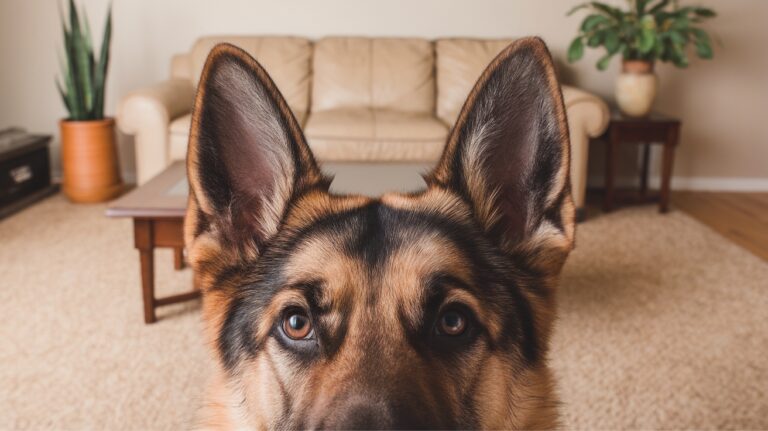
Teaching toy pickup can be fun and easy. With a few clever tricks, your shepherd will happily tidy up like it is their new favorite game.
If your living room currently looks like a toy store exploded, you’re not alone. German Shepherd owners everywhere are navigating obstacle courses of squeaky balls, ropes, and half-destroyed plushies on a daily basis.
Here’s the thing: your dog made that mess, and your dog can absolutely clean it up. Teaching a GSD to pick up their toys isn’t just a party trick; it’s a legitimate, brain-stimulating exercise that taps directly into their working dog instincts.
Teach Your GSD to Pick Up Toys With This Easy Trick
Why German Shepherds Are Perfect for This
German Shepherds weren’t bred to lounge around looking pretty. They were built to work, problem-solve, and take direction from their people.
That means tricks like this aren’t just fun for them; they’re fulfilling. A bored GSD is a destructive GSD, and giving them jobs to do is one of the best things you can do for their mental health.
What You’ll Need Before You Start
Grab a basket, bin, or box that’s low enough for your dog to easily drop things into. It doesn’t need to be fancy; a laundry basket or a wide storage bin works perfectly.
You’ll also need high-value treats. Think small pieces of chicken, cheese, or whatever makes your dog’s eyes go wide. The more irresistible the treat, the faster this goes.
Stock up on your dog’s favorite toys too. You want things they’re already excited to pick up, not the sad, forgotten rope in the corner of the room.
The secret to teaching any complex behavior is breaking it into steps so small that success feels inevitable.
Step One: Teach the “Take It” Command
Before your dog can put toys away, they need to reliably pick them up on command. If your GSD already knows “take it,” you can skip ahead.
If not, hold a toy out and say “take it” the moment they grab it with their mouth. Reward immediately with a treat and enthusiastic praise.
Repeat this until they’re grabbing the toy the second you say the word. Most GSDs nail this within a single session because, well, they’re German Shepherds.
Step Two: Introduce the Basket
Place the basket on the floor in front of you and hold the toy directly over it. Ask your dog to “take it,” and the second they grab the toy, use your release word (“drop it,” “give,” or whatever you use) right over the basket.
When the toy lands in the basket, throw a party. Treats, praise, happy voice, the whole show. That sound of the toy hitting the basket needs to become the best sound in your dog’s world.
Some dogs will need this repeated five times. Others will need it repeated fifty. Both are completely normal, and neither means your dog is failing.
Step Three: Add Distance
Once your dog is reliably grabbing and dropping over the basket, start moving the toy a few inches away from the bin. Ask them to take it, then gesture toward the basket.
This is where it gets exciting. You’ll start to see that little spark when they realize they need to carry the toy to the basket themselves.
Reward every successful drop in the basket like it’s the greatest achievement in canine history. Because honestly, it kind of is.
Distance is just a variable. Your dog already knows the game; now they’re just learning the field.
Step Four: Scatter Multiple Toys
Once your dog understands the concept with one toy, add a second. Point to a toy, give the command, and guide them back to the basket.
Don’t rush this part. Some dogs generalize quickly and will start picking up toys you didn’t even point to. Others need each toy introduced individually.
Step Five: Name the Behavior
Now it’s time to add your cue. Choose something clear and fun like “clean up,” “tidy up,” or “put it away.”
Say your chosen phrase right before you give the take it cue. Over enough repetitions, your dog will start associating the phrase with the entire cleanup sequence.
Eventually, all you’ll need to do is say “clean up” and point to the general area. Your GSD’s brain will fill in the rest.
Troubleshooting Common Problems
My Dog Drops the Toy Before Reaching the Basket
This usually means the basket is too far away in the early stages. Shrink the distance and build back up gradually.
Make sure you’re not luring with the treat in your hand during the carry, because that can cause early drops. Keep the reward hidden and only produce it after the drop.
My Dog Picks Up the Toy but Won’t Drop It
Work on your “drop it” or “give” command separately, completely outside of the cleanup game. Once the drop is solid on its own, bring it back into the routine.
Never chase your dog or grab at the toy. That turns it into a keep-away game, which is the exact opposite of what you want.
My Dog Loses Interest Quickly
Keep sessions short. Three to five minutes is plenty, especially in the early stages of learning.
Always end on a success, even if that means making the task easier right before you stop. Ending on a win keeps your dog excited to train again tomorrow.
How to Make It a Habit
Consistency is everything with this trick. Try to practice at the same time each day, ideally after a play session when there are actually toys to pick up.
Habits are built in the mundane moments, not just the dedicated training sessions.
Don’t skip the celebration phase even once you think the behavior is solid. Dogs are always paying attention to whether something is still worth their effort.
Taking It to the Next Level
Once your GSD has the basics down, you can start naming specific toys. “Get the ball” or “find your rope” becomes shockingly achievable with a dog of this breed.
You can also set up a toy box in each room and practice asking your dog to clean up in different locations. Generalization is its own training goal, and it’s one most GSD owners don’t even realize they can pursue.
Some people even turn cleanup into a timed game, seeing how many toys their dog can put away in one minute. German Shepherds tend to find this extremely motivating once they understand the rules.
A Few Final Tips Worth Knowing
Never train when you’re frustrated. Your dog reads your energy more accurately than you might think, and a stressed handler produces a stressed learner.
Keep your cues consistent. If you say “clean up” on Tuesday and “pick it up” on Thursday, you’re asking your dog to learn two separate things. Pick one phrase and stick with it forever.
And finally, film it. The first time your GSD trots across the room, picks up a squeaky taco, and drops it perfectly into the basket, you’re going to want proof.