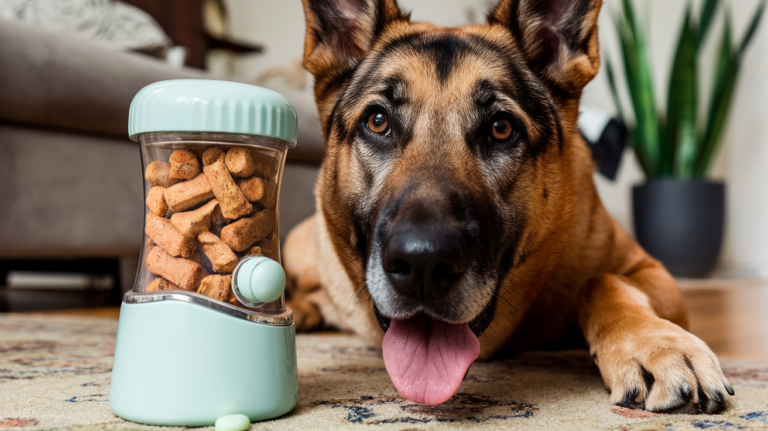
That grin isn’t accidental. This fun trick brings out an expressive, heart melting smile on cue.
Ever catch your German Shepherd looking at you with what appears to be a goofy grin? That adorable expression isn’t just your imagination! German Shepherds can absolutely learn to smile on command, and it’s one of the most endearing tricks you’ll ever teach your furry friend.
This charming behavior transforms your noble protector into an instant heart melter. Whether you want to impress your friends, capture the perfect Instagram moment, or simply add another trick to your dog’s repertoire, teaching the smile command is surprisingly achievable. Get ready to turn that serious working dog face into pure, photogenic joy!
Understanding the German Shepherd Smile
Before we jump into training, it’s helpful to understand what we’re actually teaching. A dog’s “smile” is technically called a submissive grin. In the wild, this expression helps dogs communicate peaceful intentions to other pack members. When your German Shepherd pulls back their lips to show their teeth in a relaxed, non aggressive way, they’re displaying this natural behavior.
The key difference between a smile and a snarl? Body language tells the whole story. A smiling dog has soft, relaxed eyes, loose body posture, and often a wagging tail. A snarling dog shows tension throughout their entire body, with hard eyes and stiff muscles. You’ll recognize your GSD’s genuine smile because their whole demeanor screams happy rather than threatening.
Some German Shepherds naturally smile more than others. If you’ve already caught your pup doing this spontaneously, you’re halfway there! These dogs often smile when greeting their favorite humans, during play sessions, or when they’re feeling particularly content. Our job is simply to put this adorable behavior on cue.
What You’ll Need for Training
| Item | Purpose | Notes |
|---|---|---|
| High value treats | Motivation and rewards | Use something your GSD goes crazy for (cheese, hot dogs, or freeze dried liver) |
| Clicker (optional) | Marking the exact moment of success | Helpful but not required; you can use a verbal marker like “yes!” |
| Patience | The most crucial ingredient | Some dogs pick this up in days, others need weeks |
| Mirror or camera | Monitoring your own expressions | You’ll be making silly faces, so it helps to see yourself! |
Step 1: Capture the Natural Smile
The easiest way to teach the smile command is to catch your German Shepherd doing it naturally and reward that behavior. This technique is called “capturing” in dog training lingo, and it’s incredibly effective for behaviors dogs already do on their own.
Start by keeping treats handy throughout the day. Watch your GSD during times when they’re most likely to smile: when you come home, during gentle petting sessions, or right before something exciting happens (like getting their leash for a walk). The moment you see those lips curl back in that adorable grin, mark it immediately with your clicker or a cheerful “yes!” and follow up with a treat.
Timing is everything in dog training. The faster you reward the smile, the quicker your German Shepherd will connect the dots between the behavior and the treat.
Repeat this process as many times as possible. Your dog’s brain will start making the connection: smile equals treats. At this stage, don’t worry about adding a verbal cue yet. We’re simply building the foundation by reinforcing the behavior every single time it happens naturally.
Step 2: Use Your Own Smile as a Lure
Here’s where things get fun (and potentially embarrassing if your neighbors can see you). German Shepherds are incredibly attuned to human facial expressions and often mirror our emotions. You can use this to your advantage!
Get down to your dog’s level and smile really big at them. I mean REALLY big. Show all your teeth. Make it exaggerated and goofy. Many German Shepherds will naturally mimic this expression, especially if they’re already familiar with the behavior from Step 1.
When your pup attempts to copy your smile, even if it’s just a tiny lip curl, mark and reward immediately. Some dogs catch on to this mirroring game quickly; others need more time. If your GSD isn’t responding to your facial expressions, don’t worry! Simply go back to capturing the natural smile for a while longer before trying this step again.
Step 3: Introduce a Physical Cue
Not every German Shepherd responds to facial mirroring, so having a backup plan is smart. Some trainers have success with a gentle physical cue. Please note: this technique requires a very light touch and should never involve forcing your dog’s mouth open or causing any discomfort whatsoever.
With a treat in one hand, use your other hand to very gently touch the side of your dog’s muzzle near their lips. Some dogs will automatically lift their lip slightly in response to this sensation. The instant they do, mark and reward enthusiastically.
If your German Shepherd seems uncomfortable with this approach, skip it entirely. We want this to be a fun, positive experience, not something that creates anxiety or stress. Always prioritize your dog’s comfort over achieving a specific training goal.
Step 4: Add the Verbal Cue
Once your German Shepherd is consistently offering the smile behavior (whether through capturing, mirroring, or the physical cue), it’s time to attach a word to it. Choose something clear and distinct like “Smile,” “Cheese,” or “Say cheese!”
Here’s the important part: say your chosen word right before your dog performs the behavior, not after. For example, if you notice your GSD is about to smile naturally, say “Smile!” then let them complete the action and reward. If you’re using the mirroring technique, say “Smile!” then flash your big grin and wait for them to copy you.
Repeat this sequence many, many times over several days or weeks. The verbal cue needs to become strongly associated with the action. Think of it like Pavlov’s bell; eventually, the word “Smile” will trigger the behavior automatically.
Consistency is your best friend when adding verbal cues. Use the same word, same tone, and same enthusiasm every single time.
Step 5: Practice Without Props
As your German Shepherd gets better at the smile command, start weaning off any physical cues or prompts. If you’ve been using the mirroring technique, begin giving the verbal cue without making the exaggerated face yourself. If you’ve been touching their muzzle, stop doing that and rely only on the word.
This step tests whether your dog truly understands the command or if they’re simply responding to other cues. It’s totally normal if your GSD seems confused at first. Just go back a step, practice more with the props, then try again. Training isn’t linear; sometimes we take two steps forward and one step back.
Continue rewarding every successful smile during this phase. We’re still building reliability, so treats remain important motivators. Your German Shepherd should start offering the smile more quickly and confidently as they realize what you’re asking for.
Step 6: Increase Duration and Distance
Once your dog can smile on command while you’re standing right next to them, it’s time to add challenges. Start asking for the smile from a few feet away. Then try it from across the room. Can your GSD smile while you’re standing up instead of crouching down? How about when you’re sitting on the couch?
You can also work on duration. Instead of rewarding the instant flash of teeth, wait a second or two before marking and treating. Gradually increase how long you want your German Shepherd to hold that adorable grin. Some dogs can learn to smile for five or even ten seconds, creating perfect photo opportunities!
Remember to keep sessions short and fun. Five minutes of focused training is better than 30 minutes of a bored, distracted dog. German Shepherds are smart, but they also have limits to their attention spans, especially for silly tricks like this one.
Troubleshooting Common Challenges
My German Shepherd keeps offering other tricks instead
This is super common, especially if you’ve taught your GSD lots of commands. They’re basically throwing out their entire repertoire hoping something sticks! The solution? Only reward the smile. Ignore sits, downs, paw shakes, and everything else. Be patient and wait for that lip curl, then party like it’s the best thing ever.
The smile looks more like a snarl
Check your dog’s body language carefully. If they seem tense, stressed, or uncomfortable, stop the training session immediately. You want loose, wiggly, happy body language accompanying the smile. If something feels off, consult with a professional trainer who can observe in person and ensure you’re not accidentally reinforcing anxiety or fear.
My dog only smiles when I’m holding treats
Welcome to dog training! This is called being “treat dependent,” and it happens to everyone. The fix is to gradually reduce treat frequency while increasing praise and other rewards. Start rewarding every other smile, then every third one, and so on. Randomly reward sometimes so your GSD never knows when the treat is coming; this actually makes the behavior stronger.
It’s been weeks and nothing is happening
Some dogs simply don’t smile naturally very often, which makes this trick harder to capture. Consider whether your German Shepherd shows this behavior at all during normal life. If not, you might need to try the mirroring or physical cue methods more extensively. Also, remember that every dog learns at their own pace. What takes one GSD three days might take another three months.
Making It Camera Ready
Now that your German Shepherd can smile on command, let’s talk about getting that perfect shot for social media! The trick is to have everything set up before you ask for the smile. Get your phone or camera ready, frame your shot, and make sure the lighting is good.
Use a helper if possible. One person can hold the camera while you give the command and reward. This prevents the awkward fumbling that happens when you’re trying to do everything yourself. Your GSD will hold the smile longer if they know a reward is coming, so have treats ready and visible.
Natural lighting works best for photos. Position your dog near a window or take them outside during golden hour (the hour after sunrise or before sunset). Get down to their eye level for the most engaging shots. And most importantly, take lots and lots of pictures! Dogs are unpredictable models, so quantity increases your chances of getting that one perfect image.
Advanced Smile Variations
Once your German Shepherd has mastered the basic smile, you can get creative with variations. Try combining it with other commands for entertaining combinations. “Smile and wave” is adorably goofy. “Smile and play dead” creates hilarious photo opportunities.
You could also teach different types of smiles. A “big smile” could mean showing lots of teeth, while a “little smile” is just a subtle lip curl. Some dogs can even learn to smile on one side of their mouth more than the other, though this is pretty advanced and not every GSD will be able to manage it.
The sky’s the limit here! The more you practice and play with this trick, the more your clever German Shepherd will understand the game. These dogs live to learn and please their humans, so they’ll often start offering creative variations all on their own.
Smile Sessions: Keeping It Fun
Throughout this entire training process, remember that the goal is fun and bonding, not perfection. If your German Shepherd seems frustrated or bored, take a break. Come back to it tomorrow or next week. Training should strengthen your relationship, not strain it.
The best tricks are the ones both you and your dog enjoy. If the smile command becomes a chore, it defeats the entire purpose of teaching something cute and entertaining.
Celebrate small victories along the way. The first tiny lip curl deserves a party. The first smile from across the room? That’s treat jackpot territory! Your enthusiasm and joy will fuel your German Shepherd’s motivation far more than any food reward ever could.
And finally, don’t compare your dog’s progress to others. Social media is full of dogs performing amazing tricks, but you’re only seeing the highlight reel. Every German Shepherd is an individual with their own learning style, personality, and timeline. Your smiling GSD journey is unique and special, regardless of how long it takes or how “perfect” the final result looks.