Jumping on guests isn’t rudeness, it’s excitement. This fast fix redirects energy and helps greetings stay calm and controlled.
Your doorbell rings, and before you can even reach the handle, you hear it: the thunderous gallop of paws hitting hardwood at maximum velocity. Your German Shepherd has transformed into a furry missile aimed directly at whoever dares stand on the other side of that door. Spoiler alert: your guests are about to get very acquainted with your dog’s paws, tongue, and overwhelming enthusiasm.
Sound familiar? You’re definitely not alone. German Shepherds are magnificent creatures with hearts as big as their bodies, but their greeting style can feel more like a tackle than a welcome. The good news? This behavior isn’t a personality flaw or a sign of poor training on your part. It’s just pure, unfiltered excitement that needs redirecting.
Why German Shepherds Jump on Guests in the First Place
Before we dive into solutions, let’s talk about why your German Shepherd has decided that launching themselves at visitors is an acceptable social practice. Understanding the motivation behind the behavior makes fixing it so much easier.
It’s All About That Greeting Ritual
In the dog world, face to face greetings are the norm. Puppies naturally jump up to lick the faces of adult dogs as a sign of respect and affection. When your German Shepherd jumps on your guests, they’re essentially trying to get eye level and say hello the only way they know how. The problem? Humans are inconveniently tall, and your dog hasn’t figured out that we prefer greetings that don’t involve cleaning paw prints off our clothes.
Reinforcement Happens Without You Realizing It
Here’s where things get tricky. Every time your dog jumps and gets any form of attention (even negative attention like yelling or pushing them away), you’re accidentally rewarding the behavior. To your German Shepherd’s brain, attention equals success. They jumped, they got interaction, mission accomplished. It doesn’t matter that you were scolding them. You engaged, and that’s all they wanted.
Energy Levels Are Through the Roof
German Shepherds are high energy dogs that need substantial physical and mental stimulation. When that doorbell rings and they haven’t burned off their energy, all that pent up excitement has to go somewhere. Unfortunately, it usually goes straight into your guest’s chest cavity at approximately thirty miles per hour.
The Foundation: What You Need Before Training Begins
You can’t build a house without a foundation, and you can’t fix jumping without establishing some basics first.
Exercise Is Non-Negotiable
A tired German Shepherd is a well behaved German Shepherd. Before you even think about having guests over for training purposes, make sure your dog has had adequate exercise. This breed needs:
| Activity Type | Minimum Daily Requirement | Ideal Duration |
|---|---|---|
| Walking | 45 minutes | 60+ minutes |
| Mental Stimulation | 15 minutes | 30+ minutes |
| Play/Training | 20 minutes | 45+ minutes |
| Off-Leash Running | Not required | 30+ minutes (in safe area) |
Master Basic Commands First
Your German Shepherd should have a solid grasp on “sit,” “stay,” and “down” before you tackle the jumping issue. These commands become your toolkit for redirecting behavior. If your dog doesn’t reliably respond to these basics, spend a few weeks getting those locked in first. Trust me, it’ll make everything else exponentially easier.
The Training Protocol: Step by Step
Alright, let’s get into the actual training process. This isn’t a quick fix, but it is effective if you stay consistent.
Step One: The Setup Stage
Start by practicing with people your dog knows but doesn’t see constantly. You want someone who triggers excitement but not full blown mania. Have them stand outside your door while you get your dog in a sitting position about ten feet back from the entrance.
The golden rule of jump training: never allow the behavior to succeed. Every single successful jump sets your training back by multiple sessions.
Keep your dog on a leash during these initial training sessions. This gives you control and prevents them from rehearsing the unwanted behavior. The leash isn’t for yanking or correcting; it’s simply a management tool that keeps everyone safe while your dog learns a better option.
Step Two: The Four Paws Rule
Here’s your new household law: Four paws on the floor equals rewards and attention. Jumping equals absolutely nothing. No eye contact, no touch, no verbal interaction. When your training helper enters and your dog starts to jump, have them immediately turn their back and ignore the dog completely.
The moment those four paws hit the ground, mark it with a “yes!” or a click (if you’re using clicker training) and reward with treats and calm attention. Timing is everything here. The reward needs to happen within two seconds of the correct behavior, or your dog won’t make the connection.
Step Three: Building Duration
Once your German Shepherd can keep all fours on the floor for the initial greeting, start adding duration. They need to stay calm not just for the first three seconds, but for the entire greeting process. Gradually increase the time between the four paws behavior and the reward.
Have your training partner approach, stop, wait for calm behavior, reward, take a step back, and repeat. This teaches your dog that calm behavior needs to be maintained throughout the entire interaction, not just for a split second.
Step Four: Increasing Difficulty
Now it’s time to raise the stakes. Start inviting different people over. Change the location of greetings. Add in doorbell rings. Practice when your dog is more excited. Each of these variables increases difficulty, so don’t rush. You might nail it with your neighbor in the living room but completely fall apart when the mailman arrives at the front door.
Consistency isn’t just important; it’s literally the only thing that matters. One person letting your dog jump undoes hours of training.
Advanced Techniques for Stubborn Cases
Some German Shepherds are particularly enthusiastic and need extra help. If you’ve been working on the basics for several weeks without much progress, try these advanced strategies.
The Tether Method
Attach your dog’s leash to a sturdy piece of furniture about six feet from the door. When guests arrive, your dog physically cannot reach them to jump. This removes the possibility of practicing the unwanted behavior. Guest comes in, waits until dog is calm, then approaches for a proper greeting. This method works beautifully for dogs who simply cannot control themselves in the moment.
The Alternative Behavior Approach
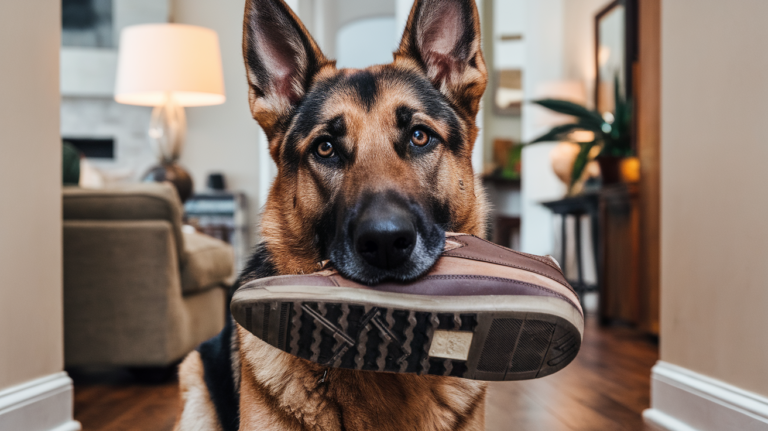
Instead of just eliminating jumping, give your German Shepherd a specific job to do when guests arrive. Teach them to grab a toy and hold it in their mouth during greetings. It’s physically impossible to jump effectively while holding a stuffed duck. Plus, it gives their excitement an acceptable outlet. Most guests find a dog proudly presenting their toy absolutely adorable, which means your dog still gets positive attention for greeting behavior.
The Threshold Game
Practice having your dog sit and stay while you open and close the door repeatedly without anyone actually entering. Build up their tolerance for door excitement separately from greeting excitement. Once they can maintain a calm sit through multiple door openings, add a person standing on the other side. Then add that person entering. Break it down into tiny, manageable pieces.
Common Mistakes That Sabotage Your Progress
Even with the best intentions, it’s easy to accidentally undermine your own training. Here are the pitfalls to avoid:
Inconsistency Among Family Members
If you’re working hard on training but your teenager lets the dog jump all over them every day after school, you’re fighting a losing battle. Everyone in the household needs to be on the same page. That means everyone enforces the four paws rule, every single time. No exceptions for “just this once” or “they’re just so excited.”
Using Punishment Instead of Redirection
Yelling, kneeing your dog in the chest, or using other aversive techniques might stop the behavior in that specific moment, but they don’t teach your dog what TO do instead. Plus, German Shepherds are sensitive souls despite their tough exterior. Harsh corrections can damage your relationship and create anxiety around greeting situations.
Expecting Too Much Too Soon
This is a German Shepherd, not a robot. There will be setbacks. There will be days when it feels like your dog has forgotten everything you’ve taught them. That’s normal. Real behavioral change takes weeks, sometimes months. Celebrate the small victories and don’t get discouraged by occasional failures.
Training is not a straight line from problem to perfect. It’s a messy, zigzagging journey with plenty of backsliding. That’s not failure; that’s just how learning works.
Management Strategies for Real Life Situations
While you’re working on training, you still have to live your life. Here’s how to manage situations when you can’t actively train:
Put your dog in another room with a stuffed Kong or puzzle toy when guests first arrive. Let everyone get settled, then bring your dog out on leash once the initial excitement has died down. This prevents practicing the jumping behavior while also not completely excluding your dog from social situations.
If you’re having a party or large gathering, consider whether this is really the right time for your German Shepherd to practice their greeting skills. Sometimes the kindest thing you can do for everyone (including your dog) is to give them a break in a quiet room with something to occupy them. Training happens in controlled situations, not during chaos.
The Bottom Line
Your German Shepherd’s jumping habit didn’t develop overnight, and it won’t disappear overnight either. But with consistent training, clear boundaries, and plenty of patience, you absolutely can teach your enthusiastic goofball that four paws on the floor is the only acceptable greeting style.
The intelligence and trainability that makes German Shepherds such incredible working dogs is the same quality that will help you solve this problem. Your dog wants to please you. They just need clear communication about what “please” actually looks like. Give them that clarity, stay consistent, and before you know it, you’ll have a dog who greets guests with dignity instead of altitude.