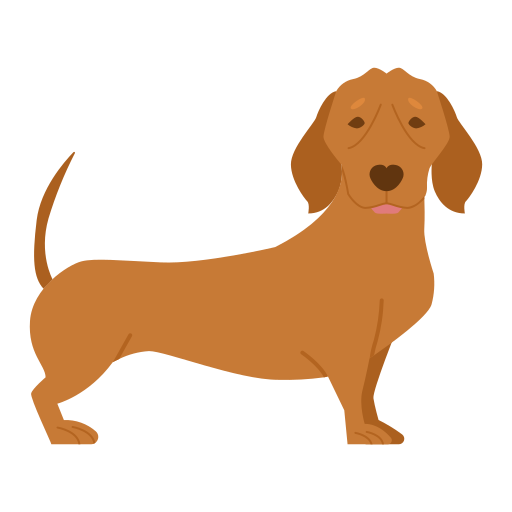
 Dachshund
 The doorbell rings, and half a second later you hear it: eight small nails skittering across the floorboards like dice tossed onto a table.
Then the bark. Deep, outraged, comically large for the body producing it.
Then the blur of a long brown torpedo aiming for the six inch gap between your door and the frame.
Anyone who lives with a dachshund knows that soundtrack. What most people do not realize is that the sound gives you about one second of warning, which is roughly half the time you actually need to get a foot into position.
And here is the uncomfortable math: a dog built two inches off the ground can slip through a space you would swear was too narrow, and once those legs hit open sidewalk they move a lot faster than they look like they should.
Door dashing is fixable. But you have to build the solution in a particular order, because skipping steps is exactly why most people fail at this.
Why Dachshunds Bolt in the First Place
The nose decides before the brain votes
Dachshunds were bred to follow a scent trail into a hole in the ground and keep going without asking anyone’s permission. That independence was the whole point.
So when a squirrel, a delivery driver, or a stranger’s dog registers on the other side of that door, your dog is not being defiant. Your dog is doing its job with tremendous enthusiasm.
Understanding that changes your training approach completely. You are not correcting bad behavior. You are teaching an alternative behavior that pays better.
The door has become the most exciting object in the house
Think about what happens at that door every single day. People arrive. Packages appear. Walks begin. The mail slot rattles.
For a dog, that is a slot machine that pays out constantly.
A door that predicts excitement will always create excitement. Your job is to change what the door predicts.
Step 1: Make Bolting Physically Impossible for the Next Few Weeks
Training takes time. Traffic does not wait for training.
Before you teach a single cue, remove the possibility of a successful escape. Every successful dash is a massive reward, and rewarded behavior repeats.
Build an airlock
Set up a barrier roughly six feet back from your entry door. A freestanding pet gate, an exercise pen panel, or a baby gate across a hallway all work.
Now you have two barriers between your dachshund and the street, and you can open the front door without holding your breath.
If your layout does not allow a gate, keep a lightweight house leash clipped to a harness during high traffic hours and step on it when the door opens. Not elegant, but effective.
Step 2: Give Your Dog a Paid Position
A dog cannot bolt through a door and lie on a mat at the same time. That is the entire strategy in one sentence.
Pick a bed, mat, or rug placed behind your barrier, ideally where your dog can still see the door. Visibility matters, because we are not asking the dog to miss the show. We are asking the dog to watch from a seat.
Start with the door closed and the house quiet. Toss a treat onto the mat, and the instant four paws land on it, mark the moment with a cheerful word and pay again.
Repeat until your dog starts marching to the mat on its own to see if the vending machine is open.
Then add duration. Pay for three seconds on the mat. Then eight. Then twenty, dropping treats between the front paws so the mat becomes the most reliably delicious real estate in your home.
Name it once it works
Only after your dog is offering the behavior enthusiastically should you attach a word. Say "place" or "bed" right as the dog commits to moving there, then pay generously.
Naming a behavior your dog does not yet understand just teaches your dog that the word is meaningless background noise.
Step 3: Teach the Wait at Every Threshold in the House
Here is where the work becomes genuinely fun, because you can practice it fifteen times a day without setting anything up.
Stand at any interior door with your dog beside you. Reach for the handle. If your dog surges forward, the handle goes back to neutral.
No scolding. No repeating yourself. The door simply stops moving when the dog moves.
Wait for stillness, even a fraction of a second of it, then crack the door an inch and immediately close it again. Repeat.
Your dachshund will figure out the rule surprisingly fast: forward pressure closes doors, stillness opens them. Dachshunds are excellent at cause and effect when the cause and effect actually benefits them.
Once your dog holds position while the door swings fully open, release with a word like "okay" and let the dog through. The release is the reward.
Stillness at a doorway is not obedience. It is a habit, and habits are built through repetition in boring conditions before they hold up in exciting ones.
Step 4: Reintroduce the Doorbell on Purpose
Your doorbell currently functions as a starting pistol. Time to defuse it.
Record the sound on your phone, or have a family member press it while you work with your dog behind the gate.
Play it at a low volume. The second it sounds, feed your dog on the mat. Every time, without fail, without asking for anything first.
You are not training a behavior here. You are rewiring an association, and it works fastest when the food arrives regardless of what your dog does.
After a week or two of this, most dogs start doing something wonderful: the bell rings, and instead of launching, they whip their head toward you with an expression that says where is my payment.
Now raise the volume. Then move to the real bell. Then have someone knock instead.
Step 5: Proof It With Actual Humans
Recruit a friend, because this stage falls apart if you try to fake it.
Have your helper come to the door, ring, and wait outside while you cue your dog to the mat. If your dog holds, your helper steps in.
If your dog breaks, your helper steps back out and closes the door. That is the entire consequence, and it is a genuinely powerful one, since your dog wants the visitor to arrive.
Run this five or six times in a session. Keep sessions short and end while your dog is still winning.
Then vary everything. Different people. Different times of day. Someone holding a package. Someone talking loudly.
Real life is messy, so your practice needs a little mess in it too.
Step 6: Build a Recall You Would Actually Bet Money On
Even a well trained dog gets out eventually. A gate gets left open, a child props the door, a guest does not know the rules.
Your recall is the safety net under everything else, and it needs to be trained separately from door work.
Use a special word your dog has never heard before, something you have never burned by shouting it across a park while your dog ignored you.
Pay it with something absurd. Chicken. Cheese. A liver treat your dog would sell you for.
Practice in the hallway. Then the yard. Then on a long line at a quiet park, always paying like it is the best decision your dog has ever made.
Never, ever call your dog to do something unpleasant. If it is bath time, go get the dog. The word stays sacred.
Step 7: Handle the Bad Day Correctly
Do not chase
Chasing a loose dachshund turns a scary situation into a thrilling game of keep away, and you will lose that game.
Instead, drop to the ground. Turn sideways. Run in the opposite direction while making a ridiculous, high pitched happy noise.
Curiosity is a stronger pull than pursuit, and a dog running toward you is infinitely better than a dog running away.
Carry treats in your pocket at home, not just on walks. The three seconds you save fumbling for a reward can matter.
The goal is never a dog who cannot escape. The goal is a dog who has no interest in trying, and who comes back instantly if it happens anyway.
Step 8: Cover the Unglamorous Safety Details
Microchip registered and current. Not registered five years ago at the shelter with a phone number you no longer have.
A collar tag with your actual mobile number, kept on at home rather than tucked in a drawer between walks.
A well fitted harness for walks, since dachshund necks and spines deserve better than a collar taking the force of a lunge.
And one house rule for guests, delivered before you open the door: do not let the dog out, no matter how charming the dog is being.