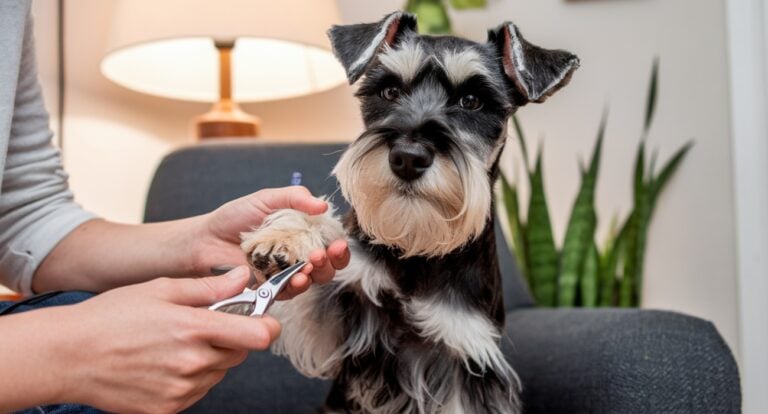
Hand-stripping or clipping—what’s best for your Schnauzer’s coat? See what professional groomers recommend for healthy, happy fur.
Walk into any dog show with Schnauzers competing, and you’ll spot the hand stripped dogs immediately. Their coats gleam with that signature harsh texture, looking absolutely magnificent under the lights. Now walk into your average pet grooming salon on a Saturday afternoon, and you’ll find clippers buzzing away on adorable Schnauzer after adorable Schnauzer. So what gives?
The split between hand stripping and clipping isn’t just about aesthetics (though that’s a huge factor). It’s about time, money, coat health, and what you actually want from your grooming routine. Some groomers swear by one method exclusively, while others adapt based on each dog’s lifestyle and their owner’s expectations. Let’s dig into what the pros really think.
Understanding the Schnauzer Coat
Before diving into techniques, let’s talk about what makes Schnauzer hair special. These dogs sport a double coat consisting of a soft, dense undercoat and a wiry, harsh outer coat. This isn’t the silky fur you’d find on a Golden Retriever or the tight curls of a Poodle. The Schnauzer coat evolved for a specific purpose: protection while ratting in German stables and farms.
That wiry texture isn’t just for show. It naturally repels dirt and water, provides insulation, and (back in the working dog days) protected against bites and scratches. When properly maintained through hand stripping, the coat maintains this functional texture. When clipped repeatedly, the texture gradually softens and changes.
The Science Behind the Texture
Each wire hair on a Schnauzer grows from the follicle with a thick shaft that tapers to a fine point. When you hand strip, you remove the entire dead hair from the root, allowing a new wire hair to grow in with that same thick to thin structure. Clipping, however, cuts the hair at its thickest point, so when it grows back, you’re seeing the blunt, thick part of the shaft rather than the natural taper. Over time and multiple clippings, the coat becomes progressively softer and loses that characteristic harsh feel.
What Exactly Is Hand Stripping?
Hand stripping sounds medieval, but it’s actually a precise grooming technique that involves plucking out dead hairs from the coat using your fingers or a stripping knife. The process removes the old, ready to shed hairs while leaving the healthy, growing hairs intact.
The key to successful hand stripping isn’t strength; it’s timing. You’re not yanking hairs out by force. You’re removing dead coat that’s already released from the follicle and ready to go.
Professional groomers who specialize in hand stripping develop an almost sixth sense for which hairs are ready to be removed. They work methodically across the dog’s body, section by section, often taking several hours to complete a full strip on a Standard Schnauzer. Miniature and Giant Schnauzers require proportional time investments.
The Hand Stripping Process
A typical hand stripping session involves multiple stages. First, the groomer assesses the coat to determine if it’s “blown” (ready to strip). They’ll test a small section by gently pulling to see if the hairs release easily. If the coat’s not ready, stripping will be uncomfortable for the dog and ineffective for the groomer.
Once the coat is ready, the groomer works through each area using either fingers or a stripping knife (which doesn’t actually cut, despite the name). They grip small sections of hair between thumb and knife or thumb and finger, then pull in the direction of hair growth. The dead hairs slide out while the live hairs remain. It’s tedious, time consuming, and requires significant skill.
The Case for Clipping
Let’s be real: clipping is significantly faster and more widely available. Your average grooming appointment might take 90 minutes to two hours for a full haircut, bath, and nail trim. That same dog hand stripped might require four to six hours, sometimes split across multiple appointments.
Clipping uses electric clippers with various blade lengths to trim the coat to a uniform length. It’s the same basic concept as a human haircut, just adapted for dogs. The groomer can quickly work through the body, legs, and head, creating that classic Schnauzer silhouette without the intensive labor of hand stripping.
Why Groomers Often Recommend Clipping
Cost matters. Hand stripping typically costs two to three times more than clipping because of the time and specialized skill involved. Many pet owners simply can’t or won’t pay $150 to $300 for grooming when they can get similar looking results for $60 to $100.
Availability is another huge factor. Not every groomer learns hand stripping anymore. It’s a dying art in many areas, particularly in big chain salons where speed and volume are prioritized. Finding a qualified hand stripping groomer might mean driving an hour or more, which isn’t practical for regular maintenance.
Then there’s the dog’s temperament. Hand stripping requires a patient, well trained dog who can stand still for extended periods. Puppies, anxious dogs, or those with mobility issues often do better with the quicker clipping process.
Comparing the Two Methods
| Factor | Hand Stripping | Clipping |
|---|---|---|
| Time Required | 4 to 6 hours | 1.5 to 2 hours |
| Cost Range | $150 to $300+ | $60 to $100 |
| Coat Texture | Maintains wiry, harsh texture | Gradually softens coat |
| Color Intensity | Preserves rich, deep colors | May cause fading over time |
| Availability | Limited; requires specialist | Widely available |
| Frequency | Every 8 to 12 weeks | Every 6 to 8 weeks |
| Pain Level | Minimal when done correctly | None |
What Professional Groomers Actually Say
Talk to ten groomers and you’ll get ten slightly different opinions, but certain themes emerge consistently. Most groomers agree that hand stripping is ideal for show dogs or owners who want to maintain the breed standard coat. For pet Schnauzers who won’t see the inside of a show ring, clipping is perfectly acceptable and often preferable.
The ‘right’ choice depends entirely on your priorities. If coat texture and breed standard matter to you, hand strip. If convenience and cost are your main concerns, clip without guilt.
Many groomers practice what they call “rolling the coat,” where they hand strip sections of the coat on a rotating schedule rather than doing the entire dog at once. This maintains coat texture while reducing the per visit time and cost. It’s a middle ground that appeals to dedicated owners who want the benefits of hand stripping without the intense sessions.
The Health Perspective
Some groomers argue that hand stripping is healthier for the skin because it removes dead coat and allows better air circulation. Others contend that a properly done clipper cut achieves the same results without the time investment. The truth probably lies somewhere in the middle.
One area where most groomers agree: if you’ve been clipping a Schnauzer for years, transitioning to hand stripping requires patience. The coat needs to grow out enough to strip, which means several months of your dog looking somewhat scruffy. Many owners start the transition, get frustrated during the awkward growth phase, and return to clipping.
Making the Decision for Your Schnauzer
Consider your lifestyle honestly. If you travel frequently, work long hours, or live in an area without access to hand stripping groomers, clipping makes more sense. There’s zero shame in choosing the practical option.
Questions to Ask Yourself
Do you show your dog? If yes, hand stripping is non negotiable. Show Schnauzers must maintain proper coat texture.
What’s your budget? If grooming costs above $100 every couple of months strain your finances, clipping is the wise choice. Your dog will be just as healthy and happy.
How much does appearance matter? Some owners genuinely love the softer, fluffier look of a clipped Schnauzer. Others want that classic, harsh wire coat. Neither preference is wrong.
Can your dog handle long grooming sessions? Senior dogs, puppies, or anxious dogs often struggle with multi hour appointments. Clipping might be more humane for them.
Living with Your Choice
Whichever method you choose, consistency matters more than the technique itself. Regular grooming prevents matting, keeps your Schnauzer comfortable, and maintains skin health. A clipped Schnauzer with regular appointments will always look better than a hand stripped Schnauzer who only sees the groomer twice a year.
The Hybrid Approach
Many savvy Schnauzer owners adopt a hybrid strategy. They hand strip the visible areas (back, sides, top of head) while clipping the areas that mat easily (armpits, groin, behind ears). This preserves some coat texture where it’s most noticeable while keeping grooming time and cost more reasonable.
Don’t let grooming perfectionism steal the joy of owning your Schnauzer. Whether stripped or clipped, a well cared for dog who receives regular grooming, proper nutrition, and lots of love will thrive.
The beard and leg furnishings typically get scissored regardless of which body method you choose. These areas need frequent trimming to prevent food collection and matting, and hand stripping isn’t practical for these softer, longer hairs.
Special Considerations for Different Schnauzer Varieties
Miniature Schnauzers make up the vast majority of the breed population, and they’re the most commonly clipped. Their smaller size means faster grooming times for both methods, but their popularity also means more groomers have experience working with them.
Giant Schnauzers present unique challenges. Their larger surface area means hand stripping takes even longer (we’re talking six to eight hours sometimes), and their stronger personalities require experienced handlers. Many Giant owners clip simply because finding someone qualified and willing to hand strip a 75 pound dog is nearly impossible.
Standard Schnauzers fall in the middle for both size and availability of services. They’re large enough that hand stripping is a significant time commitment but small enough that it’s manageable for experienced groomers.
The Bottom Line from Grooming Professionals
After interviewing dozens of professional groomers, a clear consensus emerges: both methods are valid choices. The grooming community has largely moved past the judgment that once surrounded clipping versus stripping debates.
Modern groomers recognize that pet owners have different needs, budgets, and priorities. They’d rather see a regularly clipped Schnauzer than a hand stripped one who only gets groomed when the matting becomes severe. Coat texture matters far less than consistent care and the human/animal bond.
Your Schnauzer won’t love you less if you clip instead of strip. They won’t know they’re supposed to have a harsh coat texture. What they will know is whether they’re comfortable, well maintained, and spending quality time with their favorite human. Focus on that, and the grooming method becomes just another practical decision in the long list of choices we make as dog owners.