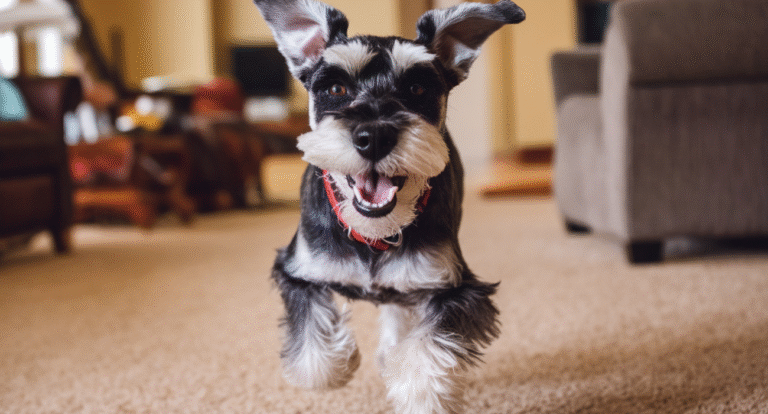
Wave goodbye to non-stop barking with these easy tricks. Enjoy peace and quiet while helping your Schnauzer become a calmer, happier companion.
Listen. That sound you hear isn’t your imagination or the neighbors’ TV turned up too loud. It’s your Schnauzer, doing what Schnauzers do best: alerting you to literally everything. Bred as ratters and guard dogs, these bearded beauties come hardwired with a vocal streak that would make an opera singer jealous.
But here’s the thing: you don’t have to resign yourself to wearing earplugs in your own home. Your Schnauzer’s barking habit isn’t a life sentence. With the right approach and a bit of patience, you can teach even the most chatty Schnauzer when it’s time to save their voice for actual emergencies (or at least what you consider emergencies).
1. Identify the Bark Triggers
Not all barks are created equal. Your Schnauzer might be sounding off about genuine concerns (someone’s at the door), perceived threats (a plastic bag floating by), or pure boredom (it’s Tuesday). Spend a few days actually paying attention to when your dog barks and what’s happening in those moments.
Keep a simple log if you need to. You might discover that 90% of the barking happens during specific times or in response to particular stimuli. Maybe it’s the afternoon mail delivery, or perhaps it’s whenever they hear dogs barking on TV. Once you identify the patterns, you can address the root cause instead of just treating the symptom.
Understanding your Schnauzer’s motivations gives you power. If they’re barking at passersby through the front window, closing the blinds during peak walking hours might eliminate the trigger entirely. If they’re responding to doorbell sounds from your shows, muting commercials becomes your new best friend.
2. Teach the “Quiet” Command
Here’s where that famous Schnauzer intelligence works in your favor. These dogs are smart enough to learn that barking on command is a trick, which means they can also learn when not to bark. The “Quiet” command becomes your secret weapon.
Start by letting your dog bark a few times at a trigger, then calmly say “Quiet” while holding a treat near their nose. Most dogs can’t bark and sniff simultaneously. The moment they stop barking, even for a second, reward them immediately and enthusiastically. Repeat this process consistently, gradually increasing the duration of silence required before they get the treat.
The goal isn’t to eliminate your Schnauzer’s voice entirely. It’s about giving them an off switch and teaching them to use it.
Patience is crucial here. Your Schnauzer won’t become a meditation guru overnight. But with consistent practice, that “Quiet” command will become as reliable as “Sit” or “Stay.” Just remember: timing is everything. That treat needs to appear within seconds of silence, or your dog won’t connect the dots.
3. Increase Physical Exercise
A tired Schnauzer is a quiet Schnauzer. These athletic little dogs were bred to work, and without adequate physical outlet, all that energy has to go somewhere. Spoiler alert: it usually comes out through their vocal cords.
| Exercise Type | Duration | Frequency | Bark Reduction Impact |
|---|---|---|---|
| Brisk walks | 30-45 minutes | Twice daily | High |
| Fetch sessions | 15-20 minutes | Once daily | Medium to High |
| Dog park visits | 45-60 minutes | 3-4x weekly | Very High |
| Agility training | 20-30 minutes | 2-3x weekly | High |
Before you protest that you don’t have time for all this exercise, consider how much time you’re currently spending managing barking complaints, soothing your own frazzled nerves, or apologizing to neighbors. A well exercised Schnauzer isn’t just quieter; they’re also calmer, better behaved, and more enjoyable to live with overall.
Mix up the activities too. Schnauzers are intelligent and get bored easily. Rotating between walks, play sessions, and training games keeps their minds engaged along with their bodies. Mental exhaustion is just as effective as physical tiredness when it comes to reducing excessive vocalization.
4. Provide Mental Stimulation
Speaking of mental exhaustion, let’s talk about your Schnauzer’s brain. These dogs are smart. Like, puzzle solving, problem analyzing, too clever for their own good smart. Without appropriate mental challenges, they’ll create their own entertainment, and you probably won’t like their creative choices.
Interactive puzzle toys, snuffle mats, and food dispensing balls turn mealtime into brain training. Hide treats around the house and teach your Schnauzer to find them. Practice new tricks beyond the basics. Even something as simple as rotating their toys (keeping some put away and switching them out weekly) keeps their environment novel and interesting.
Training sessions themselves provide excellent mental workouts. Fifteen minutes of focused obedience practice can tire out a Schnauzer more effectively than an hour of mindless wandering. The concentration required to learn new commands or perfect existing ones burns through mental energy beautifully, leaving less fuel for unnecessary barking.
5. Control the Environment
Sometimes the easiest solution is simply removing temptation. If your Schnauzer’s favorite hobby is barking at everything passing by the front window, maybe they don’t need access to that window all day. This isn’t about punishment; it’s about setting your dog up for success.
Rearrange furniture to block prime viewing spots. Use frosted window film on lower panes to obscure the view while still letting in light. Create a comfortable space in a quieter part of the house where your Schnauzer can relax without constant visual stimulation. You’re not being mean by limiting their surveillance capabilities; you’re helping them stay calm.
Consider white noise machines or calming music too. These can mask outdoor sounds that might trigger barking sprees. Many Schnauzers bark less when they can’t hear every little noise from outside. Plus, there are specifically designed dog calming playlists that use frequencies and rhythms proven to soothe anxious pups.
6. Address Separation Anxiety
Some Schnauzers bark excessively because they’re genuinely distressed when left alone. This isn’t just being annoying; it’s a cry for help. Separation anxiety barking has a different quality to it, usually more frantic and accompanied by other stressed behaviors like pacing or destructive chewing.
If you suspect separation anxiety, start with very short absences. Leave for literally 30 seconds, come back, no big deal. Gradually increase the duration as your dog learns that you always return. Make your departures and arrivals boring and low key. No tearful goodbyes or ecstatic reunion celebrations; just casual comings and goings like it’s no big deal.
Your Schnauzer needs to learn that being alone is safe, boring, and temporary. Not scary, exciting, or permanent.
Consider crate training if you haven’t already. Many dogs find crates comforting because they mimic the security of a den. Leave items with your scent, provide special toys that only appear during alone time, and ensure they’re thoroughly exercised before you leave. Sometimes a camera that lets you check in (and even dispense treats remotely) can help you monitor progress and reward quiet behavior.
7. Use Positive Reinforcement
Here’s a revolutionary concept: catch your Schnauzer being quiet and reward that behavior. We spend so much time addressing the barking that we forget to reinforce the silence. Your dog has no idea that you actually prefer the quiet moments unless you make it explicitly clear.
Every time your Schnauzer is hanging out calmly, toss them a treat. When they look at something that would normally trigger barking but stay quiet, that’s praise worthy! When they stop barking on their own without being told, that deserves a celebration. You’re essentially paying them for good behavior, and Schnauzers are very motivated by payment.
Be consistent and generous with this positive reinforcement, especially in the beginning. Your Schnauzer should start noticing a pattern: quiet = good things happen. The more you reinforce calm behavior, the more of it you’ll see. It’s basic psychology, but it works remarkably well with food motivated, intelligent breeds like Schnauzers.
8. Avoid Accidentally Rewarding Barking
Here’s where many well meaning owners shoot themselves in the foot. Your Schnauzer barks at the window. You rush over to see what’s wrong. You’ve just rewarded the barking with attention. Or they bark at you while you’re eating, and you toss them a bit of food to quiet them. Guess what you’ve just taught them?
Even negative attention (yelling “Stop barking!”) is still attention, and for some Schnauzers, that’s rewarding enough. The key is to completely ignore unwanted barking whenever possible. No eye contact, no speaking to them, no touching. Pretend they’re literally invisible until they’re quiet, then immediately engage with praise and rewards.
This requires discipline on your part. Ignoring a barking Schnauzer is harder than it sounds, especially when they’re persistent. But if you cave and give attention (even negative attention), you’ve just taught them that persistence pays off. Stay strong, be consistent, and wait for that moment of silence before offering any interaction whatsoever.
9. Socialize Properly
Many Schnauzers bark excessively because they’re uncertain or fearful in social situations. A well socialized dog who’s comfortable around various people, animals, and environments is generally much quieter than an anxious, under socialized one. Proper socialization isn’t just a puppy thing; adult Schnauzers can absolutely benefit from expanded social experiences.
Gradually expose your Schnauzer to different situations in controlled, positive ways. Start with low stress environments and work up to busier, more stimulating settings. Let them observe from a distance before requiring closer interaction. Reward calm behavior around new people, dogs, and situations. The goal is building confidence and showing them that the world isn’t actually that scary.
A confident Schnauzer doesn’t need to bark at everything because they’re not constantly worried about potential threats.
Join training classes, visit dog friendly stores, walk in different neighborhoods, and invite friends over regularly. Each positive experience builds their confidence and reduces their need to vocally announce every novel occurrence. Just remember to keep things positive and move at your dog’s pace. Forcing interaction before they’re ready will backfire spectacularly.
10. Consider Professional Help
Sometimes, despite your best efforts, the barking persists. There’s absolutely no shame in calling in reinforcements. Professional dog trainers and veterinary behaviorists have seen it all and can offer personalized strategies based on your specific situation. What works for one barky Schnauzer might not work for yours.
A professional can observe your dog’s behavior patterns and identify triggers or issues you might have missed. They can demonstrate techniques in person, which is often more effective than reading about them. Plus, they can rule out medical issues that might be contributing to excessive vocalization. Sometimes persistent barking stems from pain, cognitive decline, or other health problems that require veterinary intervention.
Group training classes offer the bonus of socialization while teaching obedience. Private sessions provide intensive, customized attention. Both have their place. And honestly? Sometimes just having an expert tell you “Yes, this is normal and fixable” provides the encouragement needed to stick with training long enough to see results. You’re not failing if you need help; you’re being smart and proactive.