Give your Schnauzer the healthiest teeth and breath. This essential guide shares easy routines and products for oral care every owner needs.
Let’s talk about something that doesn’t get nearly enough attention: your Schnauzer’s smile. Those teeth hiding behind that distinguished beard work hard every single day, chomping kibble, demolishing toys, and occasionally attempting to taste test your furniture. Yet somehow, dental care often falls to the bottom of the pet care priority list.
Here’s a jaw dropping fact: by age three, approximately 80% of dogs show signs of dental disease. Schnauzers, despite their robust nature and impressive whiskers, aren’t immune to oral health problems. But you have the power to change that statistic for your four legged companion, and it’s easier than you might think.
Why Schnauzer Dental Health Actually Matters
Beyond the obvious “your nose will thank you” benefit, your Schnauzer’s dental health is deeply connected to their overall physical condition. When plaque builds up on teeth, it doesn’t just sit there looking gross. It transforms into tartar, harboring bacteria that can sneak into your dog’s bloodstream through inflamed gums. From there, these microscopic troublemakers can travel to vital organs, potentially causing damage to the heart, kidneys, and liver.
Dental disease is progressive and sneaky. It starts innocently enough with a bit of plaque accumulation (hello, that yellowish film you might notice). Then comes gingivitis, with red and swollen gums that might bleed when your pup chews. If left unchecked, it advances to periodontitis, where the structures supporting the teeth start breaking down. Eventually, your Schnauzer could face tooth loss, chronic pain, and systemic infections.
Schnauzers, regardless of their size variety, are prone to certain health conditions that make dental care even more critical. Their genetic predisposition to conditions like diabetes and pancreatitis means keeping inflammation in check (including in the mouth) becomes particularly important.
Recognizing the Warning Signs
Your Schnauzer can’t exactly tell you when their mouth hurts, so you need to become a dental detective. Some dogs are stoic little soldiers who hide discomfort remarkably well, making it easy to miss developing problems until they’re advanced.
Visual and Behavioral Clues
Watch for yellow or brown tartar buildup along the gumline. While a little discoloration might not seem alarming, it indicates that bacteria are throwing a party in your dog’s mouth. Red, swollen, or bleeding gums are serious red flags that shouldn’t be ignored.
Changes in eating habits often signal dental trouble. If your Schnauzer suddenly shows reluctance to eat hard food, drops kibble frequently, chews on only one side of their mouth, or exhibits unusual drooling, something’s bothering them. Some dogs become head shy about having their face or mouth touched when they’re experiencing oral pain.
The Breath Test
Yes, dog breath has a certain… essence to it. But there’s normal dog breath and then there’s “something is seriously wrong” breath. A healthy dog’s breath might not smell like roses, but it shouldn’t make you recoil in horror. Extremely foul odor, especially if it’s sweet, fruity, or reminiscent of decay, warrants immediate veterinary attention.
Dental disease doesn’t take vacations or wait for convenient timing. Regular monitoring and early intervention can save your Schnauzer from pain and save you from expensive emergency procedures down the line.
The Home Care Arsenal
Maintaining your Schnauzer’s dental health requires consistency and the right tools. Think of it as building a dental care routine that becomes as normal as feeding or walking.
Brushing Basics
Tooth brushing remains the gold standard for at home dental care. If you just laughed out loud at the thought of brushing your Schnauzer’s teeth, you’re not alone. Many dog owners assume it’s impossible, but with patience and proper technique, most dogs can learn to tolerate (and some even enjoy) the process.
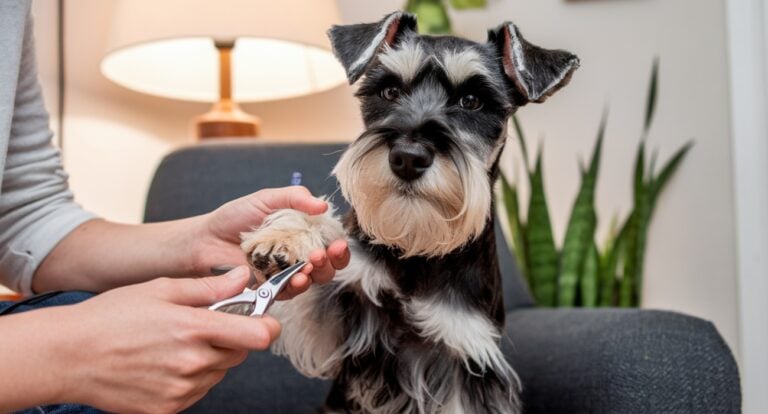
Start slowly. Don’t march up to your Schnauzer with a toothbrush on day one expecting cooperation. Begin by getting them comfortable with you touching their mouth. Lift their lips gently, touch their teeth and gums with your finger, and reward calm behavior. Once they’re relaxed with mouth handling, introduce a dog specific toothbrush or finger brush.
Never use human toothpaste, which contains ingredients toxic to dogs. Dog toothpaste comes in flavors like poultry, beef, and peanut butter, turning tooth brushing into a treat time experience. Apply a small amount to the brush, focus on the outer surfaces of the teeth (where plaque accumulates most), and use gentle circular motions.
Aim for daily brushing, but if that’s unrealistic, three to four times weekly still provides significant benefits. The outer surfaces matter most since your dog’s tongue naturally cleans the inner surfaces to some degree.
Dental Chews and Toys
Dental chews serve double duty as entertainment and oral health tools. Look for products approved by the Veterinary Oral Health Council (VOHC), which means they’ve been tested and proven to reduce plaque or tartar. These chews work mechanically, scraping away buildup as your Schnauzer gnaws.
Size matters tremendously here. Miniature Schnauzers need appropriately sized chews, while Giant Schnauzers require more substantial options. Chews that are too small pose choking hazards, while those that are too large might discourage chewing altogether.
Rubber toys with nubs or ridges, rope toys that floss between teeth, and puzzle toys that encourage extended chewing all contribute to oral health. Avoid extremely hard items like real bones, antlers, or hard nylon toys that can fracture teeth. If you wouldn’t want to hit yourself in the kneecap with it, it’s probably too hard for your dog’s teeth.
Professional Dental Care
Home care is fantastic and necessary, but it doesn’t replace professional veterinary dental cleanings. Think of it like your own dental care: brushing at home is essential, but you still need professional cleanings periodically.
What Happens During a Professional Cleaning
A proper veterinary dental cleaning requires general anesthesia. Before you panic about anesthesia risks, understand that modern veterinary anesthesia is remarkably safe, especially with appropriate pre anesthetic bloodwork and monitoring. Anesthesia allows the veterinarian to thoroughly clean below the gumline (where disease lurks), take dental radiographs, and address any problems without causing your dog stress or pain.
The procedure involves scaling to remove tartar, polishing to smooth tooth surfaces (making future plaque accumulation more difficult), and a thorough oral examination. Your vet will probe around each tooth, checking for pockets that indicate bone loss, loose teeth, or other abnormalities. Dental radiographs reveal problems invisible to the naked eye, such as root abscesses or bone loss.
When Surgery Becomes Necessary
Sometimes dental problems progress beyond cleaning into surgical territory. Tooth extractions might sound dramatic, but they’re sometimes the kindest option when teeth are damaged, infected, or causing pain. Dogs adapt remarkably well to tooth loss, even multiple extractions, and often show immediate improvement in comfort and appetite post recovery.
Dogs are masters at hiding pain, an evolutionary trait from their wild ancestors where showing weakness could mean death. Your Schnauzer might be suffering silently with dental pain while still wagging their tail and acting relatively normal.
Diet and Nutrition Connections
What your Schnauzer eats directly impacts their oral health. Dry kibble provides more mechanical cleaning action than wet food, as the crunching action helps scrape teeth. However, this doesn’t mean kibble alone prevents dental disease or that wet food is terrible for teeth.
Some prescription dental diets feature specially designed kibble that’s larger and more fibrous, requiring more chewing and creating a tooth brushing effect. These diets can be beneficial for dogs prone to dental issues, though they’re typically more expensive than regular food.
Avoid feeding table scraps and sticky treats that cling to teeth and promote bacterial growth. Raw carrots, apple slices (without seeds), and frozen green beans make excellent low calorie treats that also provide some cleaning action. Always supervise when giving fresh produce to prevent choking.
Water additives designed to reduce plaque and freshen breath offer another option for dogs who absolutely refuse tooth brushing. While not as effective as mechanical cleaning, they provide some benefit with zero effort. Look for VOHC approved products for proven efficacy.
Age Specific Considerations
Puppies and Young Adults
Starting dental care early establishes good habits for life. Schnauzer puppies should become accustomed to mouth handling and tooth brushing as soon as they join your family. Their puppy teeth (deciduous teeth) will fall out, but the handling practice proves invaluable when their permanent teeth arrive around six months old.
Some puppies retain baby teeth when adult teeth erupt, creating crowding that traps food and bacteria. Monitor your Schnauzer puppy’s mouth during teething and alert your vet to any retained baby teeth.
Senior Schnauzers
Older dogs face increased dental disease risk, yet they’re often the ones who benefit most from good oral care. Senior Schnauzers may have existing dental problems requiring management, and their immune systems might be less robust at fighting oral infections.
The anesthesia concern becomes more prominent with senior dogs, making pre anesthetic bloodwork absolutely essential. However, withholding necessary dental treatment due to age alone does more harm than good. An experienced veterinarian can assess anesthesia risk and make informed recommendations. Many seniors sail through dental procedures and experience dramatic quality of life improvements afterward.
Common Schnauzer Specific Issues
Schnauzers of all sizes share certain breed traits that impact dental health. Their distinctive beards, while adorable, can trap food particles and moisture around the mouth, potentially contributing to bacterial growth. Regular beard cleaning helps minimize this issue.
Miniature Schnauzers specifically show higher incidence of early dental disease, likely related to their smaller jaw size creating tighter tooth spacing. This crowding makes plaque accumulation easier and cleaning more challenging. Mini Schnauzer owners should be especially vigilant about daily brushing and regular professional cleanings.
Some Schnauzers develop a condition called enamel hypoplasia, where tooth enamel doesn’t form properly. This makes teeth more susceptible to decay and damage. While you can’t prevent this genetic condition, excellent dental care helps manage it.
Creating Your Dental Care Schedule
Consistency transforms dental care from overwhelming to manageable. Create a realistic schedule you’ll actually follow rather than an ambitious plan you’ll abandon after two weeks.
A practical weekly schedule might look like this: daily tooth brushing (or at minimum, four times weekly), dental chews three to four times weekly, monthly mouth examinations where you check for obvious problems, and professional cleanings as recommended by your veterinarian based on your dog’s individual needs.
Set reminders on your phone, keep supplies accessible, and tie dental care to existing routines. Many people successfully incorporate tooth brushing into their morning or evening rituals. If you feed your dog at the same time daily, brush their teeth immediately after. The key is making it automatic rather than something you have to remember.
The Cost Benefit Analysis
Quality dental care requires investment, but it’s significantly cheaper than treating advanced dental disease. A root canal costs $1,500 to $3,000. Treating a jaw bone infection requires thousands of dollars in surgery and medications. Compare those figures to regular cleanings and home care supplies, and prevention becomes the obvious financial choice.
Beyond money, consider your Schnauzer’s quality of life. Chronic dental pain affects eating, playing, and overall happiness. Dogs living with untreated dental disease experience constant low level discomfort that diminishes their enjoyment of life. The investment in their oral health pays dividends in their comfort, longevity, and vitality.
Your Schnauzer’s dental health isn’t a luxury; it’s a fundamental component of responsible pet ownership that directly impacts how long and how well they live.
Making dental care a priority today means more years of your Schnauzer greeting you with enthusiastic (and not horrifically stinky) kisses, enjoying their meals without pain, and maintaining the overall health that keeps them bounding around like the energetic characters they are.