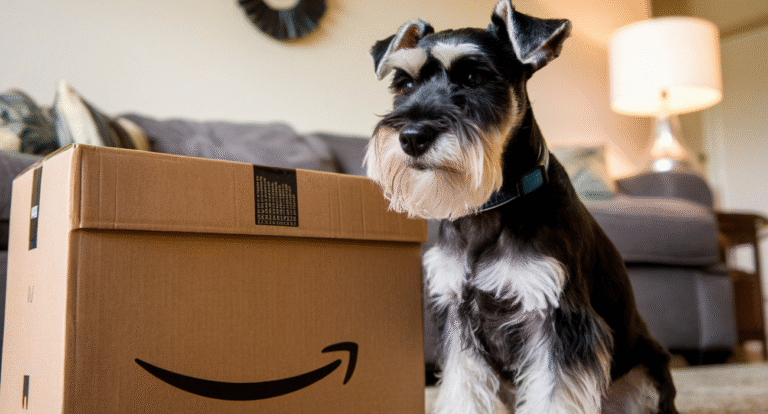
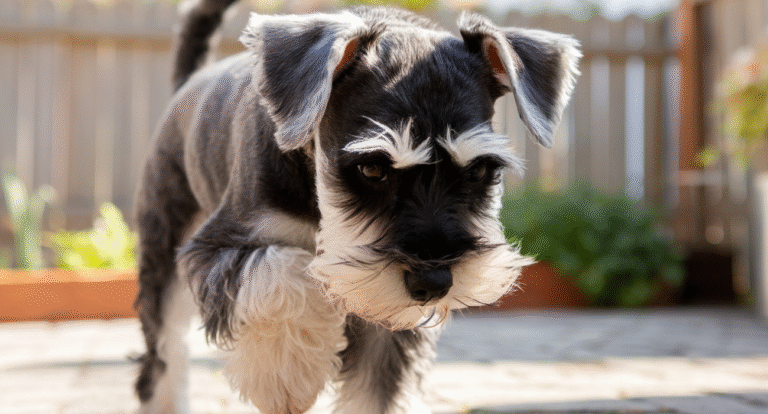
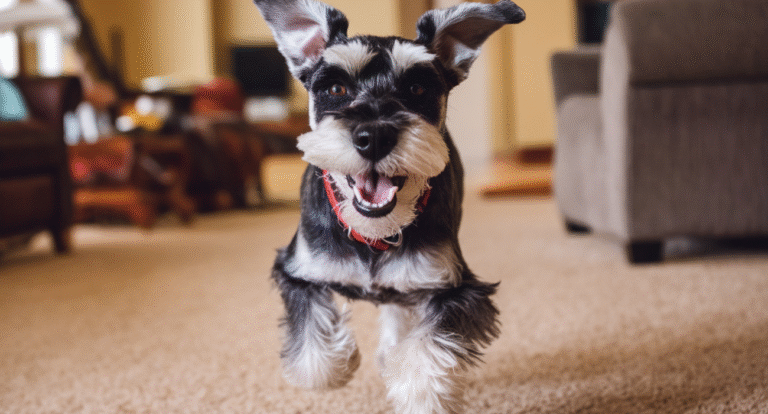
Guest greetings don’t have to be chaotic. Train your Schnauzer to welcome visitors calmly without all the jumping.
Your doorbell rings. Within seconds, your Schnauzer transforms into a furry pogo stick, launching themselves at your unsuspecting guests with the enthusiasm of a rocket scientist at a SpaceX launch. Aunt Martha nearly loses her balance, your neighbor takes three steps back, and you’re left apologizing yet again while wrestling sixty pounds of wiry excitement.
Sound familiar? You’re not alone. Schnauzers are notorious for their exuberant greetings, turning every visitor arrival into an Olympic jumping event. But here’s the good news: this behavior isn’t a permanent personality trait. It’s a trainable habit, and with the right approach, your Schnauzer can learn to channel that enthusiasm into calm, polite greetings that won’t send your guests fleeing.
Why Schnauzers Jump (And Why It’s Actually Your Fault)
Before you get defensive, hear me out. Your Schnauzer isn’t jumping to annoy you or assert dominance (that outdated theory needs to retire already). They’re jumping because it works. Every single time they’ve launched themselves at someone, they’ve gotten exactly what they wanted: attention.
Think about typical human responses to a jumping dog. We make eye contact, we say their name (even if we’re saying “No!”), we push them down with our hands, we laugh nervously, we pet them to calm them down. From your Schnauzer’s perspective, all of these responses equal success. They jumped, they got attention, mission accomplished. Even negative attention is attention to a dog who just wants to connect with the exciting human who just arrived.
Schnauzers, specifically, were bred to be alert watchdogs and versatile farm helpers. That terrier tenacity runs deep in their DNA. They’re supposed to be reactive, aware, and enthusiastic about changes in their environment. When someone new arrives, every instinct in their wiry little body screams “INVESTIGATE! ENGAGE! ALERT THE TROOPS!”
The jumping behavior typically starts in puppyhood when it was objectively adorable. A twelve pound Schnauzer puppy standing on their hind legs? Precious. That same behavior in a forty pound adult Standard Schnauzer with muddy paws? Significantly less charming. But nobody told your dog that the rules changed.
The foundation of stopping jumping behavior is this: your Schnauzer must learn that four paws on the floor is the only way to get attention from humans. Not sometimes. Not eventually. Always.
The Training Foundation: Management Comes First
You cannot train a behavior while it’s actively happening. This is where most people get stuck. They wait until guests arrive, their Schnauzer is already in full jumping mode with adrenaline pumping, and then try to teach calm behavior. That’s like trying to teach someone to whisper at a rock concert.
Management means preventing the jumping before training has taken hold. This requires some temporary lifestyle adjustments:
When guests come over, your Schnauzer needs to be behind a baby gate, in another room, on a leash, or in their crate before the doorbell rings. Yes, really. No exceptions during the training period. Every single time your Schnauzer successfully jumps on someone, you’ve just set your training back by reinforcing the exact behavior you’re trying to eliminate.
For the next few weeks, every greeting becomes a training opportunity, which means every greeting needs setup and control. Tell your guests ahead of time: “We’re working on training, so there will be a process when you arrive.” Real friends will understand. Everyone else can deal with it because this is your house and your dog.
Here’s your new arrival protocol:
- Guest texts that they’re five minutes away
- Put Schnauzer on leash or behind barrier
- Guest arrives and completely ignores the dog (this is crucial)
- You wait until Schnauzer shows calm behavior
- Only then does greeting begin (we’ll get to the specifics)
The leash is your secret weapon during this phase. A standard six foot leash gives you control without constant physical intervention. You can step on the leash, keeping it short enough that jumping becomes physically impossible, while still allowing your Schnauzer to sit or stand comfortably.
Teaching the Alternative Behavior: Sit Means Sit
Your Schnauzer needs to know exactly what to do, not just what not to do. The clearest alternative to jumping? Sitting. It’s physically incompatible with jumping (can’t do both simultaneously), it’s easy to reward, and it gives your enthusiastic Schnauzer a specific job during the exciting chaos of guest arrivals.
Start practicing sits in completely boring, non exciting situations. Your Schnauzer should be fluently sitting on cue before you ever attempt guest greetings. We’re talking dozens of successful repetitions throughout the day: before meals, before going outside, before getting leashed, randomly during TV time.
Once sitting is solid, add duration. Your Schnauzer needs to understand that “sit” means “plant your butt and keep it planted until released.” Use a release word (try “okay!” or “free!” or “release!”) to clearly communicate when sitting time is over. This prevents the pop up, sit, pop up, sit cycle that drives everyone crazy.
Now practice sits specifically in exciting contexts. Have family members practice coming through the front door. Ring the doorbell yourself. Knock on walls. Create artificial excitement while requiring sits. Reward heavily for maintaining the sit during excitement. We’re talking high value treats: real chicken, cheese, hot dogs, whatever makes your Schnauzer’s brain light up.
| Training Phase | Duration | Key Focus | Success Marker |
|---|---|---|---|
| Foundation Sits | 1-2 weeks | Sit command in calm settings | 90% success rate with verbal cue only |
| Duration Sits | 1-2 weeks | Holding sit for 10-30 seconds | Maintains position until release word |
| Excitement Sits | 2-3 weeks | Sitting during doorbell, knocks, arrivals | Can sit within 3 seconds of exciting stimulus |
| Guest Greetings | 3-4 weeks | Sitting for actual guest attention | Greets 3 consecutive guests without jumping |
The Four Paws Protocol: Your Guest Greeting Blueprint
You’ve done the foundation work. Your Schnauzer understands sit. Now it’s time to put it all together with real guests. Here’s your step by step protocol:
Phase One: The Ignore Phase
Guest arrives and your Schnauzer is already on leash (you’re holding it or standing on it). The guest enters and completely ignores your dog. No eye contact, no talking, no reaching down. They should act like your Schnauzer is invisible furniture. This is brutally hard for dog lovers, so brief your guests thoroughly.
Your Schnauzer will likely try everything in their repertoire: jumping (prevented by leash), barking, spinning, play bowing, whining. Ignore all of it. You and your guest chat casually like nothing is happening. Wait. The behavior will start to decrease because it’s not working.
Phase Two: The Calm Recognition
The instant (and I mean instant) your Schnauzer offers calm behavior (sitting, standing calmly, even just stopping the chaos for two seconds), mark it. Use a marker word like “yes!” or a clicker if you use one. Immediately reward with a treat. Guest still ignores the dog at this point.
Repeat this multiple times. Schnauzer offers calm behavior, you mark and reward. You’re building an incredibly clear pattern: calm behavior makes good things happen.
Phase Three: The Guest Interaction
Once your Schnauzer can maintain calm behavior (preferably sitting) for 10-15 seconds, the guest can calmly offer attention. Not excited squealing. Not baby talk chaos. Calm, quiet attention. Guest crouches down (rather than looming over) and offers gentle pets.
Critical rule: The instant your Schnauzer’s butt leaves the ground, all attention stops. Guest stands up, turns away, crosses arms. You can even have the guest leave the room briefly. Wait for the sit to happen again, then resume. Your Schnauzer learns: sitting makes attention continue, jumping makes attention disappear.
Consistency is everything. One successful jump that gets rewarded with attention will undo a week of training. Everyone who interacts with your Schnauzer must follow the same protocol.
Troubleshooting the Stubborn Schnauzer
Let’s address the elephant in the room: Schnauzers can be magnificently stubborn. That terrier streak means they’ll sometimes test boundaries with the persistence of a toddler who really, really wants a cookie.
Problem: Schnauzer won’t sit, just keeps jumping
Solution: You’re likely asking for the sit while they’re too aroused. Back up. Increase distance from the guest. Work on calming exercises before attempting the greeting. Consider whether your Schnauzer has had enough physical exercise that day (a tired Schnauzer is a trainable Schnauzer).
Problem: Sits for three seconds then pops back up
Solution: You’re asking for too much duration too quickly. Reward more frequently. If they can hold a sit for three seconds, reward at two seconds before they break. Gradually increase the time between rewards as they improve.
Problem: Perfect at home, chaos with actual guests
Solution: Your practice scenarios aren’t exciting enough. You need to practice with real people in short training sessions. Recruit friends, neighbors, and family. Offer them coffee and cookies in exchange for being training assistants. Start with calm, dog savvy people, then gradually work up to exciting visitors like children or people who make squeaky noises.
Problem: Different family members getting different results
Solution: Film everyone working with the dog. I guarantee you’ll find inconsistencies. One person is rewarding too late. Another is allowing three jumps before requiring a sit. Someone else is using a different release word. Get everyone on exactly the same page with exactly the same protocol.
The Real World Application
Here’s what successful training actually looks like in practice (spoiler: it’s not perfect, and that’s okay). Your Schnauzer probably won’t transform into a robot who executes flawless sits every single time forever. What you’re aiming for is management and improvement, not perfection.
Most trained Schnauzers will still show initial excitement when guests arrive. The difference is they’ll recover quickly, sit when asked, and greet politely rather than treating every visitor like a trampoline. Some dogs will always need a moment to decompress behind a gate before greetings. Some will always need that leash as a reminder during high excitement moments. That’s completely fine.
Training is not about eliminating your Schnauzer’s personality or enthusiasm. It’s about giving them appropriate outlets and teaching them the house rules for interacting with humans.
Build in regular refresher training. Even after your Schnauzer has mastered calm greetings, occasionally practice the protocol. Have guests sometimes ignore jumping attempts. Maintain the four paws rule consistently. Dogs, like humans, get rusty on skills they don’t practice regularly.
Consider adding an alternative greeting ritual that satisfies your Schnauzer’s need for engagement. Maybe they learn to grab a specific toy when guests arrive (can’t jump when holding a toy). Maybe they learn to go to their bed or mat near the door. Give them a job during greetings that’s incompatible with jumping.
Expanding Beyond the Front Door
Once you’ve conquered guest greetings at home, it’s time to generalize the behavior. Your Schnauzer needs to understand that the “four paws on the floor” rule applies everywhere: at the vet, at the park when meeting other dogs’ owners, when you’re out for walks and neighbors want to say hello.
The training process is identical, just with different locations and scenarios. Start in low distraction environments and gradually increase difficulty. Your Schnauzer might be perfect at home but completely forget their training at the dog park initially. That’s normal. Each new context requires practice.
Practice greetings with people your Schnauzer knows in new locations before attempting with strangers in new locations. Proof the behavior thoroughly. Have people approach from different angles, at different speeds, making different sounds. The more variety in training, the more reliable the behavior becomes.
Pay special attention to children, who can be especially exciting (read: challenging) for Schnauzers. Kids often run, squeal, and move unpredictably, which can trigger even a well trained dog to jump. Teach your Schnauzer that kids require extra calm behavior, and teach kids how to properly greet your dog (calmly, no sudden movements, let the dog approach them).
The most important thing? Celebrate progress, not perfection. Your Schnauzer is a living being with emotions, instincts, and off days. Some greetings will be flawless. Others will be disasters. What matters is the overall trend improving over weeks and months. Take videos monthly to document progress because day to day changes feel invisible, but the long term transformation will amaze you.