Want to understand your Schnauzer better? These smart tips teach you how to read every wiggle, wag, and glance like an experienced pro.
Your Schnauzer is talking to you right now. Seriously! Those perky ears, that magnificent beard, the way they’re tilting their head at you this very moment… it’s all communication. While your bearded buddy can’t exactly tell you they need a walk or that the mailman is their sworn enemy, they’re broadcasting their feelings through every whisker twitch and tail wag.
The problem? Most of us humans are pretty terrible at speaking dog. We miss the subtle signals, misinterpret the obvious ones, and sometimes accidentally stress out our pups by completely misreading the room. But here’s the good news: Schnauzers are actually incredibly expressive dogs, and once you crack their code, you’ll wonder how you ever missed what they were saying.
The Ears Tell Stories (And Sometimes Lies)
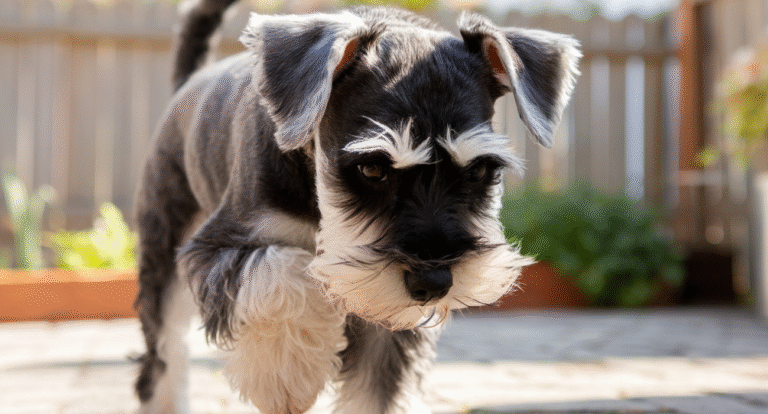
Schnauzer ears are remarkably expressive, especially if they’re cropped (though more and more Schnauzer parents are keeping them natural these days, which is totally fine!). Natural ears give you even more to work with because they have more mobility and surface area to communicate with.
When your Schnauzer’s ears are forward and alert, they’re engaged with something in their environment. Could be excitement, could be curiosity, could be that they heard the treat bag rustle from three rooms away. The ears alone don’t tell the whole story, though. You need to look at what else is happening.
Relaxed, neutral ears mean your dog is chill. They’re not on high alert, not worried, just existing peacefully in their bearded glory. This is your baseline, the position you want to see most often when your Schnauzer is hanging around the house.
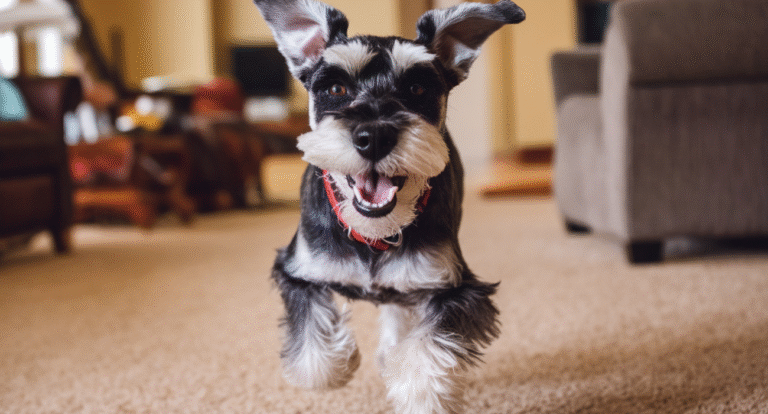
But here’s where it gets interesting: pulled back ears can mean several different things. Sometimes it’s fear or submission. Other times, especially in Schnauzers who are super excited to see you, those ears go back in pure joy. This is why context matters so much! Are they backing away or jumping forward? That makes all the difference.
Tail Talk: More Than Just Happy Wagging
Forget everything you think you know about tail wagging meaning happiness. That’s like saying all human smiles mean joy when we know darn well that some smiles are nervous, awkward, or even threatening.
The Position Matters
A high, stiff tail (especially if it’s quivering) often signals high arousal. Your Schnauzer might be excited, but they might also be overstimulated or even aggressive. Giant Schnauzers, in particular, can get very intense with this posture when they’re in guardian mode.
A neutral tail, carried naturally without tension, is your happy medium. This is a comfortable, confident dog just doing their thing.
A tucked tail between the legs? Yeah, that’s universal dog language for “I’m uncomfortable, scared, or submitting.” If you see this, something in the environment is stressing your Schnauzer out.
The Wag Itself
Here’s where it gets really fascinating:
| Wag Type | What It Usually Means | What to Watch For |
|---|---|---|
| Broad, sweeping wag | Genuine happiness, friendliness | Whole body wiggles, relaxed face |
| Small, fast wag | High arousal, could be excitement OR anxiety | Check if body is tense or loose |
| Slow, deliberate wag | Uncertainty, cautious assessment | Often paired with still body posture |
| Wag more to the right | Positive emotional response | Subtle but scientifically documented! |
| Wag more to the left | Negative or anxious response | Research shows dogs notice this too |
Your Schnauzer’s tail isn’t just decoration or a convenient indicator of mood. It’s a sophisticated signaling device that broadcasts emotional states to other dogs and, if you’re paying attention, to you. Learning these nuances transforms your ability to understand what your dog is actually experiencing.
Eyes: Windows to Your Schnauzer’s Soul
Those expressive Schnauzer eyes can melt hearts and communicate volumes. But you need to know what you’re looking at.
The “Soft Eye” vs. “Hard Stare”
Soft eyes are exactly what they sound like: relaxed, with normal eyelid tension, often accompanied by that contented Schnauzer expression that makes you want to give them all the treats. This is a comfortable, happy dog.
The hard stare, though? That’s different. The eyes become focused, intense, unblinking. The dog might be locked onto something (prey drive activating, hello squirrel!) or they might be feeling threatened or threatening. Either way, it’s arousal and intensity.
Whale Eye
This is when your dog shows the whites of their eyes, usually by turning their head away while keeping their eyes on something. It’s called “whale eye” and it typically means anxiety or discomfort. Your Schnauzer is worried but feels they need to keep watching whatever is concerning them.
If you see whale eye, don’t force interaction. Your dog is already stressed and needs space or reassurance, not more pressure.
The Squint
A relaxed squint or slow blink? That’s the good stuff. In dog language, this is affiliative behavior, like a canine version of a smile. Some trainers even recommend slow blinking at your dog as a calming signal.
Mouth Movements Mean More Than You Think
Schnauzers have those adorable bearded faces that can sometimes mask subtle mouth movements, but they’re definitely happening and worth noting.
The Relaxed, Open Mouth
Picture your Schnauzer after a good walk, tongue lolling out, mouth hanging open in that goofy “happy dog” expression. This is contentment. The jaw is loose, there’s no tension, everything is chill.
Tight, Closed Mouth
When that mouth snaps shut and the facial muscles tense up, your dog has shifted into a more aroused or alert state. Could be focus, could be stress, could be preparation for action (like barking at the mail truck).
Lip Licking and Yawning
These are classic stress signals. If your Schnauzer is lip licking (and there’s no food involved) or yawning (and they just woke up from a nap), they’re likely feeling uncomfortable or anxious about something in their environment.
Stress signals are your dog’s way of saying “I’m not comfortable” or even “please back off” without escalating to growling or snapping. When you catch these early warning signs, you can intervene before your Schnauzer feels they need to escalate their communication. This is especially crucial with the protective instincts that Schnauzers naturally possess.
Body Posture: The Big Picture
Now we’re getting into the full body read, which is where everything comes together.
The Forward Lean
When your Schnauzer leans forward, putting their weight on their front legs, they’re approaching whatever has their attention. Could be curious interest, could be assertiveness, could be the beginning of a challenge. Look at the rest of the body: is the tail up? Are the ears forward? Is the mouth closed?
The Backward Lean
Weight shifting back, maybe even backing up physically, signals uncertainty or avoidance. Your Schnauzer isn’t confident about whatever they’re facing. This doesn’t necessarily mean fear; it could just be caution about something new.
The Play Bow
Front end down, butt in the air, tail wagging like crazy? That’s the universal dog signal for “LET’S PLAY!” Even the most dignified Standard Schnauzer will throw out a play bow when they’re feeling frisky. This posture is pretty much always positive and social.
The Freeze
When a dog goes completely still, that’s significant. It can mean intense focus (prey drive locked on target) or it can be a fear response (freeze being part of fight/flight/freeze). Context is everything here.
The Hackles Situation
Raised hackles (piloerection, if we’re getting technical) are those hairs that stand up along your Schnauzer’s back and neck. Many people assume this always means aggression, but that’s not quite right.
Hackles indicate arousal, which could be:
- Excitement (omg another dog to play with!)
- Fear (that’s a scary stranger!)
- Aggression (get out of my yard!)
- Intense focus (tracking a scent)
You need the whole picture. Raised hackles plus forward lean plus hard stare? Very different from raised hackles plus play bow plus wagging tail.
Putting It All Together: Reading Scenarios
Let’s practice with some common Schnauzer situations.
Scenario One: Doorbell Rings
Your Schnauzer’s ears shoot forward, tail goes up and stiff, they lean forward, mouth closes, eyes focus hard on the door, and they’re likely barking their head off. Translation: High alert, guardian mode activated. They’re aroused and ready to protect their territory. This is pretty standard Schnauzer behavior, but the intensity tells you how worked up they are.
Scenario Two: New Dog at the Park
Ears neutral or slightly forward, tail wagging in broad sweeps, play bow initiated, mouth open and relaxed, bouncy movements. Translation: “Friend! Let’s play! You seem cool!” This is confident, friendly socialization.
Scenario Three: Vet Visit
Tail tucked, ears back, body weight shifted backward, whale eye showing, lip licking, possibly panting even though it’s not hot. Translation: “I am extremely uncomfortable and would like to leave now, please.” This dog needs patience and reassurance, not forcing interaction.
Special Schnauzer Considerations
Different Schnauzer sizes and varieties can have slightly different body language quirks.
Miniature Schnauzers tend to be bold and vocal despite their small size. They’ll often display confident body language even in situations where larger dogs might be more cautious. Don’t dismiss their signals just because they’re pint sized; they’re communicating just as clearly.
Standard Schnauzers are the original size and often strike a balance between playfulness and seriousness. They can shift quickly between relaxed and alert, so watch for those transitions.
Giant Schnauzers are powerful guardians and their body language carries more physical weight (literally). A Giant Schnauzer’s forward lean and hard stare is intense and should always be taken seriously. They’re not being dramatic; they’re being clear about their intentions.
Common Misreadings and How to Avoid Them
Mistake One: Assuming All Wags Are Happy
We covered this, but it bears repeating: wag type matters. A stiff, fast wag from a tense dog is not the same as a whole body wiggle from a relaxed dog.
Mistake Two: Ignoring Subtle Signals
By the time your Schnauzer is growling or snapping, they’ve likely given you a dozen more subtle signals first. The lip lick, the turned head, the stiffening body, the whale eye… these are all earlier communication attempts. Catch them early!
Mistake Three: Reading Signals in Isolation
One signal alone doesn’t tell you much. Is the tail wagging? Great, but what are the ears doing? How about the eyes? The mouth? The overall body position? You need the complete picture for accurate interpretation.
Why This Matters for Your Relationship
Understanding your Schnauzer’s body language isn’t just an interesting party trick. It fundamentally changes your relationship. You can:
- Prevent problems by seeing stress or discomfort before it escalates
- Deepen your bond by responding appropriately to your dog’s emotional state
- Keep everyone safer by recognizing warning signs and intervening
- Reduce anxiety (yours and your dog’s) by understanding what’s actually happening
- Communicate more effectively because you’re finally speaking the same language
Schnauzers are smart, expressive, opinionated dogs with a lot to say. They’ve been trying to tell you things all along. Now you know how to listen properly, which means both of you can finally understand each other. And that’s when the real magic happens in your relationship with your bearded companion.
| Body Part | Relaxed Signal | Alert Signal | Stressed Signal |
|---|---|---|---|
| Ears | Neutral position | Forward, attentive | Pinned back flat |
| Tail | Natural carriage | Up, possibly stiff | Tucked between legs |
| Mouth | Open, tongue out | Closed, focused | Tight, lip licking |
| Eyes | Soft, blinking | Hard stare | Whale eye, avoiding |
| Body | Even weight, loose | Forward lean | Backward lean, lowered |
The most important thing you can do as a Schnauzer parent is simply to pay attention. Your dog is constantly communicating with you through a sophisticated system of physical signals. Every ear position, every tail movement, every shift in posture has meaning. When you start seeing your Schnauzer as the eloquent communicator they truly are, rather than assuming they’re mysterious or unpredictable, everything changes. You become fluent in a language you’ve been hearing all along but never quite understood.