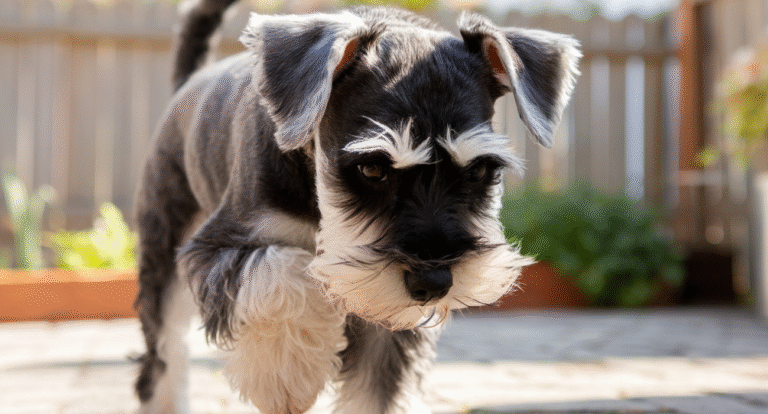
Grooming your Schnauzer’s paws can be simple. Follow these easy steps to keep them neat and healthy without stress.
Schnauzer paws are basically tiny masterpieces of fur, pads, and personality. They’re also magnets for dirt, debris, and enough hair to make a small wig. If you’ve ever wondered why professional groomers charge what they do, spend five minutes examining your Schnauzer’s paws and you’ll understand. There’s a whole ecosystem happening down there, and somebody needs to manage it. That somebody can be you, and it doesn’t have to feel like performing surgery while your dog acts like you’re attempting exactly that.
The truth is, paw grooming is one of those essential skills that separates the frazzled dog owner from the confident one. It’s not glamorous. Your Schnauzer will probably give you grief about it. But once you get the hang of it, you’ll wonder why you were ever intimidated in the first place. Plus, there’s something weirdly satisfying about transforming your dog’s wild Hobbit feet into neat, tidy paws. Let’s get into how you can master this skill without losing your mind (or your dog’s trust).
Why Paw Grooming Actually Matters
Let’s start with the why before we dive into the how. Schnauzer paws aren’t like other dog paws. Thanks to their wiry, continuously growing coat, the fur between their paw pads grows with wild abandon. Left unchecked, this creates a whole host of problems that go beyond mere appearance. Matted fur between the pads can trap moisture, leading to bacterial or yeast infections. Long hair collects everything your dog walks through: mud, salt, chemicals, tiny pebbles, and mystery substances you’d rather not identify.
Then there’s the traction issue. Dogs rely on their paw pads to grip surfaces. When excessive fur covers these pads, your Schnauzer essentially has no traction. They’ll slip on smooth floors, struggle with stairs, and generally move around like Bambi on ice. For older Schnauzers or those with joint issues, this lack of grip can actually contribute to injuries.
Here’s the reality: Regular paw grooming isn’t optional maintenance. It’s fundamental to your Schnauzer’s comfort, hygiene, and physical safety. Those fuzzy feet need attention.
Beyond health concerns, there’s the comfort factor. Imagine wearing socks that are perpetually wet, dirty, and bunched up between your toes. Unpleasant, right? That’s what overgrown paw fur feels like for your dog. Keeping those paws neatly trimmed means your Schnauzer can actually feel the ground properly, maintain their natural gait, and avoid that constant sensation of walking on matted, uncomfortable fur.
Gathering Your Paw Grooming Arsenal
You don’t need a professional grooming station, but you do need the right tools. Using regular scissors or inappropriate equipment is a fast track to either doing a terrible job or accidentally nicking your dog. Neither outcome is ideal. Here’s what you actually need:
| Tool | Purpose | Why You Need It |
|---|---|---|
| Blunt-tip grooming scissors | Trimming fur around and between pads | The rounded tips prevent accidental pokes |
| Small clippers | Quick, efficient trimming | Faster and safer for beginners |
| Slicker brush | Removing mats before trimming | Can’t trim what you can’t see |
| Styptic powder | Stopping bleeding from quick cuts | Just in case (accidents happen) |
| High-value treats | Bribery and positive reinforcement | Never underestimate treat power |
| Good lighting | Seeing what you’re doing | Seems obvious but easily overlooked |
Invest in quality blunt-tip scissors specifically designed for pet grooming. Regular craft scissors have sharp points that can easily jab your dog if they move unexpectedly (and they will move unexpectedly). Small clippers with a #30 or #40 blade work beautifully for paw pads, though scissors work fine if you’re more comfortable with them.
The slicker brush is non-negotiable. You need to brush out any mats or tangles before you start trimming. Trying to cut through matted fur is not only frustrating, it’s also a good way to accidentally cut skin that’s caught up in the mat. Take the time to thoroughly brush each paw, paying special attention to the areas between the pads where mats love to form.
The Pre-Grooming Prep Work
Before you even think about picking up scissors, set yourself up for success. Choose a time when your Schnauzer is naturally calm. Post-walk or after playtime works well because your dog will have burned off excess energy. A wired, excited Schnauzer is infinitely harder to groom than a pleasantly tired one.
Start building positive associations with paw handling long before grooming day. Spend time just touching your dog’s paws while watching TV or during cuddle sessions. Gently press between the pads, hold each paw for a few seconds, and reward calm behavior with treats. This desensitization process makes actual grooming sessions dramatically easier. Dogs who are comfortable with paw handling from an early age rarely put up much fuss during grooming.
Set up your grooming space thoughtfully. You need excellent lighting (seriously, you cannot have too much light for this task), a non-slip surface for your dog to stand on, and all your tools within easy reach. Many people find that grooming on a table covered with a yoga mat works perfectly. The height saves your back, and the mat prevents slipping. If you’re working on the floor, that’s fine too, just make sure you can see what you’re doing without contorting yourself into uncomfortable positions.
Have a helper if possible, especially for your first few attempts. Someone who can hold treats near your Schnauzer’s nose and provide gentle restraint makes the entire process smoother. That said, plenty of people successfully groom solo. You’ll just need to work a bit more slowly and take more breaks.
The Actual Trimming Process (Step by Step)
Here’s where we get down to business. Start with the easiest paw first (usually a back paw, since most dogs are more tolerant of having their rear feet handled). Hold the paw gently but firmly. You want enough control that your dog can’t easily yank away, but not so tight that you’re causing discomfort.
Step one: Brush the paw thoroughly. Use your slicker brush to work through any tangles, always brushing in the direction of hair growth. Pay special attention to the fur between the pads. If you encounter stubborn mats, work them out gently with your fingers or a mat splitter tool. Never try to cut directly through a tight mat without separating it from the skin first.
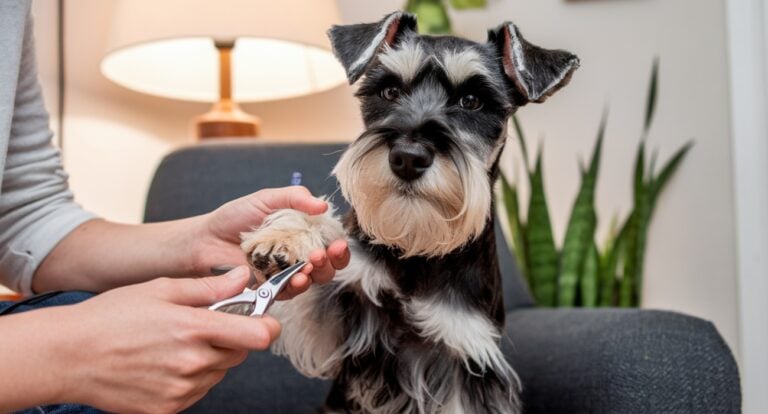
Step two: Trim the fur on top of the paw. Hold your scissors parallel to the paw and trim the excess fur so it’s roughly even with the paw pad level. Schnauzer paws should look neat and rounded, not like they’re wearing fluffy slippers. Take small snips rather than trying to remove everything in one cut. You can always trim more; you cannot glue fur back on.
Step three: Address the fur between the pads. This is the most important part and requires the most care. Spread the pads gently with your fingers to expose the fur growing between them. Using your blunt-tip scissors or clippers, carefully trim this fur so it’s level with or slightly below the pad surface. The goal is to expose the pads fully so they can make contact with the ground. Be extremely careful here. Paw pad skin is thin and bleeds readily if nicked.
Pro insight: Many groomers actually prefer small clippers for between the pads because there’s less risk of cutting the dog. If you’re nervous with scissors, clippers are your friend. Just go slowly and keep the blade flat against the pad.
Step four: Trim around the edges of the paw. Look at the paw from all angles and trim any straggly hairs that stick out beyond the paw’s natural outline. The finished result should look tidy and rounded, with all the pads visible and clear of fur. Think “neat and natural” rather than “sculpted topiary.”
Step five: Check the nails. While you’re focused on the paws, take a quick look at nail length. If you hear clicking when your Schnauzer walks, the nails are too long and need trimming. This could be a separate task if you’re not comfortable doing it all at once, but it’s worth checking while you’re already handling the paws.
Repeat this entire process for each paw, working at your dog’s pace. If your Schnauzer gets squirmy or stressed, take a break. Hand out treats liberally throughout the process. You want your dog to associate paw grooming with positive experiences, not wrestling matches and anxiety.
Handling the Inevitable Challenges
Let’s be real: This won’t always go smoothly, especially at first. Your Schnauzer might pull away, whine, or give you accusatory looks that make you question your life choices. Here’s how to handle common problems:
The foot snatcher: Some Schnauzers yank their paw back the second you touch it. Combat this by holding the leg just above the paw rather than gripping the paw itself. This gives you better control and feels less threatening to the dog. Also, work in shorter sessions. Five minutes of successful grooming beats 20 minutes of struggling.
The squirmer: If your dog won’t hold still, you’re probably working too long without breaks. Do one paw, give a play break, then do another. Also reassess your restraint technique. Sometimes dogs squirm because we’re holding them too tightly, which creates anxiety. A calm, loose hold often works better than a death grip.
The biter: If your Schnauzer tries to bite during paw handling, you’ve got a trust or fear issue that needs addressing before you attempt grooming. Go back to basic desensitization work. Touch the paw briefly, reward, and release. Gradually build up duration. If the behavior persists, consult a professional trainer. Grooming should never be traumatic for your dog.
The mat situation: Discovered a mat you can’t work through? Don’t force it. You can carefully cut the mat out, but only if you can slide a comb between the mat and the skin to protect the skin from your scissors. When in doubt, leave it for a professional groomer. A mat isn’t worth injuring your dog.
Bleeding (it happens): If you accidentally nick a pad or the quick of a nail, don’t panic. Apply styptic powder or cornstarch directly to the cut and hold pressure for 30 seconds. The bleeding should stop quickly. Paw pad cuts look dramatic because they bleed readily, but they’re usually minor. If bleeding doesn’t stop after a few minutes or the cut looks deep, contact your vet.
Maintenance Between Sessions
Here’s a secret that makes paw grooming infinitely easier: maintenance. Instead of letting your Schnauzer’s paws reach crisis levels of overgrowth, do quick touch-ups regularly. A five minute paw check once a week means you’ll never face a massive grooming project.
Get in the habit of examining paws after outdoor adventures. Check for debris, ice balls (in winter), cuts, or developing mats. A quick brush and removal of any foreign objects takes seconds and prevents bigger problems. Many Schnauzer owners keep a small towel by the door specifically for wiping and checking paws when their dog comes inside.
Between full grooming sessions, brush those paws. Run a slicker brush through the paw fur every few days. This prevents mats from forming and keeps the fur manageable. It also maintains your dog’s comfort level with paw handling, making actual grooming sessions less stressful.
Knowing When to Call in Backup
Look, sometimes you need a professional, and that’s completely okay. If your Schnauzer has severe matting, infected paws, or becomes aggressive during grooming attempts, a professional groomer or veterinary technician should handle it. They have training, experience, and sometimes sedation options for dogs who simply cannot tolerate the process.
Even if you do home grooming, having a relationship with a good groomer is valuable. They can tackle the occasional major mat, show you techniques you might be missing, and handle grooming when life gets too hectic. Many people alternate between home maintenance and professional full grooms every 4 to 6 weeks. This hybrid approach works beautifully.
Bottom line: Home paw grooming is totally achievable, but knowing your limits and asking for help when needed isn’t failure. It’s responsible pet ownership. Your Schnauzer doesn’t care who grooms their paws, only that the job gets done.
The goal isn’t perfection on your first attempt or even your tenth. The goal is keeping your Schnauzer’s paws healthy, comfortable, and functional. Some grooming sessions will go smoothly. Others will feel like you’re wrestling a particularly opinionated small bear. Both scenarios are normal. What matters is that you keep trying, stay patient, and always prioritize your dog’s wellbeing over achieving some grooming ideal you saw on social media.
Your Schnauzer’s paws carry them through their entire life. They deserve attention, care, and regular maintenance. With practice, the right tools, and a generous supply of treats, you absolutely can handle this essential grooming task. Those perfect, tidy paws are within your reach (pun absolutely intended).