Nervous dogs need a gentler approach. These calming grooming tricks reduce fear, build trust, and make sessions easier for everyone involved.
Your German Shepherd might be brave enough to protect your entire family, yet completely falls apart when you approach with a comb. This contradiction baffles many owners, but it’s actually quite common. These dogs are incredibly sensitive, and grooming involves touching, restraining, and strange sensations that can trigger their anxiety.
The transformation from nervous wreck to calm grooming client doesn’t happen overnight. However, with consistent application of proven techniques, most German Shepherds can overcome their grooming fears. Let’s explore six practical tricks that actually work.
1. Start With Desensitization Before You Even Begin
The biggest mistake owners make is diving straight into grooming without preparation. Your nervous German Shepherd needs to gradually become comfortable with grooming tools before they ever touch their body.
Begin by simply leaving grooming tools around your home where your dog can see and sniff them. Place the brush near their food bowl, leave the nail clippers on the coffee table, or set the grooming table (if you use one) up in the living room. This sounds almost too simple, but it works wonders. Your dog learns that these objects exist in their environment without anything scary happening.
Next, pick up the tools and move them around while rewarding your dog with treats. Just holding the brush? Treat. Clicking the nail clippers in the air (nowhere near your dog)? Treat. You’re building positive associations before any actual grooming occurs.
The foundation of successful grooming with anxious dogs lies in separating the tools from the action. When your German Shepherd sees a brush as just another household object rather than a harbinger of stress, you’ve already won half the battle.
2. Master the Art of Touch Desensitization
German Shepherds have sensitive skin, and nervous dogs are often touch reactive in areas where grooming happens most: paws, ears, tail, and belly. You need to normalize touching these areas outside of grooming contexts.
During regular cuddle time or relaxation periods, gently handle your dog’s paws. Hold them for just two seconds, then release and reward. Gradually increase the duration. Do the same with ears (gently lifting and examining), running your hands down their tail, and touching their belly and hindquarters.
The key principle here is brief and positive. You’re not restraining them; you’re creating hundreds of micro-experiences where touch equals good things. Over several weeks, your German Shepherd’s nervous system learns to stay calm when these sensitive areas are handled.
Here’s a progression timeline that works for most dogs:
| Week | Activity | Duration | Frequency |
|---|---|---|---|
| 1-2 | Touch paws lightly | 2-5 seconds | 5-10 times daily |
| 3-4 | Hold paws, light pressure | 10-15 seconds | 3-5 times daily |
| 5-6 | Manipulate toes, touch nails | 15-30 seconds | 2-3 times daily |
| 7-8 | Introduce clipper touching (not cutting) | 30-60 seconds | 1-2 times daily |
3. Create Irresistible Positive Associations With High Value Rewards
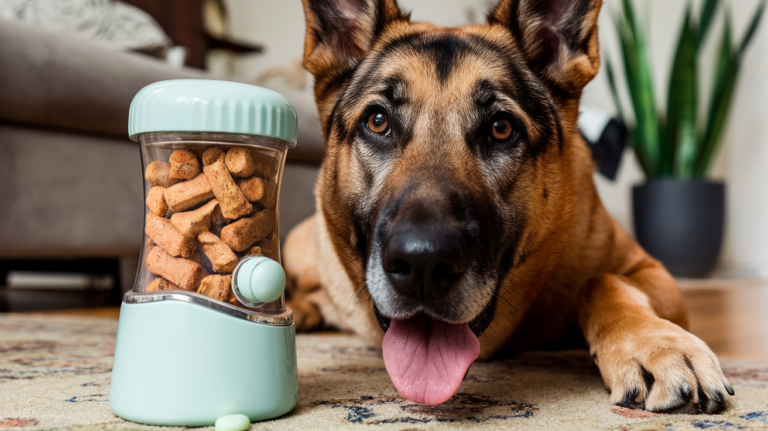
Not all treats are created equal, and nervous dogs need the good stuff during grooming. We’re talking about whatever your German Shepherd would do backflips for: tiny pieces of chicken, cheese, hot dogs, or specialized high value treats.
The strategy is counterconditioning: pairing something your dog fears with something they absolutely love. Every single interaction with grooming tools should produce a reward. Brush touches their fur? Treat appears instantly. Nail clipper comes near their paw? Jackpot of treats.
Timing matters enormously here. The treat must appear during or immediately after the grooming action, not five seconds later. Your dog’s brain needs to connect the grooming sensation directly with the reward. Think of it like Pavlov’s dogs, except instead of salivating at a bell, your German Shepherd learns to relax during brushing.
Some owners use a “treat scatter” technique: toss 5-10 tiny treats on the floor during grooming so your dog stays occupied and creates a positive experience. Others use lick mats smeared with peanut butter or squeeze tubes of treat paste. Experiment to find what works best for keeping your particular dog calm and happy.
4. Keep Sessions Ridiculously Short (Seriously)
When you’re dealing with a nervous German Shepherd, your grooming session should be laughably short at first. We’re talking 30 seconds to 2 minutes maximum. Most owners try to complete entire grooming sessions, which overwhelms anxious dogs and reinforces their fear.
Instead, adopt the “one body part per session” approach. Monday: brush only the back for 90 seconds. Tuesday: examine and touch the front paws for one minute. Wednesday: gently brush one ear. This might sound inefficient, but you’re playing the long game. A dog who tolerates 90 seconds of calm grooming every day is infinitely better than a dog who panics through a 30 minute session once a month.
Success in grooming nervous dogs is measured in seconds, not in completed tasks. Five calm minutes today builds the foundation for twenty calm minutes next month.
As your German Shepherd’s comfort increases, gradually extend sessions by 15 to 30 second increments. Track their body language closely: panting, whale eye (showing whites of eyes), lip licking, or yawning indicate stress. End the session before these signs appear when possible, always finishing on a positive note.
5. Control The Environment Like A Professional
Your German Shepherd’s anxiety often connects to environmental factors you might not even notice. Background noise, location, time of day, and even who’s present can dramatically affect their stress levels.
Choose a quiet, familiar space for grooming. Many dogs feel more secure in smaller areas rather than wide open spaces. A bathroom, laundry room, or corner of the bedroom often works better than the middle of the living room. Close doors to reduce escape options, which paradoxically helps some dogs relax because they’re not constantly scanning for exits.
Consider the surface under your dog’s feet. Slippery floors increase anxiety because your dog can’t get stable footing. Use a rubber mat or towel to give them traction. Some German Shepherds actually prefer being groomed while lying on their dog bed or favorite blanket because it adds comfort and familiarity.
Timing matters too. Groom your dog after exercise when they’re naturally calmer. A tired German Shepherd is a more cooperative German Shepherd. A 20 minute walk or 10 minute training session before grooming can make an enormous difference in their receptiveness.
6. Implement Calming Protocols and Pressure Techniques
Some German Shepherds respond beautifully to specific calming techniques that address their nervous system directly. The “Thundershirt effect” is real: gentle, consistent pressure can have a soothing impact on anxious dogs.
Try placing one hand firmly (but gently) on your dog’s shoulder or side while grooming with the other hand. This steady pressure provides reassurance and can interrupt the anxiety response. Some owners use grooming loops attached to a stable surface, not to restrain the dog, but to provide a point of contact that feels secure.
Calming signals from you matter immensely. Speak in a low, slow, soothing voice (not high pitched excitement). Take deep breaths yourself; dogs pick up on human anxiety and mirror it. Some groomers use classical music or white noise in the background, which studies have shown can reduce canine stress levels.
For particularly nervous dogs, consult your veterinarian about natural calming supplements like L-theanine or adaptil (dog appeasing pheromone) diffusers. In severe cases, your vet might prescribe mild anti-anxiety medication to use during the training period. There’s no shame in using pharmaceutical help while you work on behavioral modification; sometimes dogs are too anxious to learn, and medication creates a window where training can actually take effect.
| Calming Technique | How It Works | Best For |
|---|---|---|
| Steady pressure touch | Activates calming pressure points | Dogs who respond to physical comfort |
| Slow, rhythmic brushing | Creates predictable, soothing sensation | Dogs nervous about unpredictability |
| Background white noise | Masks startling environmental sounds | Noise sensitive dogs |
| High value food distraction | Redirects focus from anxiety to reward | Food motivated dogs |
| Post exercise grooming | Capitalizes on natural endorphin calm | High energy dogs |
Remember that every German Shepherd is unique. What works brilliantly for one might not work for another. The real trick is patient observation: watch your dog’s responses, adjust your approach accordingly, and celebrate tiny victories. That moment when your nervous shepherd actually leans into the brush instead of pulling away? That’s the moment you know you’re on the right track.
Grooming a nervous German Shepherd isn’t about dominating their fear or forcing compliance. It’s about gradually expanding their comfort zone until grooming becomes just another part of life they can handle with confidence.
The transformation won’t happen in a week, but with consistency and compassion, your anxious German Shepherd can become a cooperative grooming client. The bond you build through this patient process often extends far beyond grooming, creating deeper trust in all aspects of your relationship.