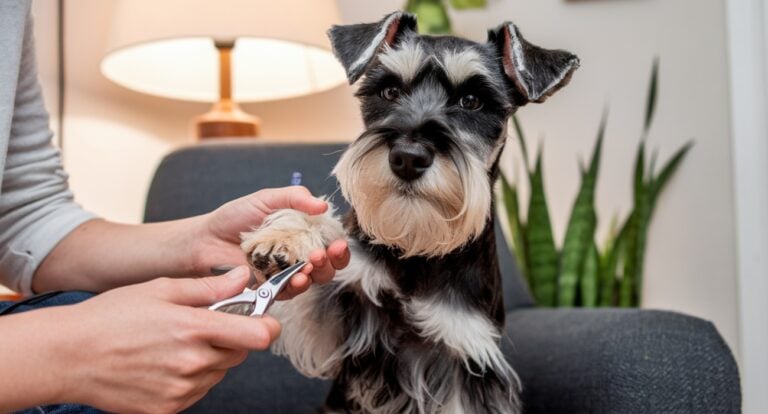
Does your Schnauzer nip at ankles? This clever trick can stop the habit quickly without frustration.
When your schnauzer launches another sneak attack on your heels, you’ve probably wondered if you adopted a dog or a piranha with paws. Those needle sharp puppy teeth (or persistent adult chompers) can make even the shortest walk across your living room feel like running a gauntlet. The internet is full of conflicting advice, and you’re exhausted from trying methods that just don’t stick.
The truth is simpler than you think. One specific approach works consistently across different schnauzers, different ages, and different severity levels of nipping. Ready to discover what actually stops the behavior? Let’s dive in.
The Magic Trick: Reverse Timeout (The “Be a Tree” Method)
The technique that works like magic isn’t about punishing your schnauzer or establishing dominance. It’s about something much more powerful: teaching your dog that nipping makes all the fun disappear instantly. Behaviorists call this “negative punishment,” but don’t let the terminology fool you. There’s nothing harsh about it.
When your schnauzer nips at your ankles, you immediately become the world’s most boring statue. No yelling, no pushing away, no dramatic reactions. You simply stop moving, cross your arms, look away, and refuse to engage for 10 to 30 seconds. The moment feels like an eternity to your social, attention craving schnauzer.
This works because schnauzers are incredibly people oriented. They’re herding dogs at heart, bred to work closely with humans and respond to our cues. When you remove your attention completely, you’re taking away the one thing your schnauzer values most: interaction with you.
Why Schnauzers Nip in the First Place
Understanding the behavior helps you address it more effectively. Schnauzers nip for several reasons, and identifying your dog’s specific motivation can supercharge your training efforts.
- Puppies explore the world with their mouths. Just like human babies, young schnauzers learn about their environment through taste and texture. Your ankles are moving, interesting, and right at mouth level. It’s basically schnauzer puppy paradise.
- Herding instinct runs deep in the breed. Schnauzers were originally farm dogs tasked with herding livestock and catching rats. That ankle nipping? It might be your dog’s ancient DNA telling them to keep the “herd” (that’s you) in line.
- Energy needs an outlet. A bored schnauzer is a destructive schnauzer. These dogs were bred to work all day, and if they don’t get enough physical and mental stimulation, that energy redirects into behaviors like nipping, barking, or zooming around your house at midnight.
Your schnauzer isn’t being malicious or trying to dominate you. They’re simply doing what comes naturally, and it’s your job to redirect that energy into appropriate behaviors.
The Step-by-Step Process
Let’s break down exactly how to implement the reverse timeout technique. Consistency is everything here. If you’re wishy washy or only use the method sometimes, your schnauzer will get confused and the nipping will continue.
Phase One: Immediate Response
The instant your schnauzer’s teeth touch your skin or clothing, freeze. I mean completely stop whatever you’re doing. If you were playing, the play stops. If you were walking, become a statue. This is where most people struggle because our natural instinct is to react, pull away, or say something.
Cross your arms over your chest and turn your head away. Avoid all eye contact. Your schnauzer might escalate briefly (more nipping, jumping, barking) because they’re confused about why the fun suddenly stopped. Hold firm. This initial escalation usually lasts only a few sessions before your dog figures out the pattern.
Count to 20 in your head. Then, calmly resume whatever you were doing. If your schnauzer immediately nips again, repeat the process. Some sessions might involve five or six freezes before your dog settles down.
Phase Two: Pair with a Cue
Once your schnauzer starts to understand that nipping equals boring human, add a verbal marker right before you freeze. A simple “oops” or “too bad” works perfectly. Say it in a neutral, matter of fact tone (not angry or disappointed). This cue becomes a warning that helps your dog make the connection faster.
The progression looks like this: schnauzer nips → you say “oops” → you become a tree → 20 seconds pass → you resume interaction. Over time, many dogs will stop mid nip when they hear the cue because they’ve learned what comes next.
| Training Phase | What You Do | Expected Timeline | Success Markers |
|---|---|---|---|
| Week 1 | Freeze immediately every single time, no exceptions | Days 1 to 7 | Dog looks confused, may escalate temporarily |
| Week 2 | Add verbal cue, maintain consistency | Days 8 to 14 | Escalation decreases, dog responds faster to freeze |
| Week 3 | Dog starts to self correct | Days 15 to 21 | Nipping frequency drops noticeably, gentler mouth contact |
| Week 4+ | Occasional reminders needed | Day 22 onward | Nipping becomes rare, responds immediately to cue |
Phase Three: Redirect to Appropriate Outlets
Here’s where the magic really happens. The reverse timeout teaches your schnauzer what not to do, but you also need to show them what they should do with all that mouthy energy. Always have appropriate chew toys nearby. The moment you unfreeze after a nipping incident, offer a toy.
When your schnauzer chews the toy instead of your ankle, celebrate like they just won the lottery. Praise, treats, more playtime… make the appropriate behavior wildly rewarding. Schnauzers are smart cookies. They’ll quickly figure out that toys get them attention and good things, while ankles make humans turn into boring statues.
Common Mistakes That Sabotage Your Progress
Even with a perfect technique, certain behaviors can undermine your training. Let’s talk about what not to do, because avoiding these pitfalls matters just as much as following the correct steps.
- Inconsistency kills progress. If you use the freeze method in the morning but let nipping slide when you’re tired in the evening, your schnauzer can’t learn the rule. Every single person in your household needs to use the same approach, every single time. No exceptions.
- Physical punishment backfires spectacularly. Tapping your dog’s nose, scruffing them, or using any physical correction can create fear, anxiety, or aggression. Some schnauzers will nip harder because they’re now stressed and overstimulated. Others become hand shy. Either way, you’ve made the problem worse.
- Talking equals attention. When your dog nips and you launch into a lecture (“No! We don’t bite! Bad dog!”), your schnauzer hears “blah blah blah I’m paying attention to you blah blah.” Any response is rewarding to a dog seeking interaction. Silence is far more powerful.
The moment you react emotionally to the nipping, whether with anger or even nervous laughter, you’ve given your schnauzer exactly what they wanted: a response. Becoming boring is your superpower.
Supplementary Strategies That Accelerate Results
The reverse timeout works beautifully on its own, but combining it with these additional approaches can speed up your timeline and create a more well rounded training program.
Exercise and Mental Stimulation
A tired schnauzer is a well behaved schnauzer. These dogs need at least 30 to 60 minutes of exercise daily, split across multiple sessions. But here’s the secret: mental exercise exhausts them faster than physical activity. Puzzle toys, scent games, and training sessions tire out their busy brains.
Try hiding treats around the house and letting your schnauzer “hunt” for them. Teach new tricks. Practice obedience commands in different locations. The more you engage your dog’s mind, the less energy they’ll have for ankle attacks.
Impulse Control Games
Games like “wait” or “leave it” teach your schnauzer that good things come to dogs who exercise self control. Start simple: hold a treat in your closed hand. Wait for your dog to stop pawing and mouthing your hand. The instant they back off or sit calmly, open your hand and reward them.
Gradually increase the difficulty. Place a treat on the floor and cover it with your hand. Practice waiting at doorways. These exercises build your schnauzer’s ability to control their impulses, which directly translates to better control over that urge to nip.
Appropriate Socialization
Puppies learn bite inhibition from their littermates and mother. If your schnauzer was separated too early or didn’t get enough puppy play dates, they might not understand that teeth on skin hurt. Carefully supervised play sessions with other vaccinated, friendly dogs can teach this crucial skill.
Watch for good canine role models. Older, patient dogs who correct puppies appropriately (a quick growl or walking away) demonstrate the exact lesson you’re trying to teach: rough play makes playmates leave.
When to Seek Professional Help
Most ankle nipping responds beautifully to the reverse timeout method within three to four weeks. However, certain situations warrant bringing in a certified dog trainer or veterinary behaviorist.
The nipping is escalating or becoming aggressive. If your schnauzer is growling, snarling, or breaking skin with deep bites, this might be fear based or pain related behavior that needs professional assessment.
Your dog is over 18 months old and the behavior isn’t improving. Adult dogs with entrenched nipping habits might need more intensive behavior modification plans that address underlying anxiety or frustration.
You feel unsafe or overwhelmed. Training should never make you afraid of your own dog. A professional can provide hands on guidance, demonstrate techniques, and create a customized plan for your specific situation. There’s zero shame in asking for help. In fact, recognizing when you need support is responsible dog ownership.
The Timeline: What to Expect
Let’s set realistic expectations. You won’t fix months or years of nipping behavior overnight. But you will see progress quickly if you’re consistent.
- Days 1 through 3: Your schnauzer will be confused and might actually nip more frequently as they try to figure out why their usual tactics aren’t working. Stay strong. This is totally normal.
- Days 4 through 10: The frequency of nipping should start decreasing. Your dog is beginning to make the connection between their behavior and your response. You might notice them starting to catch themselves mid nip.
- Days 11 through 21: Significant improvement appears. Nipping becomes less frequent, less intense, or both. Your schnauzer might mouth you gently instead of full on nipping, which indicates they’re learning bite inhibition.
- Day 22 and beyond: Occasional reminders will still be necessary, especially during exciting moments. But the behavior should be manageable and continuing to improve. Celebrate your progress!
Making It Stick for Life
Once you’ve broken the nipping habit, maintaining good behavior requires ongoing reinforcement. Schnauzers are creatures of habit, and slipping back into old patterns can happen if you get lazy.
Continue offering appropriate chew toys, especially during high energy times like after meals or when you first get home. Keep up with regular exercise and mental stimulation. A fulfilled schnauzer has no reason to seek entertainment through ankle terrorism.
Most importantly, stay consistent with your boundaries. If you allow mouthy play sometimes but not others, your schnauzer can’t understand the rules. Clear, consistent communication builds a trusting, respectful relationship where your dog knows exactly what’s expected.
Your schnauzer has the potential to be an amazing companion: loyal, entertaining, and endlessly affectionate (minus the teeth). This one simple trick really does work like magic, but remember that the real magic ingredient is you.