Try these seven quick fixes to stop your Schnauzer’s annoying nipping once and for all. Enjoy peaceful playtime again.
Your Schnauzer’s nipping problem didn’t develop overnight, and it won’t disappear with a magic wand either. But before you resign yourself to a lifetime of being your dog’s personal teething ring, there’s hope on the horizon. These bearded beauties are incredibly smart, which means they’re perfectly capable of learning that human skin is not an appropriate chew toy.
The nipping behavior stems from instinct, energy, and communication. The difference between a nippy nightmare and a well mannered companion often comes down to understanding why they’re doing it and implementing the right strategies consistently. Ready to transform your mouthy menace into a polite pup?
1. The Immediate Yelp and Withdrawal Method
When your Schnauzer’s teeth make contact with your skin, your first instinct might be to pull away frantically or scold them. Resist that urge. Instead, let out a high pitched yelp (yes, like a puppy) and immediately stop all interaction. Stand up, cross your arms, and turn away from your dog completely.
This technique works because it mimics how puppies communicate with their littermates. When one puppy bites too hard during play, the other yelps and stops playing. Your Schnauzer will quickly learn that teeth on skin equals game over. The key is consistency: every single person in your household needs to respond the same way, every single time.
Consistency is the cornerstone of all dog training. When everyone responds differently to the same behavior, you’re essentially teaching your Schnauzer that the rules are optional.
Give your dog about 10 to 20 seconds of silent treatment before re-engaging. If they nip again, repeat the process. Most Schnauzers start showing improvement within a few days when this method is applied religiously.
2. Redirect to Appropriate Chew Toys
Schnauzers have an inherent need to use their mouths, so instead of simply telling them “no,” give them an enthusiastic “yes” to something better. Keep a variety of chew toys within arm’s reach during the times your dog is most likely to nip (playtime, when you arrive home, during evening relaxation).
The moment you feel teeth heading toward your hand, quickly substitute a toy instead. Praise your Schnauzer lavishly when they take the toy. Make it the best thing that’s ever happened to them. Use different textures and types of toys to figure out what your particular dog prefers: rubber, rope, crinkly fabric, or squeaky options.
Here’s a breakdown of effective toy types for mouthy Schnauzers:
| Toy Type | Best For | Durability | Engagement Level |
|---|---|---|---|
| Rubber Kong | Solo play and stuffing with treats | Very High | High |
| Rope Toys | Interactive tug games | Medium to High | Very High |
| Puzzle Toys | Mental stimulation | High | Medium |
| Squeaky Plush | Satisfying prey drive | Low to Medium | High |
| Bully Sticks | Long lasting chewing sessions | N/A (consumable) | Medium |
Rotate toys weekly to keep them novel and interesting. A bored Schnauzer is a nippy Schnauzer, so keeping their toy box fresh makes a genuine difference.
3. Exercise That Terrier Energy Into Oblivion
A tired Schnauzer is a well behaved Schnauzer. These dogs were bred to be working terriers, which means they’ve got energy reserves that can surprise even experienced dog owners. If your pup is nipping constantly, there’s a good chance they’re simply understimulated and looking for an outlet.
Aim for at least 45 to 60 minutes of exercise daily, broken into multiple sessions. This should include walks, play sessions, and mentally stimulating activities. Try incorporating activities that engage their natural instincts: hide and seek with treats, flirt pole games, or even small agility courses in your backyard.
Mental exercise is just as important as physical activity. Teaching new tricks, practicing obedience commands, or working on puzzle feeders can drain that excess energy that often manifests as nipping behavior. A Schnauzer who’s had both their body and brain exercised properly is far more likely to settle calmly beside you instead of treating you like a chew toy.
4. Teach the “Gentle” Command
Some Schnauzers don’t realize they’re hurting you because they simply don’t understand the concept of mouth pressure control. Teaching a “gentle” or “easy” command gives them clear guidance about acceptable behavior. Start by offering treats in your closed fist, only opening your hand when your dog licks or nuzzles softly rather than nipping or pawing aggressively.
Say “gentle” in a calm, soft voice as you present your hand. The moment they interact without teeth, mark the behavior with “yes!” and deliver the treat. Gradually increase the difficulty by having them take treats from your open palm, then eventually from your fingertips.
Dogs don’t generalize well, so what they learn with treats in the kitchen needs to be practiced during playtime, greeting visitors, and every other context where nipping occurs.
Once your Schnauzer understands the concept with treats, apply it to all interactions. When they approach you with energy, put your hand out and say “gentle” before they make contact. Reward calm, soft interactions and remove your attention when they get mouthy.
5. Implement Time Outs for Persistent Nipping
Sometimes your Schnauzer gets so wound up that redirection and gentle corrections simply don’t penetrate their excited little brain. That’s when time outs become necessary. This isn’t about punishment; it’s about giving your dog a chance to reset their emotional state and learn that overly excited behavior leads to isolation from the fun.
When your dog continues nipping despite your yelping and withdrawal, calmly say “too bad” or “oops” and lead them to a boring, safe space like a bathroom or laundry room (never use their crate for time outs). Leave them there for 30 to 60 seconds only. Longer isn’t better; you just want to interrupt the behavior pattern.
After the brief time out, let them out without fanfare. No excited greetings or lectures. Simply return to what you were doing. If nipping resumes immediately, repeat the time out. Most Schnauzers need only two or three time outs before they realize the connection between their mouthy behavior and the sudden isolation.
6. Address the Root Cause: Anxiety or Overstimulation
Not all nipping comes from playfulness. Some Schnauzers nip when they’re anxious, overwhelmed, or overstimulated. Watch your dog’s body language carefully. Are their pupils dilated? Is their body stiff? Are they yawning, licking their lips, or showing whale eye (when you can see the whites of their eyes)?
These stress signals often appear right before nipping occurs. If your Schnauzer nips primarily during specific situations (grooming, vet visits, when strangers approach), you’re dealing with stress related behavior rather than play biting. In these cases, work on desensitization and counterconditioning.
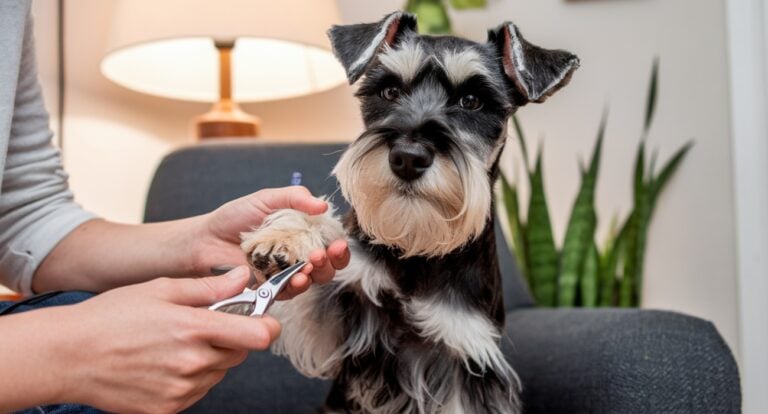
Create positive associations with triggering situations by pairing them with high value treats and removing your dog before they reach their threshold. If your Schnauzer nips when you touch their paws, for example, start by simply having your hand near their leg while feeding treats, gradually working closer over many sessions. Patience is crucial: pushing too fast will make the problem worse.
7. Enroll in a Positive Reinforcement Training Class
Sometimes you need backup, and there’s absolutely no shame in that. A qualified positive reinforcement trainer can observe your specific Schnauzer’s behavior, identify triggers you might be missing, and provide personalized strategies that account for your dog’s unique personality and your household dynamics.
Group classes offer the added benefit of socialization, which helps many Schnauzers learn appropriate play behavior from other dogs. Watching how other puppies and adult dogs interact can be incredibly educational for a mouthy youngster. Plus, you’ll gain confidence in your handling skills and learn to read your dog’s communication signals more accurately.
Professional training isn’t an admission of failure; it’s an investment in your relationship with your dog and a commitment to helping them become the best version of themselves.
Look for trainers who are certified through reputable organizations and who use exclusively positive reinforcement methods. Avoid anyone who recommends alpha rolls, scruff shakes, or other dominance based techniques; these methods can actually increase aggression and damage your bond with your Schnauzer.
The nipping phase doesn’t have to last forever. With these seven strategies in your training toolkit and a hefty dose of patience, you’ll soon have a Schnauzer who knows exactly how to interact politely with their favorite humans. The sharp teeth will still be there, of course, but they’ll be reserved for appropriate targets like toys, treats, and the occasional stubborn squeaker that absolutely must be destroyed.