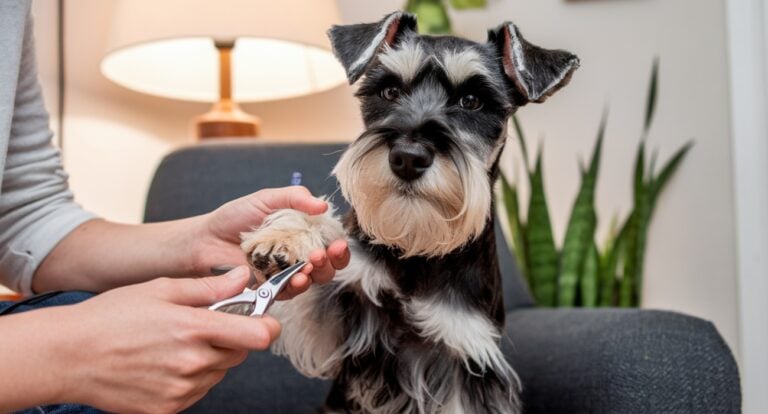
What is your Mini Schnauzer really saying with every bark, growl, or howl? Learn to decode their unique communication style.
Your Miniature Schnauzer just let out another series of sharp barks at the mailman, and you’re left wondering if they’re protecting the household or simply expressing their opinions about the daily mail delivery. These bearded little dynamos have a lot to say, and understanding their vocal language can transform your relationship from confusing chaos to harmonious communication.
Miniature Schnauzers are notoriously chatty dogs, ranking among the most vocal of all terrier breeds. Learning to decode their barks, growls, and howls isn’t just about stopping unwanted noise; it’s about understanding what your furry companion genuinely needs and feels.
The Classic Bark: More Than Just Noise
The bark is your Mini Schnauzer’s primary communication tool, but not all barks are created equal. These intelligent dogs have developed an impressive range of barking styles, each with distinct meanings that attentive owners can learn to recognize.
The Alert Bark
This is the bark you’ll hear most often. Sharp, rapid, and repetitive, the alert bark happens when your Mini Schnauzer notices something unusual. It could be a delivery person, a neighbor walking by, or even a leaf blowing in an unexpected pattern. The alert bark typically comes in bursts of three to five barks, with your schnauzer often positioning themselves at a window or door.
This bark says: “Hey! Something is happening, and I think you should know about it!” Your Mini Schnauzer isn’t necessarily alarmed; they’re fulfilling their bred purpose as a watchdog. Their terrier heritage means they take their security duties seriously, even if the “threat” is just the garbage truck making its weekly rounds.
The Demand Bark
Lower in pitch and more insistent, the demand bark usually appears around meal times, walk times, or play times. Your schnauzer has learned that barking gets results, and they’re not shy about using this knowledge. This bark often comes with accompanying behaviors: pacing, staring at you intensely, or positioning themselves near whatever they want.
When your Mini Schnauzer combines barking with direct eye contact and purposeful movement toward their leash or food bowl, they’re not just making noise. They’re engaging in sophisticated communication that demonstrates their problem-solving abilities and understanding of cause and effect.
The Play Bark
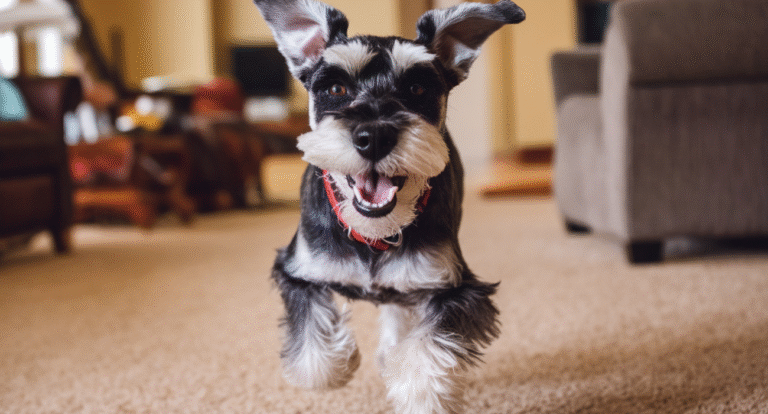
Higher pitched and often mixed with excited body language (bouncing, play bows, spinning), the play bark is your schnauzer’s invitation to fun. This bark sounds almost musical, with varied tones that communicate pure joy. You’ll notice their entire body gets involved: tail wagging frantically, front paws stomping, and those expressive eyebrows raised in anticipation.
Decoding the Growl: Not Always a Warning
Growling makes many owners nervous, but Mini Schnauzers use growls in surprisingly nuanced ways. Not every growl means your dog is aggressive or upset.
The Warning Growl
This is the growl most people recognize: deep, sustained, and often accompanied by a stiff body posture and direct stare. Your Mini Schnauzer uses this growl to establish boundaries. They might growl when someone approaches their food bowl, when they’re uncomfortable with physical handling, or when they perceive a genuine threat.
Important note: Never punish warning growls. This is your dog’s way of saying “I’m uncomfortable” before they feel the need to escalate. Punishing this communication can lead to a dog who skips the warning and goes straight to defensive action.
The Play Growl
Yes, this exists! During tug-of-war or wrestling sessions, many Mini Schnauzers emit playful growls that sound fierce but are actually expressions of engagement and enjoyment. These growls are usually higher pitched than warning growls and come with loose, wiggly body language. Your schnauzer’s face will look relaxed, not tense, and they’ll often release the toy and bounce around, inviting you to continue the game.
The Frustration Growl
This growl happens when your Mini Schnauzer wants something they can’t have or can’t reach. Maybe their ball rolled under the couch, or they spotted a cat outside but can’t get to the window fast enough. This growl is shorter and more intermittent, often mixed with whining or huffing sounds.
The Mysterious Howl: When Your Schnauzer Channels Their Inner Wolf
Mini Schnauzers aren’t known as howlers like Huskies or Beagles, but they certainly can howl when the mood strikes. Understanding why your schnauzer howls can help you address underlying needs or simply appreciate this primal form of expression.
The Loneliness Howl
If you hear howling when you’re away from home (thank you, doorbell cameras), your Mini Schnauzer might be expressing separation anxiety or loneliness. This howl is prolonged, mournful, and often happens in response to hearing other dogs or sirens. Your schnauzer is essentially calling out, hoping for a response from their pack (that’s you).
The Attention-Seeking Howl
Some Mini Schnauzers learn that howling gets immediate human attention, and they’ll use this party trick strategically. This howl is often shorter and more performative, and your schnauzer will watch your reaction carefully. They’ve figured out that this particular sound is irresistible to humans who will stop whatever they’re doing to check on their dramatic little friend.
The howl represents your Mini Schnauzer’s connection to their ancient canine ancestry. Despite centuries of selective breeding that transformed them into compact, bearded companions, they still carry the instinct to communicate across distances using this haunting vocalization.
Understanding Context: The Secret to Translation
Here’s where things get interesting: the same vocalization can mean different things depending on context. Your Mini Schnauzer’s body language, the environment, and recent events all provide crucial clues.
| Vocalization Type | Body Language | Likely Meaning | Appropriate Response |
|---|---|---|---|
| Rapid, high-pitched barking | Tail wagging, play bow, bouncing | Excitement, invitation to play | Engage in play or redirect energy |
| Deep, repetitive barking | Stiff posture, focused stare, raised hackles | Alert or warning | Investigate the concern, provide reassurance |
| Whining mixed with barking | Pacing, looking toward door/leash | Need to go outside or wanting a walk | Take them out or provide the requested activity |
| Growling during play | Loose body, “smiling” face, wiggly movements | Playful engagement | Continue appropriate play |
| Sustained howling | Looking toward doors/windows, anxious pacing | Separation anxiety or loneliness | Address underlying anxiety, consider training |
The Schnauzer-Specific Vocabulary
Mini Schnauzers have some breed-specific vocalizations that set them apart from other dogs. Their terrier heritage gives them a particular vocal intensity, while their intelligence means they quickly learn which sounds generate responses from their humans.
The “Schnauzer Snort”
Not quite a bark, not quite a sneeze, the schnauzer snort is an exclamation point in canine form. This happens when your schnauzer is particularly excited or frustrated. It’s almost like they’re trying to bark but the excitement won’t let the full sound escape, resulting in this adorable snorting noise.
The Grumble-Talk
Many Mini Schnauzer owners report their dogs “talking back” with a series of grumbles and muttered sounds that resemble human speech patterns. This isn’t aggression; it’s your schnauzer expressing opinions. Some seem to save this special communication for specific situations, like being told to get off the couch or being interrupted during a nap.
The Excitement Whine
When you grab their leash or the treat jar, your Mini Schnauzer might produce a high-pitched whining that escalates into quick, breathy barks. This vocalization combines anticipation, excitement, and a touch of impatience. Their entire body vibrates with enthusiasm, and they can barely contain themselves.
What Your Schnauzer’s Volume Tells You
The intensity of vocalization matters just as much as the type. Mini Schnauzers are capable of impressive volume considering their size, and they modulate this volume based on how urgently they need your attention.
Quiet vocalizations (soft whines, low grumbles, gentle woofs) usually indicate your schnauzer is processing something or making tentative communication. They’re not quite sure if they need to escalate yet.
Medium volume represents your schnauzer’s normal communication level. This is their standard “I have something to say” voice.
Maximum volume (and Mini Schnauzers can definitely achieve maximum volume) indicates high emotion: intense excitement, serious alarm, or significant frustration. When your schnauzer really cranks up the volume, they believe the situation demands immediate attention.
Age and Vocalization Patterns
Your Mini Schnauzer’s vocal habits will evolve throughout their life. Puppies experiment with different sounds, discovering which ones work best for getting what they need. Adolescent schnauzers often go through a phase of excessive vocalization as they test boundaries and assert themselves.
Adult Mini Schnauzers typically settle into consistent vocal patterns, though they continue refining their communication based on what works. Senior schnauzers might become more vocal due to cognitive changes, hearing loss (barking because they can’t hear themselves as well), or discomfort from age-related conditions.
Training Your Vocal Schnauzer
Understanding what your Mini Schnauzer is saying is step one. Step two is helping them understand when vocalization is appropriate and when quiet time is needed. The key is never punishing communication itself, but rather teaching alternative behaviors and reinforcing calm behavior.
When your schnauzer alert barks, acknowledge what they’re telling you (“I see it, thank you”) and then give a cue for quiet. Reward silence generously. For demand barking, the solution is simple but requires consistency: never give them what they want while they’re barking. Wait for even a brief pause, then reward that quiet moment.
The most successful approach to managing a vocal Mini Schnauzer isn’t about suppressing their natural communication, but about channeling it appropriately. Your schnauzer needs to feel heard, and once they trust that you understand their signals, excessive vocalization often naturally decreases.
Remember that some level of vocalization is normal and healthy for this breed. Attempting to create a completely silent schnauzer works against their nature and can lead to frustration for both of you.
The Emotional Intelligence Behind the Noise
Your Mini Schnauzer’s vocalizations reveal their impressive emotional intelligence. They’re not just reacting to stimuli; they’re making decisions about how to communicate based on past experiences, your responses, and their assessment of the situation.
When your schnauzer uses different barks for different situations, they’re demonstrating understanding that varied communication yields varied results. When they “talk back” with grumbles, they’re engaging in social interaction that mirrors human conversation patterns. This isn’t anthropomorphization; it’s recognition of genuine cognitive complexity.
The next time your Mini Schnauzer launches into a barking session, take a moment before reacting. Consider the pitch, the rhythm, the body language, and the context. Your bearded little friend is telling you something specific, and with practice, you’ll become fluent in schnauzer speak. The reward? A deeper bond, fewer misunderstandings, and the satisfaction of truly communicating with your four-legged companion.