Cut grooming time with this fast and easy guide to caring for your Schnauzer at home. Keep them looking sharp with minimal fuss.
Professional grooming appointments can cost a small fortune, especially when your schnauzer needs a touch up every six to eight weeks. What if you could achieve salon-worthy results right in your own bathroom or backyard?
Home grooming isn’t just about saving money. It’s about taking control of your dog’s appearance, working on your own schedule, and actually enjoying the process. Sure, your first attempt might not be Instagram perfect, but with practice, you’ll wonder why you ever paid someone else to do what you can master yourself. Ready to grab those clippers and get started?
Understanding Your Schnauzer’s Coat
Before you start snipping away, you need to understand what makes schnauzer fur so special. These dogs have a double coat consisting of a wiry outer layer and a softer undercoat. This unique texture is what gives them that characteristic rough, distinguished look that sets them apart from other breeds.
The outer coat is designed to be coarse and weather resistant, while the undercoat provides insulation and comfort. When you see show schnauzers with that perfectly crisp appearance, it’s often achieved through a technique called hand stripping, which removes dead outer hairs to maintain coat texture. However, most pet owners opt for clipping, which is faster and easier (though it does soften the coat over time).
Why Regular Grooming Matters
Schnauzers aren’t just high maintenance for aesthetic reasons. Their coat type means they don’t shed much, which sounds great until you realize that dead hair stays trapped in the coat, leading to matting and skin issues. Regular grooming keeps their skin healthy, prevents painful tangles, and helps you spot any lumps, bumps, or skin conditions early.
Regular grooming isn’t vanity… it’s essential healthcare wrapped in a haircut. Neglecting your schnauzer’s coat can lead to painful mats, skin infections, and a very uncomfortable pup.
Essential Tools You’ll Need
Walking into a pet store and facing the wall of grooming tools can feel overwhelming. Let’s break down exactly what you need versus what’s just nice to have.
| Tool | Purpose | Priority Level |
|---|---|---|
| Clippers with blade attachments | Trimming body, legs, and face | Essential |
| Slicker brush | Removing tangles and loose hair | Essential |
| Metal comb | Final detangling and checking for mats | Essential |
| Grooming scissors | Detail work around paws and face | Essential |
| Nail clippers | Keeping nails at proper length | Essential |
| Thinning shears | Blending and texturizing | Helpful |
| Grooming table | Making the process easier on your back | Nice to have |
Invest in quality clippers specifically designed for dogs. Human clippers won’t cut it (pun intended) because dog hair is completely different from human hair in texture and thickness. Look for clippers that come with multiple guard combs, typically ranging from 3mm to 25mm, so you can achieve different lengths on various parts of the body.
Preparing Your Schnauzer for Grooming
The secret to successful home grooming? Preparation. A well-prepared dog is a cooperative dog, and a cooperative dog makes your job infinitely easier.
Start by giving your schnauzer a thorough bath using a quality dog shampoo. This removes dirt, oils, and loose hair, making the actual cutting process much smoother. Make sure to dry them completely (damp hair doesn’t cut evenly and can dull your clipper blades faster than you can say “good boy”).
While they’re still slightly damp, work through the entire coat with your slicker brush, followed by a metal comb. This is your chance to identify and remove any mats before you start clipping. Trying to run clippers over matted hair is a recipe for disaster, potentially hurting your dog and damaging your equipment.
Creating a Calm Environment
Set up your grooming space in a quiet area where your schnauzer feels comfortable. Some dogs do great on a sturdy table (which saves your back), while others prefer staying on the ground. Lay down a non-slip mat so your pup has secure footing.
Have treats ready for positive reinforcement. Every few minutes of good behavior deserves a reward. If your schnauzer is new to home grooming, consider breaking the session into multiple shorter periods rather than trying to complete everything in one marathon sitting.
The Basic Schnauzer Clip: Step by Step
Now we’re getting to the good stuff. The classic schnauzer look features a shorter body, longer furnishings (leg hair and skirt), and that iconic bearded face with prominent eyebrows.
Body and Back
Start with a #7 or #5 blade (or guard comb equivalent) for the body. Begin at the base of the skull and clip with the direction of hair growth, moving down the back toward the tail. Use smooth, overlapping strokes to ensure even coverage. The goal is to create a clean, uniform appearance without any choppy lines.
Continue down the sides of the body, being careful around sensitive areas like the armpits and groin. These spots are prone to clipper burn, so use a slightly longer guard and a gentle touch. For the chest, you can go slightly shorter or keep it the same length as the sides, depending on your preference.
Legs and Furnishings
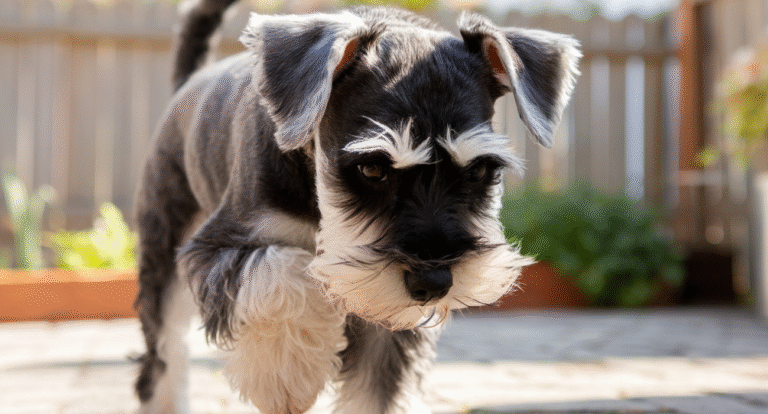
Here’s where schnauzers get their distinctive look. The legs should be left longer, creating that characteristic cylindrical “pillar” appearance. Use scissors or a longer guard comb (around 13-19mm) to shape the legs, removing any scraggly bits while maintaining fullness.
Comb the leg hair downward and trim to create a straight, even line. The legs should look neat but substantial. Think of sculpting rather than just cutting… you’re creating dimension and shape.
The difference between a good schnauzer clip and a great one comes down to the legs and beard. Take your time with these features, and your dog will look professionally groomed.
The Famous Face
The schnauzer face is what everyone notices first, so this is where you’ll want to focus extra attention. The basic principle: short on top of the head and cheeks, long on the eyebrows and beard.
Use a #10 blade (or equivalent guard) to clip the top of the head, starting between the ears and moving forward toward the eyebrows. Be extremely careful around the ears, as the skin is thin and easily nicked. Clip the cheeks short as well, blending into the beard area.
For the eyebrows, comb the hair forward and trim any pieces that hang into your dog’s eyes. You want prominent brows, but they shouldn’t obstruct vision. Use thinning shears to remove bulk while maintaining that bushy, expressive look.
The beard requires careful scissoring. Comb it forward and downward, then trim to your desired length, creating a rectangular shape. Most owners prefer a fuller beard, but the exact length is personal preference.
Finishing Touches
Once you’ve completed the main clipping, go back through with your comb and scissors to catch any uneven spots or stray hairs. Check the transition areas where different lengths meet, using thinning shears to blend any harsh lines.
Paws and Nails
Don’t forget those feet! Trim the hair between the paw pads using small scissors or clippers (be very careful here). This prevents matting and helps with traction on slippery floors. Shape the hair around each paw into a neat, rounded “cat foot” appearance.
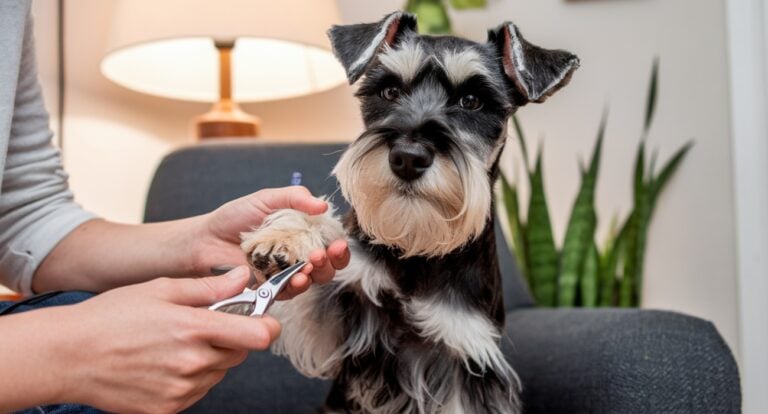
Nail trimming is crucial but nerve wracking for many owners. The quick (the blood vessel inside the nail) is difficult to see in dark nails. Trim small amounts at a time, stopping before you reach the quick. If you accidentally cut too far and cause bleeding, apply styptic powder immediately.
Ears and Sanitary Areas
Schnauzers need their ear hair plucked regularly to prevent infections. You can use your fingers or hemostats to gently remove hair from inside the ear canal. Only pluck a little at a time to avoid irritating the sensitive skin.
For sanitary areas, use a #10 blade to carefully clip around the private parts and under the tail. This keeps things clean and hygienic, especially important if your schnauzer has a fuller coat.
Maintaining Between Full Grooms
You don’t need to do a complete grooming session every week, but regular maintenance makes the full grooms much easier. Aim for the following schedule:
- Brushing: Every other day to prevent mats
- Face and paw trimming: Every 2 weeks to keep things tidy
- Full body clip: Every 6-8 weeks
- Baths: Monthly or as needed
Regular brushing is your best friend. Just five minutes every couple of days prevents the kind of severe matting that requires professional intervention (or worse, shaving your dog down completely).
Consistency beats perfection. A schnauzer who gets regular, mediocre grooming will always look better than one who gets occasional “perfect” grooming with long gaps in between.
Troubleshooting Common Issues
Even experienced groomers encounter challenges. Here are solutions to common schnauzer grooming problems:
Clipper lines: These visible streaks happen when you don’t overlap your strokes enough or when you go against the hair growth. Fix them by going over the area again with longer strokes, blending into surrounding areas.
Uneven legs: If one leg looks fuller than another, wet the hair down, comb it out, and compare. Sometimes it’s just how the hair is lying. Trim conservatively, checking frequently by stepping back to view from a distance.
Beard looks scraggly: A scruffy beard often means you need to thin it out rather than cut it shorter. Use thinning shears to remove bulk while maintaining length, creating a denser, more uniform appearance.
Dog won’t stay still: This is probably the most common complaint. Break sessions into shorter periods, use high value treats, and consider having someone help you, especially for face and paw work. Some dogs never love grooming but learn to tolerate it with patience and positive reinforcement.
Making It Enjoyable for Everyone
Let’s be real: your schnauzer probably isn’t going to jump for joy when you pull out the clippers. But you can make the experience tolerable, even pleasant, with the right approach.
End every session on a positive note, even if you didn’t accomplish everything you planned. If your dog cooperated for 15 minutes, that’s a win. You can finish tomorrow. Pushing a stressed dog creates negative associations that make future sessions even harder.
Celebrate small victories. Your first home groom probably won’t look like a professional job, and that’s perfectly okay. Every attempt builds your skills and your confidence. By your fifth or sixth grooming session, you’ll be amazed at how much you’ve improved.
Home grooming is a journey, not a destination. Some days your schnauzer will look like they stepped out of a dog show. Other days they’ll look like they styled their own hair. Both are fine. What matters is that you’re bonding with your dog, saving money, and taking control of their care. Plus, even a slightly wonky homemade haircut beats an overgrown, matted mess any day of the week.