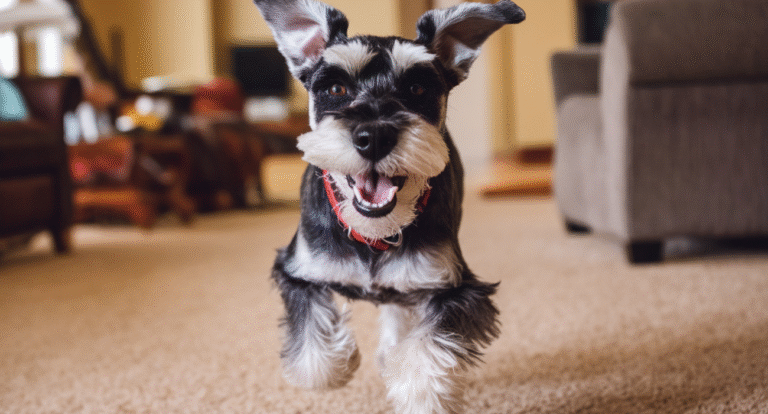
Chewing everything in sight often signals stress. Learn the real reasons why and how to help calm your Schnauzer.
Introduction 1
Your favorite shoes are gone. The couch cushion looks like it survived a bear attack. And your Schnauzer? They’re sitting there with those innocent eyebrows raised, as if to say, “What? Me?” If you’ve been finding your home slowly disintegrating under the teeth of your bearded buddy, you’re not alone. While it might seem like your pup has declared war on your belongings, there’s often something deeper going on beneath that wiry coat.
Destructive chewing isn’t just puppies being puppies. For many Schnauzers, it’s actually a red flag waving frantically, trying to tell you something’s not quite right in their world.
The Stress Connection: Why Your Schnauzer Becomes a Chewing Machine
Stress in dogs manifests differently than it does in humans. While we might stress-eat ice cream or doom-scroll through social media, dogs turn to more primal behaviors. For Mini Schnauzers, chewing releases endorphins and provides a temporary sense of relief from whatever’s bothering them. Think of it as their version of stress-knitting, except the yarn is your furniture and the finished product is destruction.
Separation anxiety tops the list of stress triggers for these velcro dogs. Mini Schnauzers form incredibly strong bonds with their people, which sounds adorable until you realize it means they genuinely panic when you leave. That panic? It gets channeled directly into the nearest chewable object. Your dog isn’t being spiteful; they’re genuinely distressed and trying to self-soothe the only way they know how.
Changes in routine can send these creatures of habit into a tailspin. Did you start a new job with different hours? Move the furniture around? Bring home a new baby or pet? Any of these seemingly minor (to you) changes can register as catastrophic in your Mini Schnauzer’s orderly world. The chewing that follows is their way of managing the overwhelm.
When your Mini Schnauzer’s world feels out of control, controlling what they can put in their mouth becomes their anchor to stability.
Common Stress Triggers for Schnauzers
Not all stress is created equal, and Mini Schnauzers have their own unique set of anxiety buttons. Understanding what sets your dog off is half the battle. Here’s what typically sends these dogs over the edge:
| Stress Trigger | Why It Bothers Them |
|---|---|
| Being Left Alone | Separation anxiety and fear of abandonment |
| Lack of Mental Stimulation | Boredom masquerading as stress |
| Changes in Household | Disruption of routine and territory |
| Insufficient Exercise | Pent-up energy creates anxiety |
| Loud Noises (storms, fireworks) | Fear and inability to escape perceived danger |
Is It Stress or Something Else?
Before you blame everything on anxiety, it’s worth playing detective. Sometimes what looks like stress-induced chewing is actually something completely different. Puppies under a year old are likely teething, and yes, even older puppies can still be working through that phase. Their gums hurt, and chewing provides relief. If your Mini Schnauzer is still relatively young, teething might be the real villain here.
Medical issues can also disguise themselves as behavioral problems. Dental pain, nutritional deficiencies, or even gastrointestinal discomfort can cause increased chewing behavior. If your previously well-behaved adult suddenly turns into a chewing tornado, a vet visit should be your first stop. There’s no point in addressing stress if the real problem is an infected tooth or upset stomach.
Then there’s the possibility that your dog is simply bored out of their mind. Mini Schnauzers are intelligent, energetic dogs bred to work. When they don’t have a job to do or enough mental stimulation, they create their own entertainment. Unfortunately, their idea of fun usually involves reducing your possessions to rubble. Boredom and stress can overlap, creating a perfect storm of destructive behavior.
Reading Your Schnauzer’s Stress Signals
Your dog can’t exactly text you to say, “Hey, I’m feeling overwhelmed today.” Instead, they communicate through body language and behavior. Becoming fluent in these signals helps you catch stress before it escalates into full-blown furniture consumption.
Watch for excessive panting when your dog hasn’t been exercising. Stressed Mini Schnauzers often breathe heavily and pace around restlessly. Their ears might pin back flat against their head, and you’ll notice them licking their lips repeatedly (when there’s no food in sight). Some dogs develop stress yawning, which looks different from tired yawning; it’s more frequent and exaggerated.
Clingy behavior that seems over the top, even for a breed known for being attached, can signal anxiety. If your Mini Schnauzer suddenly can’t let you out of their sight and follows you literally everywhere (including the bathroom), they’re telling you something’s wrong. The chewing often starts during or immediately after these clingy episodes, especially if you try to leave or create distance.
Your Mini Schnauzer’s destructive chewing is not a character flaw. It’s a communication attempt that happens to be really expensive for you.
Creating a Calmer Environment
Reducing your Mini Schnauzer’s stress requires addressing the root causes while managing the symptoms. Start with their daily routine. These dogs thrive on predictability. Feed them at the same times each day, maintain consistent walk schedules, and try to keep major disruptions to a minimum. When changes are unavoidable, introduce them gradually whenever possible.
Exercise is non-negotiable for this breed. A tired Mini Schnauzer is a happy, less destructive Mini Schnauzer. But here’s the kicker: physical exercise alone won’t cut it. These brainy little dogs need mental workouts too. Puzzle toys, training sessions, and interactive games should be part of your daily routine. A physically exhausted but mentally under-stimulated Mini Schnauzer will still find ways to entertain themselves, usually at your expense.
Environmental enrichment sounds fancy but really just means making your home more interesting and less stress-inducing. Leave a TV or radio on when you’re gone to provide background noise that masks scary sounds from outside. Create a cozy den area where your dog feels safe; many Mini Schnauzers appreciate having a crate with blankets as their personal fortress. Rotate toys regularly so they don’t lose their appeal.
Management Strategies That Actually Work
While you’re addressing the underlying stress, you still need to protect your belongings. Management isn’t about punishing your dog; it’s about setting everyone up for success. Provide appropriate chew toys in abundance. Keep several types available since different textures appeal at different times. Some dogs prefer rubber toys, others like rope or nylon, and some go crazy for dental chews.
Exercise before departure if separation anxiety is your issue. A 20 to 30 minute walk before you leave can take the edge off your dog’s anxiety and tire them out enough to settle down faster. Combine this with a special treat or puzzle toy that only appears when you leave, creating a positive association with your departure.
Consider using calming aids like pheromone diffusers, anxiety wraps, or calming supplements (always check with your vet first). These won’t solve the problem alone, but they can reduce the intensity of your dog’s stress response. Some dogs respond beautifully to these interventions, while others show minimal change; it’s very individual.
The goal isn’t to stop your Mini Schnauzer from chewing entirely. The goal is to redirect that energy toward appropriate outlets while reducing the stress driving the behavior.
Training plays a crucial role too. Teaching your Mini Schnauzer a solid “leave it” command and reinforcing calm behavior helps them develop better coping mechanisms. When you catch them choosing their toy over your shoe, celebrate it like they just won an Olympic medal. Positive reinforcement creates new patterns that eventually replace the destructive ones.
When Professional Help Makes Sense
Sometimes, despite your best efforts, the chewing continues or even escalates. This is when calling in a professional becomes necessary rather than optional. A certified dog behaviorist or veterinary behaviorist can assess your specific situation and create a tailored intervention plan. They might spot triggers you’ve missed or suggest approaches you haven’t considered.
If your Mini Schnauzer shows signs of severe separation anxiety (injuring themselves trying to escape, panicking to the point of making themselves sick, or completely destroying their environment), medication might be part of the solution. This isn’t giving up or taking the easy way out. For some dogs, anxiety is a chemical issue that behavioral modification alone can’t fully address. Anti-anxiety medication, combined with behavior modification, can give your dog the breathing room they need to actually learn new coping skills.
Group training classes can also help, particularly if your Mini Schnauzer’s stress stems partly from lack of socialization or confidence issues. Being around other dogs in a structured environment helps some dogs become more resilient and less reactive to stressors.
Your Mini Schnauzer’s destructive chewing doesn’t have to be a permanent feature of your life together. Understanding that stress is often the driving force behind the behavior opens up real solutions. With patience, consistency, and a willingness to see the world from your dog’s perspective, you can help your bearded companion feel secure enough to leave your belongings intact. Those eyebrows might still look innocent when caught in the act, but at least the act itself will become increasingly rare.