Clingy behavior often has a deeper cause. Learn what your German Shepherd is communicating and how to encourage healthy independence.
You’re trying to cook dinner, but there’s a 70-pound German Shepherd wedged between you and the counter. You move to the living room, and within seconds, your furry shadow appears. Even your trips to check the mailbox are met with anxious pacing and worried whines. Welcome to life with an overly attached GSD.
While it’s flattering that your dog loves you this much, excessive clinginess can signal underlying issues that need addressing. The good news? Understanding why your German Shepherd has turned into your permanent plus-one is the first step toward helping them become more independent and secure.
Understanding German Shepherd Attachment
German Shepherds weren’t designed to be aloof, independent dogs who ignore their owners. Quite the opposite, actually. These intelligent working dogs were bred specifically to partner with humans, whether herding sheep in Bavaria or assisting police officers today. Their genetic programming tells them to stay close, pay attention, and remain ready to work or protect at a moment’s notice.
This breed’s natural temperament includes loyalty, protectiveness, and an intense desire to be near their people. When you adopted your GSD, you essentially signed up for a dog who considers you their entire world. But there’s a spectrum of attachment, and understanding where your dog falls on that spectrum matters enormously.
Healthy attachment looks like a dog who enjoys your company, follows you occasionally, and can relax when you’re home. Unhealthy clinginess manifests as anxiety when you’re out of sight, inability to settle unless touching you, and genuine distress at normal separations like you going to another room.
The Root Causes of Excessive Clinginess
Separation Anxiety: The Big Culprit
Separation anxiety isn’t just your dog being annoying or overly affectionate. It’s a genuine panic disorder that causes real psychological distress. Dogs experiencing separation anxiety don’t just miss you; they experience something closer to a full-blown panic attack when you’re gone.
German Shepherds can be particularly susceptible to this condition because of their strong bonding instincts. If your dog was rehomed, spent time in a shelter, or experienced trauma, the likelihood increases even more. They’ve learned that people they love can disappear, and now they’re desperately trying to prevent that from happening again.
When your German Shepherd’s world revolves entirely around your presence, every departure feels like an emergency. Understanding this fear is crucial to addressing the behavior with compassion rather than frustration.
Lack of Confidence and Independence
Some German Shepherds never learned how to be comfortable on their own. Perhaps they were taken from their mother too early, never properly socialized, or simply haven’t been taught that being alone is safe and okay. These dogs haven’t developed the emotional skills to self-soothe or entertain themselves.
Puppies who receive everything they want immediately, without learning patience or independence, often grow into clingy adults. If your GSD never had to work for attention, food, or entertainment, they might lack the confidence to handle solitude.
Reinforcement of Clingy Behavior
Here’s an uncomfortable truth: you might be accidentally encouraging the exact behavior you want to stop. Every time your German Shepherd whines and you immediately give attention, you’ve just taught them that whining works. When they follow you to the bathroom and you talk to them or pet them, you’ve reinforced the following behavior.
Dogs are brilliant at reading patterns. If clinginess consistently results in attention, treats, or comfort, why would they ever stop? The behaviors we reward are the behaviors we get more of, even when we don’t realize we’re providing that reward.
Medical Issues and Pain
Sometimes what looks like clinginess is actually a dog seeking comfort because they don’t feel well. Older German Shepherds dealing with hip dysplasia, arthritis, or other painful conditions might stay close to you because your presence is reassuring. Similarly, cognitive decline in senior dogs can cause confusion and increased need for security.
If your previously independent GSD suddenly becomes your shadow, a veterinary checkup should be your first stop. Rule out physical problems before assuming the issue is purely behavioral.
Signs Your German Shepherd Has Crossed the Line
| Normal Attachment | Excessive Clinginess |
|---|---|
| Greets you happily when you come home | Becomes frantic and destructive when you leave |
| Enjoys being near you but can settle alone | Cannot relax unless physically touching you |
| Follows you sometimes | Follows you everywhere, including the bathroom |
| Handles short separations calmly | Shows anxiety when you’re in another room |
| Can entertain themselves with toys | Ignores toys and activities when alone |
Watch for these specific red flags: destructive behavior when left alone (chewing furniture, scratching doors), excessive vocalization (barking, howling, whining for extended periods), house soiling despite being fully housetrained, pacing or inability to settle, and physical symptoms like drooling or trembling when they sense you’re leaving.
The key distinction is whether your dog can function independently at all. A loyal companion stays near you by choice but doesn’t fall apart when circumstances require separation. A clingy dog experiences genuine distress without constant access to you.
The Impact of Clinginess on Both of You
Living with an overly attached German Shepherd affects your quality of life more than you might realize. You can’t take a shower without hearing scratching at the door. Running errands becomes complicated. Having guests over turns chaotic. Even your sleep might suffer if your dog can’t settle unless they’re touching you.
Your German Shepherd’s mental health matters just as much as your own. A dog living in constant fear of separation isn’t happy, even if they seem content when you’re present. That underlying anxiety affects their entire wellbeing.
For your GSD, chronic clinginess creates a stress cycle. They’re anxious when you’re gone, which makes reunions more intense, which reinforces their belief that separations are terrible. This constant state of worry can lead to other behavioral problems, compromised immune function, and reduced quality of life.
Breed-Specific Considerations
German Shepherds have some unique characteristics that influence attachment styles. Their intelligence means they’re excellent at predicting your routines (which can increase anticipatory anxiety), but it also means they can learn independence skills quickly. Their working dog heritage gives them a need for purpose and mental stimulation; a bored GSD often becomes a clingy GSD.
These dogs also tend toward being “one person” dogs, even in families. If your German Shepherd has bonded primarily with you, they might ignore other household members entirely when you’re around. This intensifies the problem when you specifically need to leave.
The protective instinct in German Shepherds can complicate clinginess too. Some GSDs stick close because they believe they need to guard you constantly. They haven’t learned that you’re safe when they’re not directly supervising, which creates exhausting hypervigilance.
Building Independence in Your German Shepherd
Start With Place Training
Teaching your German Shepherd to go to a specific spot (a bed, mat, or crate) and stay there creates a foundation for independence. This gives them a job (staying on their place) and helps them learn that distance from you isn’t dangerous.
Begin by rewarding your dog for simply standing on their place. Gradually increase the duration, then add distance as you move around the room. The goal is for your GSD to understand that good things happen when they’re calm and separate from you.
Implement Gradual Desensitization
You can’t just suddenly leave a clingy German Shepherd alone for eight hours and expect success. Instead, start absurdly small. Leave the room for five seconds. Come back before anxiety starts. Repeat until it’s boring. Then try ten seconds. Build up slowly over weeks.
This process requires patience, but it retrains your dog’s emotional response to your departures. They learn through repeated experience that you always come back, and that being alone is temporary and safe.
Provide Mental Stimulation
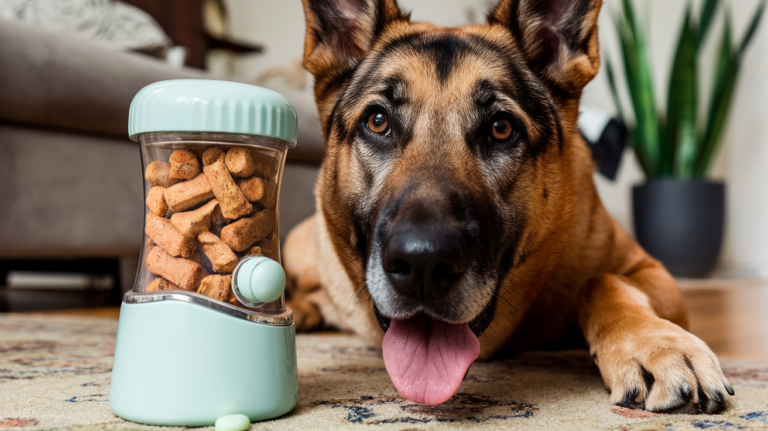
A tired German Shepherd is a less clingy German Shepherd. These intelligent dogs need serious mental exercise, not just physical activity. Puzzle toys, training sessions, nose work, and food-dispensing toys can keep your GSD’s brain busy and build confidence through problem-solving.
When your dog learns they can successfully entertain themselves and overcome challenges without your help, independence becomes less scary. They develop a sense of competence that extends to handling alone time.
Create Positive Alone Time Associations
Being alone should predict good things, not bad things. Give your German Shepherd their absolute favorite treat only when you leave. Use a special toy that appears exclusively during separation. Feed meals in a different room while you’re elsewhere in the house.
The goal is simple but powerful: your absence should become a predictor of something your dog loves. When being alone means getting that amazing frozen Kong or special chew, suddenly your departure isn’t quite so terrible.
Address Your Own Behavior
Stop making departures and arrivals dramatic events. Don’t spend five minutes saying goodbye or come home to an over-the-top reunion. Keep things calm and boring. Ignore attention-seeking behavior (yes, even those adorable whines). Reward independence by giving attention when your dog is calm and separate from you, not when they’re demanding it.
This feels counterintuitive. Shouldn’t you comfort your anxious dog? Actually, no. Comforting an anxious dog often reinforces the anxiety by confirming that there was something to be worried about.
When to Seek Professional Help
Some cases of clinginess require more than DIY training. If your German Shepherd is destroying property, hurting themselves trying to escape, or showing aggression related to their attachment, consult a veterinary behaviorist or certified separation anxiety trainer.
Severe separation anxiety sometimes requires medication alongside behavior modification. There’s no shame in this. You wouldn’t expect a person with a panic disorder to just “get over it” without help, and the same compassion should extend to your dog.
Professional help is also warranted if you’ve been working on independence for several months without improvement, or if the clinginess is severely impacting your life and ability to function normally.
The Long Game: Setting Realistic Expectations
Transforming a velcro German Shepherd into a confident, independent dog doesn’t happen overnight. Depending on the severity of the clinginess and how long the pattern has been established, you might need months of consistent work to see significant change.
Progress isn’t linear. You’ll have good days and setbacks. Your German Shepherd might handle three hours alone beautifully one day, then struggle with thirty minutes the next. This doesn’t mean you’re failing; it means you’re working with a living being who has complex emotions and needs.
The relationship you’re building through this process is worth the effort, though. A German Shepherd who trusts that you’ll return, who can self-soothe, and who has confidence in their ability to handle alone time is a happier, healthier dog. And you’ll be able to live your life without constant guilt or logistical nightmares.
Your clingy German Shepherd isn’t being difficult on purpose. They’re communicating the only way they know how that something feels wrong. With patience, consistency, and understanding of why they’re struggling, you can help your loyal companion find the security and independence they deserve.