Joint issues sneak up fast. Watch for these seven signs your German Shepherd may be experiencing discomfort and needs attention.
Something’s off. You can’t quite put your finger on it, but your German Shepherd just isn’t moving the same way anymore. Maybe they hesitated at the stairs this morning, or perhaps they didn’t jump into the car with their usual enthusiasm. These tiny moments whisper secrets about what’s happening inside your dog’s body.
German Shepherds mask pain like professionals. Their working dog heritage means they’ll push through discomfort until the problem becomes impossible to hide. By then, the damage may already be significant, making early detection not just helpful but absolutely critical.
German Shepherd Joint Vulnerability
Before diving into the warning signs, let’s understand why German Shepherds face such high joint risk. Their breeding history prioritized traits like intelligence, loyalty, and working ability, but sometimes at the expense of structural soundness. The sloped back that became fashionable in show lines altered their biomechanics, placing extra stress on hips and knees.
Genetics play a starring role in joint health. Hip dysplasia, where the ball and socket joint develops improperly, affects approximately 19% of German Shepherds according to Orthopedic Foundation for Animals data. Elbow dysplasia hits about 20% of the breed. These aren’t small numbers; they represent a significant portion of the population destined for joint struggles.
| Joint Condition | Prevalence in German Shepherds | Age of Onset | Severity Range |
|---|---|---|---|
| Hip Dysplasia | 19% | 6 months to 2 years | Mild to severe |
| Elbow Dysplasia | 20% | 4 to 10 months | Moderate to severe |
| Arthritis | 60% (in dogs over 7) | Progressive with age | Mild to debilitating |
| Panosteitis | 5 to 12% | 5 to 18 months | Self-limiting, moderate |
Sign #1: The Bunny Hop Phenomenon
Your German Shepherd should move with a powerful, driving gait from the rear. When both back legs move together in a hopping motion during runs, something’s wrong. This “bunny hopping” is the body’s way of protecting painful joints by distributing weight differently.
Young dogs exhibiting this behavior need immediate veterinary attention. It’s often an early indicator of hip dysplasia, even before X-rays show dramatic changes. Owners frequently mistake it for playfulness or quirky running style, but it’s actually a compensation mechanism for discomfort.
Watch during off-leash play sessions. Does your dog consistently use this gait at higher speeds? Film them if possible. Video evidence helps veterinarians assess the severity and track progression over time.
Sign #2: The Sit That Isn’t Square
Normal dogs sit with both hips tucked evenly beneath them. German Shepherds with joint pain often sit with their legs splayed to one side or stuck out in front. This “puppy sitting” or “lazy sit” reduces pressure on painful joints.
When your dog changes how they position their body at rest, they’re telling you that the standard position hurts. Their joints are dictating new rules for basic movements.
Pay attention to which leg extends out. Consistently favoring one side suggests asymmetric joint disease, possibly worse in one hip than the other. Even if both hips have issues, dogs usually find one position slightly more comfortable.
Don’t dismiss this as mere personality or habit. While puppies sometimes sit funny as they grow, adult dogs who suddenly adopt unusual sitting positions are almost always experiencing discomfort.
Sign #3: Stiffness After Rest
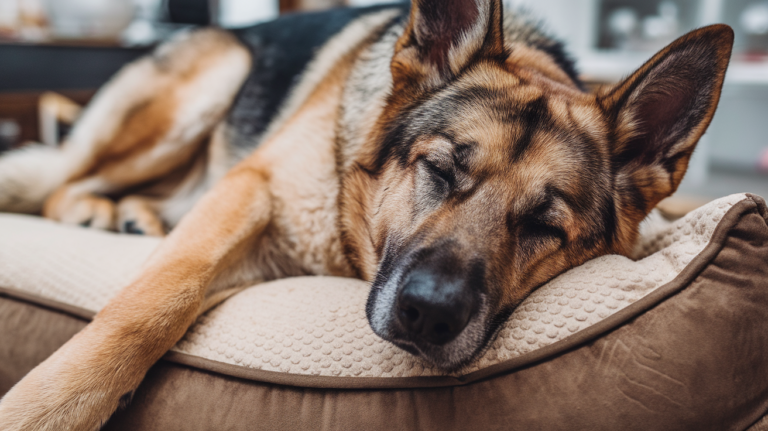
This is perhaps the most commonly reported symptom. Your German Shepherd lies down for a nap and wakes up moving like they aged twenty years. They hobble for the first few steps, then seem to “warm out of it” and move more normally.
Morning stiffness or post-rest lameness indicates inflammatory joint disease, most commonly osteoarthritis. During rest, fluid accumulates in the joint and inflammation increases. Movement pumps this fluid out and temporarily improves mobility, creating the illusion that everything’s fine.
The pattern matters enormously. If your dog needs five to ten minutes of movement before returning to normal gait, that’s significant. If they never quite return to smooth movement, the condition is more advanced.
Cold weather exacerbates this symptom dramatically. German Shepherds with joint issues become living barometers, their stiffness worsening with dropping temperatures or increased humidity.
Sign #4: Reluctance to Jump or Climb
German Shepherds are athletic dogs who should navigate obstacles with confidence. When they start refusing to jump into the car, hesitating at stairs, or avoiding their favorite couch, joint pain is the likely culprit.
This behavioral change often appears gradually. First, they need encouragement. Then they need a running start. Eventually, they refuse altogether. Owners adapt so gradually they don’t realize how much their dog’s capabilities have declined until someone points it out.
The dog who once bounded up stairs without thought now pauses at the bottom, calculating whether the discomfort is worth reaching you. That calculation breaks hearts and should break through your denial.
Watch for creative avoidance strategies. Some dogs take stairs one at a time or sidestep their way up. Others develop elaborate rituals of pacing before attempting the climb. These aren’t quirks; they’re pain management techniques your dog invented independently.
Sign #5: Decreased Activity and Exercise Intolerance
Your once-energetic German Shepherd now cuts walks short or lies down during play sessions. They’re not being lazy or stubborn; their joints hurt, and movement amplifies that pain.
Exercise intolerance manifests differently across dogs. Some simply slow down on walks. Others maintain pace but crash afterward, sleeping for hours or showing pronounced stiffness. A few become irritable during or after exercise, their discomfort overriding their normal temperament.
Track your walks using fitness apps or simple timing. If distances gradually decrease over months without obvious illness, suspect joint problems. The decline is often so gradual that owners normalize it, attributing everything to natural aging rather than treatable disease.
Young German Shepherds with joint issues face particularly tragic situations. Their minds want to run and play, but their bodies can’t sustain it. They’ll push through pain to please you, then suffer the consequences for days afterward.
Sign #6: Licking or Chewing at Joints
Dogs can’t tell us where it hurts, but they can show us. Excessive licking or chewing at specific joints (hips, elbows, knees, or ankles) indicates localized pain or discomfort.
This behavior starts subtly. You notice damp fur around the elbow or hear your dog licking themselves at night. Over time, the area may become hairless or develop thickened skin from constant attention. Some dogs escalate to chewing, creating open wounds that require medical intervention.
Distinguish between joint-focused licking and generalized itching from allergies or skin conditions. Joint-related licking targets specific anatomical points and occurs more frequently after activity when inflammation peaks.
Veterinarians consider this symptom particularly reliable because it’s self-reported, in a sense. The dog independently identifies and communicates their pain location without prompting or manipulation.
Sign #7: Audible Joint Sounds
Healthy joints move silently. Clicking, popping, or grinding sounds during movement signal cartilage damage, loose fragments, or bone-on-bone contact in advanced cases.
You might hear these sounds when your dog stands up, navigates stairs, or shifts position while lying down. Sometimes the sounds are subtle; other times they’re disturbingly loud. Either way, they indicate structural problems within the joint that warrant veterinary evaluation.
When joints announce themselves audibly, they’re already compromised. Cartilage has degraded, inflammation has set in, or mechanical function has deteriorated beyond the point of silent operation.
Not all joint sounds indicate severe pathology. Young, growing dogs sometimes experience temporary clicking as their joints develop. However, persistent sounds in adult German Shepherds, especially when accompanied by other symptoms on this list, strongly suggest degenerative joint disease.
Record these sounds if possible. Veterinarians may not hear them during a brief exam, but audio evidence confirms their existence and helps guide diagnostic approaches.
Taking Action: What Comes Next
Recognizing these signs marks the beginning of your advocacy journey. German Shepherds with joint issues need proactive management combining veterinary care, weight control, appropriate exercise, joint supplements, and sometimes medication or surgery.
Early intervention dramatically improves outcomes. Dogs diagnosed and treated in early disease stages often maintain good quality of life for years. Those whose problems go unaddressed until crisis points face more limited options and poorer prognoses.
Schedule a veterinary examination the moment you identify concerning patterns. Be specific about what you’ve observed, when symptoms occur, and how they’ve progressed. Your detailed observations guide diagnostic decisions and treatment planning.
Remember: your German Shepherd will hide pain until they absolutely cannot. Trust your instincts when something seems off, even if the signs are subtle. You know your dog better than anyone, and your vigilance might preserve their mobility and comfort for years to come.