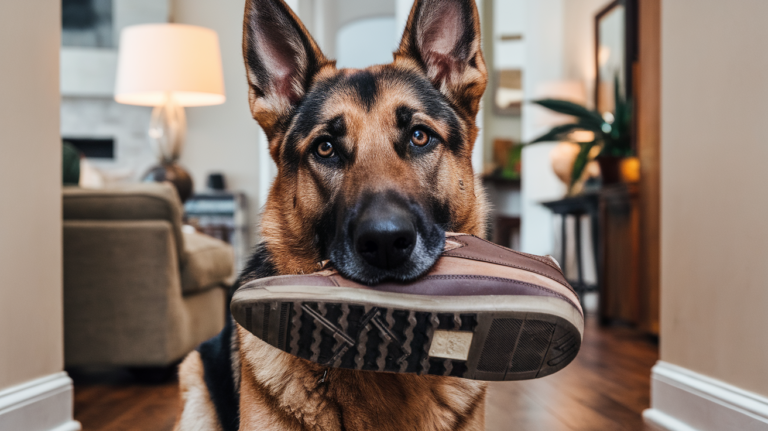
A bored shepherd becomes a mischievous shepherd. These exciting games bring instant fun, mental challenge, and the kind of joy that keeps boredom far away.
Your German Shepherd has the mental capacity of a toddler with the athletic ability of an Olympic athlete. Now imagine that combination sitting around with nothing to do all day. Terrifying, right? These dogs are wired to work, think, and solve problems. When they don’t get adequate mental and physical stimulation, they don’t just get bored; they get creative in ways that might not align with your home décor preferences.
The beautiful thing about German Shepherds is that they’re so eager to engage with you. They live for the moment when you pull out a new game or challenge. Their whole face lights up, their ears perk forward, and suddenly you’re the most interesting human on the planet.
Understanding Your German Shepherd’s Need for Stimulation
Before we dive into the games, let’s talk about why your GSD needs so much mental engagement. These dogs were originally bred in Germany (shocking, I know) to herd sheep and protect flocks. This required constant alertness, problem-solving skills, and endless stamina. Your modern German Shepherd still carries those genes, even if the closest they get to livestock is watching squirrels from the window.
A tired dog is a good dog, but an exhausted brain makes for an excellent dog. Mental stimulation can actually tire your German Shepherd out faster than physical exercise alone. Fifteen minutes of brain games can equal an hour-long walk in terms of how satisfied and sleepy your pup feels afterward.
Mental enrichment isn’t a luxury for German Shepherds; it’s a fundamental requirement for their wellbeing. Without it, you’re not living with a pet but managing a brilliant, understimulated mind in a powerful body.
The Signs Your GSD Is Bored
How do you know if your German Shepherd needs more mental stimulation? Here are the telltale signs:
| Behavior | What It Means | Urgency Level |
|---|---|---|
| Excessive barking or whining | Trying to create their own excitement | High |
| Destructive chewing | Redirecting mental energy inappropriately | High |
| Following you everywhere obsessively | Desperately seeking interaction | Medium |
| Pacing or restlessness | Unexpended mental and physical energy | High |
| Digging (indoors or out) | Creating their own “job” | Medium |
| Attention-seeking behaviors | Begging for engagement | Medium |
Now, let’s get to the good stuff: the games that will transform your bored German Shepherd into a happily exhausted one.
10 Games Your German Shepherd Will Go Crazy For
1. The Shell Game (Confidence Building)
Remember those street scam games with cups and balls? Your German Shepherd will love a legitimate version. Take three cups, hide a treat under one, shuffle them around, and let your dog find it. Start slow and obvious, then gradually increase the difficulty.
This game builds your dog’s confidence and problem-solving abilities. German Shepherds catch on quickly, so you’ll need to get creative with your shuffling techniques. Some dogs get so good they can track the cup with laser focus no matter how tricky you get.
Pro tip: Use transparent cups first so your dog understands the concept, then switch to opaque ones for the real challenge.
2. Hide and Seek (Bonding and Recall Practice)
This isn’t just for kids. Have someone hold your German Shepherd while you go hide somewhere in the house. Call their name once and wait. The joy on their face when they find you is absolutely worth it.
This game strengthens your recall command while making it fun. It also taps into your GSD’s natural tracking abilities. Start with easy hiding spots, then graduate to places that require real detective work. Behind shower curtains, in closets, or even under beds if you’re flexible enough.
3. Puzzle Toys and Food Dispensers (Independent Problem Solving)
Invest in quality puzzle toys designed for intelligent breeds. German Shepherds need Level 3 or 4 difficulty right from the start. Those beginner puzzles? Your GSD will solve them in about 30 seconds and look at you like, “Really? That’s it?”
Rotate different puzzles to keep things fresh. There are sliding compartments, flip boards, spinning wheels, and combination toys that require multiple steps. Watch your dog’s brain work as they systematically test each mechanism. It’s genuinely impressive.
4. The Name Game (Vocabulary Building)
German Shepherds can learn hundreds of words. Seriously. Start teaching your dog the names of their toys. Hold up their ball and say “ball” repeatedly before playing with it. Do this consistently with different toys.
Eventually, you can ask your dog to bring you specific items by name. “Go get your rope!” or “Where’s your squeaky?” This isn’t just cute; it’s serious cognitive exercise. Some German Shepherds can distinguish between 20, 50, or even 100+ different objects.
Teaching your German Shepherd object names isn’t showing off; it’s giving them a functional vocabulary that engages their natural desire to work with and for you.
5. Tug of War (Controlled Energy Release)
Some old-school trainers say tug of war makes dogs aggressive. That’s nonsense. When played correctly, it teaches impulse control and provides fantastic physical and mental engagement. The key is establishing rules: you start the game, you end the game, and your dog must release when told.
German Shepherds have strong jaws and love a good pulling match. Use a sturdy rope toy and let them win sometimes. This builds their confidence and makes the game more exciting. Incorporate commands like “take it,” “drop it,” and “wait” to add mental challenges to the physical activity.
6. Scent Work and Nose Games (Natural Ability Development)
Your German Shepherd’s nose is capable of incredible things. Hide treats around your house or yard and let them search. Start simple by hiding treats in obvious places while they watch, then gradually make it harder.
You can even create a DIY scent detection game. Put treats in various containers (boxes, bags, cups) and let your dog identify which ones have the goods. This taps into the same skills used by professional detection dogs. Your GSD will feel like they have a real job, which is exactly what they crave.
Level up: Hide treats in a muffin tin and cover each cup with tennis balls. Your dog has to remove the balls to find which cups have treats underneath.
7. Agility Training (Physical and Mental Combo)
You don’t need a professional agility course. Set up obstacles in your backyard using household items: weave poles from PVC pipes, jumps from broomsticks, tunnels from cardboard boxes. Guide your German Shepherd through the course, adding new elements as they master each section.
Agility training is perfect for GSDs because it combines physical exercise, mental focus, following commands, and problem-solving. Plus, watching your dog gracefully navigate obstacles is incredibly satisfying. They look so proud of themselves.
8. The Cup Stacking Challenge (Patience and Control)
This one requires serious impulse control. Stack lightweight plastic cups into a tower while your German Shepherd waits. Place a treat on top, then give permission to knock it down and claim the prize.
The challenge isn’t knocking down the cups (any dog can do that). The challenge is waiting while you build the tower. This exercises your dog’s self-control muscles, which is just as important as physical or mental stimulation. A German Shepherd with good impulse control is a joy to live with.
9. Water Games (Summer Enrichment)
German Shepherds have varying relationships with water, but most can learn to love it with the right introduction. Set up a kiddie pool, float some toys, and let them splash around. Freeze treats in ice cubes and let them figure out how to extract them.
For more adventurous dogs, try dock diving at a local facility or simply playing fetch in a lake. Water adds resistance, making physical exercise more challenging while the novelty keeps their brain engaged. Plus, it’s hilarious watching a dignified German Shepherd act like a puppy around water.
10. Interactive Play with Other Dogs (Social Stimulation)
Sometimes the best game involves another dog. German Shepherds benefit enormously from appropriate play dates with compatible dogs. The mental stimulation of reading another dog’s body language, negotiating play styles, and engaging in chase games provides enrichment you simply cannot replicate alone.
Choose playmates carefully. German Shepherds can be selective about their friends, and their play style is often intense. Look for dogs with similar energy levels who enjoy wrestling and chase games. A good dog friend can be worth their weight in gold for burning off your GSD’s energy.
Mixing It Up for Maximum Effect
The secret to keeping your German Shepherd engaged isn’t just what games you play but how often you rotate them. These brilliant dogs get bored with repetition quickly. Play the shell game today, hide and seek tomorrow, and puzzle toys the next day.
Consider creating a weekly schedule that ensures variety. Monday could be scent work, Wednesday agility training, Friday a play date. This gives your dog something different to look forward to and prevents any single game from becoming stale.
Remember: The goal isn’t to exhaust your dog into submission. It’s to provide fulfilling activities that satisfy their natural drives and strengthen your bond. A well-stimulated German Shepherd is confident, calm, and an absolute pleasure to live with.
Your German Shepherd wants to work with you, not against you. When you provide appropriate outlets for their intelligence and energy, you’re not just preventing bad behavior. You’re unlocking the full potential of one of the world’s most capable and devoted breeds. So grab some treats, pick a game, and watch those intelligent eyes light up with pure joy.