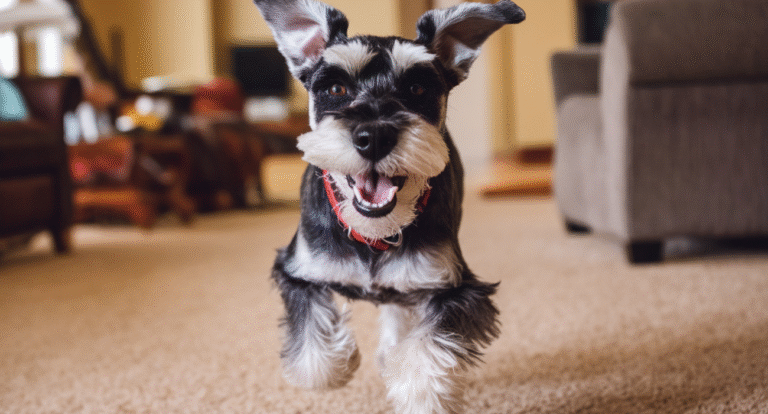
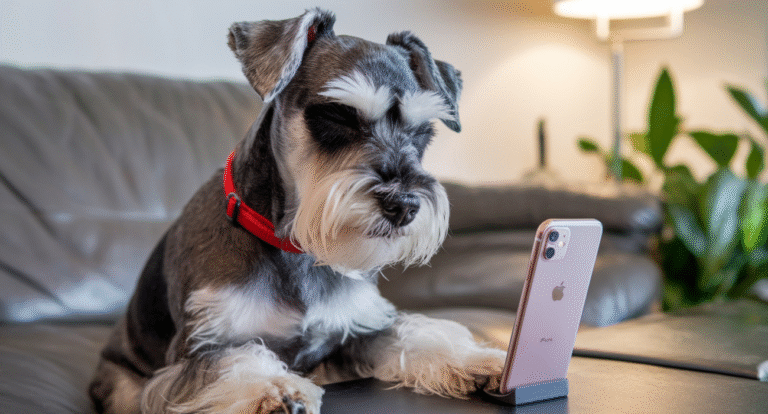
Curious about your Schnauzer’s thoughts? Dive into their playful, intelligent mind and discover what might be going on behind those expressive eyes.
Your Miniature Schnauzer isn’t just sitting there looking cute. Oh no. That little Einstein in a dog suit is running complex algorithms about treat probability, analyzing your emotional state with frightening accuracy, and maintaining a detailed mental map of every squirrel’s daily routine in a three-block radius. Welcome to the surprisingly sophisticated world of Schnauzer cognition.
These dogs pack serious brainpower into their compact frames. Originally bred as ratters and farm guardians in Germany, Miniature Schnauzers evolved to be independent thinkers who could make split-second decisions. That legacy lives on in your living room, manifesting as what you might call “selective hearing” but what they consider “executive decision making.”
The Schnauzer Superiority Complex Is Real
Let’s address the elephant (or should we say, the terrier) in the room: your Miniature Schnauzer absolutely believes they run the household. This isn’t arrogance; it’s simple fact assessment from their perspective. They’ve observed that their barking makes strangers go away, their presence at dinner time often results in food falling mysteriously to the floor, and their morning wake-up calls successfully get humans out of bed. Causation proven, case closed.
This self-assured mentality stems from their working dog heritage. Bred to hunt vermin and guard property, Schnauzers needed confidence to confront rats and sound alarms without waiting for permission. That boldness didn’t disappear just because they moved from the barn to your bed. Modern Miniature Schnauzers carry themselves with the dignity of dogs who know their historical importance, even if their current greatest accomplishment is successfully guilt-tripping you into sharing your sandwich.
What’s Really Behind That Intense Stare
When your Schnauzer locks eyes with you during dinner, they’re not simply begging. They’re engaging in sophisticated psychological warfare refined over thousands of years of dog-human cohabitation. That unblinking gaze serves multiple purposes: it communicates desire, tests your resolve, and (most importantly) maintains their position in your peripheral vision so you can’t forget they exist.
Your Schnauzer’s stare is a carefully calculated communication strategy, combining hope, expectation, and just enough persistence to wear down even the most determined treat-withholder.
The intensity of the Schnauzer stare also reflects genuine focus. These dogs possess remarkable concentration abilities, originally necessary for waiting hours at a rat hole. When they fixate on something (your sandwich, a suspicious leaf, the neighbor’s cat), they bring complete mental dedication to the surveillance operation. It’s not obsession; it’s professional thoroughness.
The Complex World of Schnauzer Emotions
Forget the myth that small dogs have simple emotional lives. Miniature Schnauzers experience feelings with operatic intensity. Joy isn’t just tail wagging; it’s a full-body celebration involving spinning, bouncing, and vocalization that could wake the dead. Similarly, disappointment manifests as profound, theatrical sighs that would make Shakespeare proud.
Their emotional sophistication extends to surprising empathy. Schnauzers often detect their owner’s mood changes before the human fully registers them. Feeling sad? Your Schnauzer knows and will either provide comfort or give you space, depending on what they’ve learned you prefer. This emotional intelligence makes them exceptional companion animals, though it also means they’re devastatingly effective at manipulation when they want something.
The Anxiety Factor
Many Schnauzer owners notice their dogs seem slightly neurotic, and there’s actually cognitive science behind this observation. These dogs possess what behaviorists call “high environmental awareness,” meaning they track everything happening around them constantly. That squirrel three houses down? Noted. The mailman’s schedule changing by five minutes? Suspicious. The family member who’s usually home but isn’t right now? Concerning.
This hypervigilance served them well as watchdogs but translates to modern life as what looks like anxiety. Your Schnauzer isn’t necessarily stressed; they’re simply paying attention to everything, all the time. It’s exhausting just thinking about it.
The Problem-Solving Schnauzer Brain
Hand a Schnauzer a puzzle toy, and watch a fascinating cognitive process unfold. First comes assessment (what am I dealing with?), then experimentation (systematic trying of different approaches), and finally either triumph or strategic destruction if the puzzle seems unreasonably difficult. This problem-solving ability ranks them among the more intelligent small breeds.
| Cognitive Skill | Schnauzer Capability | Real-World Example |
|---|---|---|
| Memory | Excellent long-term recall | Remembers every location a treat was ever hidden |
| Problem-solving | Above average for size | Figures out door handles, cabinet latches |
| Social intelligence | Highly developed | Knows exactly which family member is the easiest mark |
| Spatial reasoning | Strong | Maps every walking route and potential squirrel location |
| Cause and effect | Advanced understanding | Learns that certain behaviors consistently produce desired outcomes |
What makes Schnauzer intelligence particularly interesting is their independent thinking style. Unlike breeds that constantly look to humans for direction, Schnauzers evaluate situations and make their own decisions. Ask them to come, and they’ll genuinely consider whether that’s the best use of their time right now. This isn’t disobedience; it’s a cost-benefit analysis.
The Social Calculations Never Stop
Your Schnauzer maintains detailed mental files on every person and animal they encounter. The neighbor who always has treats? Premium status, priority greeting. The dog at the park who played too rough once? Permanently on the suspicious list, maintain distance. The family member who sneaks table food? Strategic positioning required whenever they’re eating.
Every interaction gets logged, categorized, and filed away in the Schnauzer’s surprisingly comprehensive mental database of social connections and their associated benefits or risks.
This social intelligence extends to surprising manipulation skills. Schnauzers quickly learn which behaviors produce which responses from different people. They might play up their cuteness with grandma (who’s a soft touch), act extra obedient with dad (who values discipline), and bring toys to kids (who always have energy for play). It’s not deception; it’s adaptive communication.
Pack Dynamics and Territory
Despite their small size, Schnauzers think big when it comes to their role in the family pack. They’ve observed the household dynamics and assigned themselves a position, usually somewhere between “assistant manager” and “director of security operations.” This manifests in behaviors like positioning themselves between family members and strangers, vocally alerting to any irregularities, and maintaining patrol routes through the house.
Their territorial nature means they’re constantly updating their mental map of what belongs where and who should be where. That delivery person at the door? Definitely doesn’t belong, must alert immediately. The cat sitting in their favorite sunny spot? Unacceptable territorial violation. Your Schnauzer isn’t being unreasonable; they’re simply maintaining proper household order as they understand it.
The Treat Economics System
Miniature Schnauzers operate on a sophisticated internal economy where treats are currency, attention is wealth, and proper behavior is an investment strategy. They understand transactional relationships better than most humans understand their 401(k)s. Sit when asked? That’s worth approximately one small treat. Come when called from across the park? That’s premium compliance, worth several treats or significant praise.
This economic thinking means your Schnauzer is constantly calculating value. They’ll weigh the benefit of obeying a command against the cost of abandoning whatever they’re currently doing. Sometimes your request simply doesn’t offer sufficient return on investment, and they’ll make an executive decision to decline. Understanding this helps explain why they’re perfectly obedient when treats are visible but suddenly develop hearing problems when you’re just calling them to leave the park.
What They Think About All Day
Ever wonder what occupies your Schnauzer’s mind during those long hours while you’re at work? Their mental to-do list includes: monitoring all windows for suspicious activity (squirrels, delivery people, leaves moving suspiciously), conducting security patrols through each room, napping in strategic locations that maximize comfort while maintaining surveillance capabilities, and mentally rehearsing their excited greeting for when you return.
The average Miniature Schnauzer spends approximately 60% of their alone time on security monitoring, 30% on rest and recuperation, and 10% on investigating interesting smells and sounds that require further analysis.
When you are home, their focus shifts to opportunity maximization. They’re calculating optimal positioning for treat acquisition, monitoring your activities for entertainment possibilities (walk? playtime? food prep?), and maintaining their important role as your shadow and personal supervisor. Nothing you do goes unobserved; they’re the middle manager who shows up to every meeting, needed or not.
The Verdict on Schnauzer Consciousness
Living with a Miniature Schnauzer means sharing your space with a surprisingly complex thinker. They’re not just reacting to stimuli; they’re processing, evaluating, remembering, and planning. That beard and those eyebrows frame a brain that’s always working, always watching, and definitely always hoping you’ll drop something delicious.
Understanding what’s happening inside that whiskered head transforms your relationship with your Schnauzer. Suddenly their behaviors make sense, their quirks become endearing rather than frustrating, and you realize you’re not living with a simple pet. You’re cohabitating with an opinionated, intelligent, emotionally complex creature who happens to look absolutely ridiculous when wet but somehow maintains their dignity anyway.