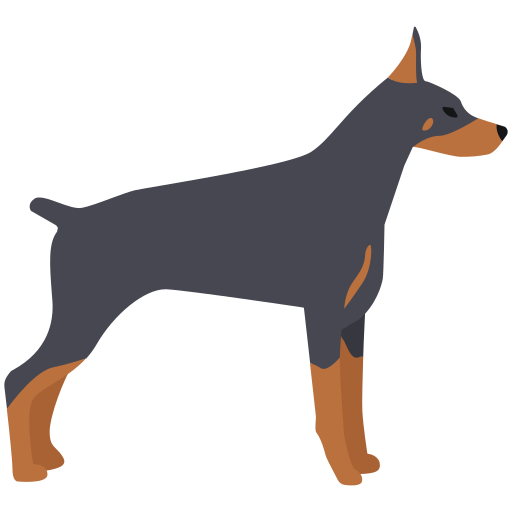
 Doberman
 Ears up.
This week is the one where you actually stop and make your Doberman feel like the center of the universe, instead of just the dog who happens to live in your house.
Dobermans are not low maintenance emotional creatures. They bond hard, they feel deeply, and they notice when you’re phoning it in.
Why This Particular Week Matters
Life gets busy. Work piles up, errands eat your evenings, and somewhere in there your dog gets a distracted pat on the head instead of real attention.
Dobermans pick up on that shift faster than almost any other breed.
They’re velcro dogs by nature, wired to stay close to their person and read every subtle cue you give off. When that connection feels thin, they notice, and sometimes they act out in ways that confuse owners who don’t realize the issue is emotional, not behavioral.
A Breed That Feels Everything
This is a breed built on intensity. Loyalty, alertness, sensitivity: it’s all turned up.
A Doberman doesn’t just live in your home. It lives in your mood, your schedule, and your tone of voice.
That’s not dramatic, it’s just true. Dedicating a week to intentional love isn’t fluff. It’s maintenance for a relationship that runs deeper than most people expect.
Small Gestures That Actually Register With a Dobie
Forget grand gestures. Dobermans care more about consistency and presence than anything flashy.
Physical Affection, On Their Terms
Dobermans love touch, but they want it done right. A lot of owners default to head pats, when what their dog actually craves is a slow scratch along the chest or a firm hand resting on their side.
Try sitting on the floor with your dog tonight. Not standing over them, not calling them to you: just sitting down at their level and letting them lean into you.
That small shift changes everything about how the moment feels to them.
Reading the Signals You Might Be Missing
Watch the tail. Watch the ears. Watch how they lean into a touch versus how they pull away from one.
Dobermans communicate constantly, and most of it is silent. Learning to read those signals is its own form of love.
Mental Enrichment Beats Another Toy
A tired Doberman is a happy Doberman, but tired doesn’t always mean physically exhausted.
This breed is famously intelligent, sometimes uncomfortably so. Puzzle feeders, scent games, and short training sessions do more for their wellbeing than an hour of fetch ever could.
Try hiding treats around a room and letting your dog hunt them down using nothing but their nose. It’s simple, it’s cheap, and it genuinely wears out that big brain of theirs.
"Give a Doberman a job, even a tiny one, and watch how quickly their whole demeanor softens."
That’s the kind of advice that sounds almost too simple to work, and yet it does, every single time.
Training as a Love Language
A lot of owners think training is about obedience. For Dobermans, it’s closer to conversation.
Five minutes of focused training, done with warmth instead of pressure, tells your dog that you see them and that you’re paying attention. That message lands hard with this breed.
Turn Mealtime Into a Moment
Feeding time is usually rushed. Bowl down, dog eats, everyone moves on.
This week, slow it down instead. Hand feed a few pieces before setting the bowl down, or turn dinner into a short training session using their regular kibble.
It sounds small, but Dobermans read mealtime as a trust exercise. Who provides, who protects, who’s actually in charge here. Slowing that moment down reinforces the bond in a way that’s easy to overlook.
A Note on Treat Quality
Not every treat needs to come from a bag. Fresh, safe options like small pieces of cooked chicken or a spoon of plain pumpkin can turn an ordinary Tuesday into something your dog remembers.
Just keep portions modest. Dobermans are lean, athletic dogs, and extra weight sneaks up fast on this breed.
The Power of a Good, Long Walk
Not the ten minute lap around the block. A real walk, with sniffing time built in and zero rush to get back home.
Dobermans were bred to move, guard, and stay alert alongside their person. A rushed walk barely scratches that itch.
Let them lead the pace occasionally. Let them stop and investigate something ridiculous, like a leaf that’s clearly been there for days.
Sniffing Is Not a Delay, It’s Enrichment
Owners often treat sniffing as a nuisance that slows the walk down. For a Doberman, sniffing is basically reading the news.
Letting them take their time doing it is a form of respect, not a waste of your schedule.
Quality Time Isn’t Just Physical
Sometimes the most loving thing you can do is simply exist near your dog without demanding anything from them.
No commands, no training, no walk. Just presence.
Dobermans often struggle with separation, and even when you’re home, distracted screen time can feel like a mild version of that same absence to them. Sitting on the couch with your dog pressed against your leg, phone face down for once, sends a message that words never could.
"A Doberman doesn’t need you to perform love. It needs you to simply be there, uninterrupted, for a little while."
Letting Them Choose the Closeness
Dobermans are notorious for wanting to be as physically close as humanly possible, sometimes uncomfortably so.
Let them. This week, resist the urge to shoo them off the couch or redirect them to their bed. Lean into the closeness instead, because for this breed, physical nearness is emotional security.
Verbal Affection Matters More Than People Think
Talk to your dog. Actually talk, not just commands barked out during a walk.
Dobermans respond to tone with startling sensitivity, picking up on warmth, frustration, and everything in between. A soft voice and a few genuine words of praise can shift their entire posture in seconds.
They’re listening more closely than you realize.
Little Rituals Build Big Bonds
Consistency is where love actually takes root, more than any single grand gesture ever could.
Pick one small ritual this week: a morning cuddle before coffee, a specific phrase before walks, a particular spot they get to sit during dinner prep.
Repeat it daily. Dobermans thrive on predictability, and rituals like these become tiny anchors of trust that build over time.
Why Small Actions Outperform Big Ones
A single elaborate gesture rarely means as much to a dog as five small ones repeated all week.
Dobermans aren’t impressed by extravagance. They’re moved by attention, repetition, and the quiet reassurance that comes from knowing exactly what to expect from you.
That’s really what this whole week comes down to: showing up, again and again, in ways your Doberman actually notices.