Clean your Schnauzer’s ears with this simple five-step routine to keep them sparkling and free from irritation or infection.
Your Schnauzer’s beard might get all the attention, but those ears deserve some serious love too. Hidden beneath those folded flaps is a surprisingly high-maintenance area that can go from perfectly healthy to problematic faster than your dog can demolish a new toy. The culprit? Limited airflow creates the perfect breeding ground for all sorts of nastiness.
Most new Schnauzer owners don’t realize that ear care should be as routine as nail trimming or teeth brushing. By the time they notice something’s wrong (excessive scratching, head shaking, or that distinctive yeasty smell), they’re already behind the eight ball. Let’s make sure that doesn’t happen to you.
Step 1: Gather Your Ear Cleaning Arsenal
Before you even think about touching your Schnauzer’s ears, you need the right supplies. Running around mid-cleaning session trying to find cotton balls while your dog escapes is nobody’s idea of fun.
Here’s your shopping list: a veterinarian-approved ear cleaning solution (skip the homemade remedies unless your vet specifically recommends them), cotton balls or gauze pads, and treats. Lots of treats. Maybe some peanut butter too if your Schnauzer is particularly squirmy.
Never, ever use cotton swabs deep in the ear canal. I cannot stress this enough. You’re not trying to dig for treasure in there. Cotton swabs can push debris further into the ear or damage the delicate ear drum. Save the Q-tips for your own ears and stick with cotton balls for your pup.
| Supply | Purpose | Where to Buy |
|---|---|---|
| Vet-approved ear cleaner | Dissolves wax and debris safely | Veterinary clinic, pet stores, online retailers |
| Cotton balls or gauze | Wipes away loosened gunk | Pharmacy, pet stores, grocery stores |
| Treats | Bribery and positive reinforcement | Anywhere your Schnauzer gives you those eyes |
| Towel | Catches the inevitable head shake mess | Your linen closet (use an old one!) |
The quality of your ear cleaning solution actually matters. Those bargain basement options might save you a few bucks now, but they could irritate your dog’s ears or fail to effectively clean them. Look for solutions with ingredients like salicylic acid or lactic acid that help maintain proper pH balance.
Step 2: Master the Art of Ear Hair Management
Here’s something that surprises a lot of people: Schnauzers grow hair inside their ear canals. Yep, just when you thought grooming couldn’t get any more involved, Mother Nature threw in this extra challenge. This hair traps moisture, wax, and debris, creating a perfect storm for infections.
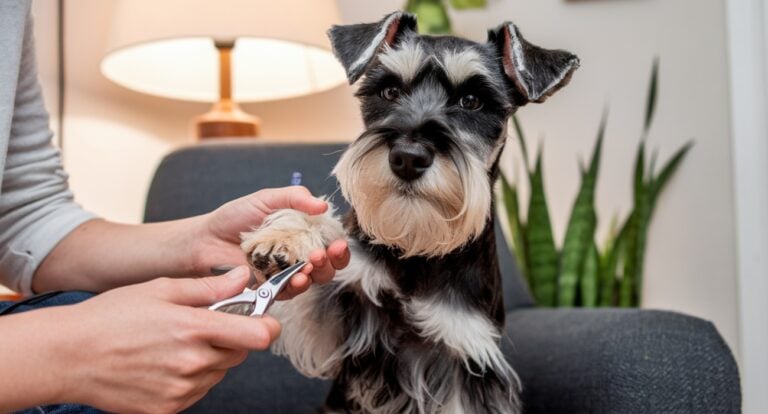
You have two options here: plucking or trimming. Plucking involves gently removing the hair with your fingers or hemostats (that’s fancy talk for small medical clamps). Trimming means carefully snipping the visible hair with small, rounded scissors. Some groomers swear by plucking because it opens up the ear canal more effectively, while others argue that trimming is less irritating.
The key to healthy Schnauzer ears isn’t just about what you do, but how consistently you do it. Regular maintenance prevents the kind of buildup that turns a simple cleaning into a major production.
If you’re nervous about plucking, start with trimming and work your way up. Or better yet, have a professional groomer show you the ropes during your Schnauzer’s next appointment. There’s no shame in getting a demonstration before attempting this at home. Your dog’s comfort is worth more than your pride.
Watch for signs that you’re being too aggressive: redness, your dog pulling away sharply, or any bleeding. If you see any of these, stop immediately and consult your vet. The goal is to remove some hair to improve airflow, not to create a completely bald ear canal.
Step 3: The Actual Cleaning Process (It’s Easier Than You Think)
Okay, here’s where the magic happens. Find a comfortable spot where your Schnauzer feels secure. Some dogs prefer sitting on your lap, others do better standing on a table with a non-slip mat. Wherever you choose, make sure you have good lighting because you need to see what you’re doing.
Lift the ear flap and hold it gently but firmly. Fill the ear canal with cleaning solution (yes, really fill it; don’t be shy) until you see the liquid pooling slightly. This might feel like you’re using too much, but trust the process. The solution needs to reach all the nooks and crannies to do its job effectively.
Now comes the satisfying part: massage the base of the ear for about 30 seconds. You’ll hear a wonderful squelching sound as the solution breaks up all that accumulated gunk. Your Schnauzer might look at you like you’ve lost your mind, but keep going. This massage is crucial for loosening debris that’s been hanging out in there.
Step back (seriously, step back) and let your dog shake their head. They’re going to do it anyway, and trying to prevent it just frustrates everyone involved. The head shake actually helps expel loosened debris from deep in the canal. That’s why you grabbed that old towel earlier, right?
Step 4: Wipe Away the Grossness
After the head shake spectacular, it’s time for the detail work. Take a cotton ball or gauze pad and gently wipe the visible parts of the ear canal and inner ear flap. You’re only cleaning what you can see. Don’t go spelunking into the depths of the ear canal.
You’ll probably be amazed (and maybe slightly horrified) by what comes out. Brown, yellow, or black discharge is normal accumulation. What’s not normal is red, bloody, or green discharge, or anything that smells absolutely rancid beyond the usual ear wax smell. Those are signs of infection that need veterinary attention.
Think of ear cleaning as preventive maintenance, not a deep cleaning service. You’re maintaining cleanliness, not performing surgery. Gentle and regular beats aggressive and sporadic every single time.
Use fresh cotton balls for each wipe. Reusing the same one just redistributes the gunk you’re trying to remove. I usually go through four to six cotton balls per ear, depending on how long it’s been since the last cleaning. Don’t worry about being wasteful; they’re cheap, and your dog’s ear health is worth it.
Pay special attention to all the little folds and crevices in the outer ear too. Schnauzers have surprisingly complex ear anatomy, and debris loves to hide in those spots. Be thorough but gentle. If your Schnauzer starts pulling away or showing signs of discomfort, take a break and come back to it.
Step 5: Establish a Routine (And Actually Stick to It)
Here’s the thing about ear cleaning: doing it once doesn’t earn you a gold star for the year. Consistency is everything when it comes to preventing ear problems in Schnauzers. Most vets recommend cleaning your Schnauzer’s ears every one to two weeks, though some dogs need it more frequently.
How do you know what schedule works for your specific dog? Pay attention to how quickly their ears get dirty. If you’re seeing significant buildup after just a few days, increase the frequency. If the ears still look pristine after two weeks, you might be able to stretch it a bit longer. Every Schnauzer is different based on their activity level, ear shape, and individual biology.
Create a routine around an existing habit. Maybe it’s every Sunday morning after your coffee, or every other Wednesday after grooming day. Put it in your phone calendar with reminders. The easier you make it to remember, the more likely you are to actually do it.
| Cleaning Frequency | Best For | Signs You Need This Schedule |
|---|---|---|
| Weekly | Active dogs, swimmers, infection-prone pups | Ears get dirty quickly; history of infections |
| Bi-weekly | Average Schnauzers with normal ear health | Moderate activity; occasional mild buildup |
| Monthly | Low-maintenance dogs in dry climates | Ears stay clean; minimal wax production |
Start this routine when your Schnauzer is young if possible. Puppies who learn that ear cleaning is just part of life handle it much better than adult dogs who suddenly have to deal with this weird new invasion of their personal space. But even older dogs can learn to tolerate (or even enjoy) ear cleaning with patience and positive reinforcement.
And speaking of positive reinforcement: treats after every cleaning session, no exceptions. Make this experience as pleasant as possible. Some Schnauzers will never love ear cleaning, but they can at least associate it with good things. High-value treats (the really good stuff they don’t get every day) work wonders for cooperation.
Watch for red flags between cleanings: excessive scratching at the ears, frequent head shaking, a strong odor coming from the ears, redness or swelling, discharge, or your Schnauzer yelping when you touch their ears. Any of these symptoms warrant a vet visit before your next scheduled cleaning. Don’t try to clean an ear infection away; that’s a job for professionals and medication.
Your Schnauzer’s ears are a window into their overall health. Regular cleaning isn’t just about hygiene; it’s about catching potential problems before they become painful, expensive emergencies.
The time investment is minimal (we’re talking five to ten minutes every week or two), but the payoff is huge. Fewer vet visits, a more comfortable dog, and the satisfaction of knowing you’re preventing problems instead of reacting to them. Plus, it’s bonding time with your pup, even if they don’t fully appreciate it in the moment.