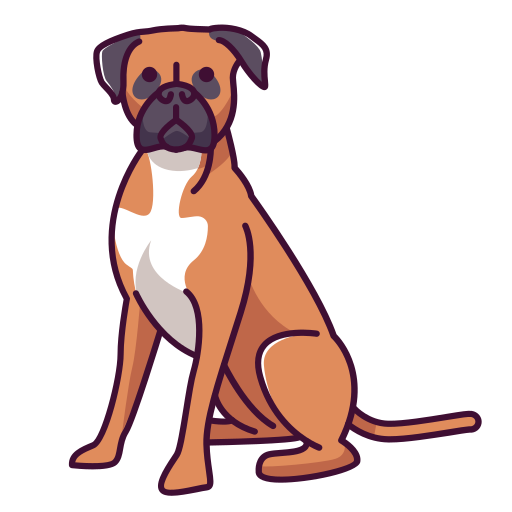
 Boxer
Boxer Nose prints at chest height, smeared across the front window into a foggy little constellation. That is what greets you when you pull back into the driveway after eight hours away.
Behind the door, something heavy is already throwing itself sideways against the wood. The tail nub is going. The whining has that specific Boxer pitch, half opera singer, half squeaky toy.
Then you find the shoe.
Leaving a Boxer alone is its own particular challenge, and anyone who has traded a couch cushion for a workday knows exactly why. This breed did not sign up for solitude. They were built to be in the mix, glued to a leg, supervising the kitchen, breathing directly into your face at 3 a.m.
The good news is that a bored, lonely Boxer is a fixable problem. The better news is that most of the fix happens before you ever walk out the door.
Why Boxers Take Your Absence Personally
Plenty of breeds nap contentedly while their people are gone. Boxers are not on that list.
The Velcro Problem
Boxers were bred as working companions who stayed close to their handlers. Centuries of that produces a dog who genuinely believes your lap is public property.
That closeness is the whole charm of the breed. It is also why the front door becomes such a loaded object.
A Clown Brain in an Athlete’s Body
Boxers stay puppyish for years. Some of them never really stop, which is delightful at the dog park and considerably less delightful when there are four unsupervised hours and a basket of laundry involved.
An under stimulated Boxer does not sit quietly with its feelings. It redecorates.
A Boxer without a job will always invent one, and you are unlikely to approve of the position description.
Chewing, digging, counter surfing, hurling toys at walls: these are not spite. They are an athlete with nothing to do and too much time to do it in.
Wear Them Out Before You Leave
This is the single highest impact thing you can do, and most people skip it because mornings are chaos.
A tired Boxer sleeps. A fresh Boxer plots.
Twenty Minutes That Change Everything
You do not need an hour long hike at dawn. You need intensity.
Fetch in the backyard until the tongue hangs sideways. A brisk walk with a few sprints thrown in. Tug until they flop over dramatically like a Victorian widow.
Short bursts of hard effort do more for a Boxer than a slow, sniffy stroll around the block, though the sniffy stroll has its own value later.
Feed the Brain Too
Physical exercise drains the body. Mental work drains something deeper.
Five minutes of training right before you leave, working on sit, stay, place, or a silly trick, sends them into their nap with a genuinely satisfied brain. It is the canine equivalent of a hard workday followed by a hot shower.
Make the House Do Some of the Work
Once you are gone, the environment becomes the babysitter. Set it up properly.
Temperature Is Not Optional
Boxers have flat faces, and flat faces cook. Their ability to cool themselves through panting is genuinely compromised compared to a longer nosed breed.
A stuffy house in July is not a minor discomfort for this breed. It is a medical risk.
Leave the air conditioning running. Draw the blinds on the sunny side of the house. Put out more water than you think is reasonable, in more than one bowl, because Boxers knock things over.
In winter, the opposite applies. That short coat and low body fat means a cold house makes for a miserable, shivering dog.
Give Them a Den, Not a Wasteland
Access to the entire house sounds generous. To an anxious dog, it often reads as too much territory to patrol.
Many Boxers do better with a defined space: a crate they actually like, a gated kitchen, a single room with their bed and their things. Smaller can feel safer.
The key word is like. A crate used as punishment becomes a box of dread. A crate stuffed with a frozen treat, an old shirt of yours, and their favorite blanket becomes a bedroom.
Sound Fills the Silence
An empty house is loud in all the wrong ways. Every delivery truck, every neighbor’s door, every squirrel with an agenda.
Leave a radio on a talk station or run a fan for white noise. It muffles the outside world and takes the edge off the sudden noises that trigger barking marathons.
The Goodbye Ritual Nobody Warns You About
Here is where well meaning owners accidentally make things worse.
The long, emotional farewell (kneeling down, cupping the face, promising you will be back soon in a voice reserved for deathbed scenes) tells your Boxer that something significant is happening.
They read your energy far better than they read your words.
Your departure should be the least interesting event of the morning.
Keep it boring. Toss the stuffed food toy, say something short and flat, walk out. No lingering, no apology tour.
Same goes for coming home. Greet them once you have set down your bags and they have all four feet on the floor, not the instant you cross the threshold while they levitate.
Practice Leaving When You Are Not Leaving
Grab your keys and sit back down. Put on your shoes and make coffee. Step outside for ninety seconds, then come back in like nothing happened.
Doing this randomly, several times a week, breaks the association between keys jingling and abandonment.
Real Entertainment While You Are Gone
A tennis ball on the floor is not enrichment. It is a tennis ball on the floor.
Food Puzzles Earn Their Keep
Frozen stuffed rubber toys are the gold standard for a reason. Pack one with wet food, plain yogurt, mashed banana, or soaked kibble, then freeze it overnight.
A Boxer will work at that thing for thirty to forty minutes, and the licking itself is calming in a way that surprises most owners.
Snuffle mats, treat dispensing balls, and scattering breakfast across the yard grass all buy real time.
Rotate, Do Not Accumulate
Ten toys available every day equals zero interesting toys. Keep most of them in a closet and swap three or four out every few days.
Novelty is cheap. Use it.
Bring in Reinforcements
Some schedules are simply too long for a dog with this much energy and this much need for company.
Midday Help
A dog walker who shows up at noon splits an eight hour stretch into two manageable halves. That is often the entire solution.
A neighbor, a retired parent, a teenager down the street: the person matters less than the interruption.
Daycare, With a Caveat
Boxers usually adore daycare. All that wrestling and body slamming finds an appropriate audience.
Just vet the facility properly. Ask about group sizes, staff ratios, and whether they separate by play style, because a rough housing Boxer paired with a nervous small dog serves nobody.
Boredom Versus Real Anxiety
These look similar from the outside and require completely different responses.
A bored dog chews things that are fun to chew. Shoes, remotes, the corner of a rug.
An anxious dog targets exits. Scratched door frames, destroyed blinds by the window, damage concentrated around the crate door.
Destruction near the door is a message, not a mess.
Other signals: drooling puddles, refusing food the entire time you are gone, house soiling in an otherwise reliable dog, or nonstop vocalizing captured on camera.
What Actually Helps
True separation anxiety does not respond to more toys. It responds to gradual desensitization, sometimes paired with medication prescribed by your vet.
Start absurdly small. One second behind a closed door, then five, then thirty, always ending before panic starts. It is slow, unglamorous work, and it is the only thing that reliably moves the needle.
Loop in a certified behavior consultant if you are stuck. There is no prize for figuring it out alone while your door frame disintegrates.
Small Adjustments Worth Trying
Leave a worn shirt in their bed. Your scent is genuinely comforting to them.
Skip the guilt spiral. Dogs live in the present, and a well managed absence is not cruelty.
Consider adjusting your own schedule where you can: a work from home day midweek, a lunch break at home on the longest days, an earlier morning to buy that exercise window.
Track what works. Set up a camera for a week and watch what your dog actually does at hour two versus hour six, because guessing wastes months and footage takes an afternoon.