Stronger bonds don’t take months. One mindset shift can instantly improve trust, cooperation, and affection.
You’ve seen those videos online where German Shepherds follow their owners everywhere, respond to the slightest gesture, and look at them like they hung the moon. Meanwhile, your GSD seems more interested in sniffing the baseboards or chewing your favorite shoes. The gap between where you are and where you want to be might feel enormous right now.
Here’s the exciting part: German Shepherds are hardwired for bonding. Their genetics practically scream “let me be your partner in everything!” The problem isn’t your dog; it’s that nobody taught you the fast track to their heart. Get ready to discover the shortcuts that will have your German Shepherd choosing you over literally anyone else.
Step 1: Master the Art of Being Interesting
Your German Shepherd needs mental stimulation like humans need coffee. These dogs get bored faster than a teenager at a family reunion, and a bored GSD is a dog who starts looking elsewhere for entertainment.
Become unpredictable. If you feed your dog at the same time every day, take the same walking route, and play the same game of fetch, you’re basically the canine equivalent of watching paint dry. Mix things up constantly. Feed breakfast at different times. Take spontaneous detours during walks. Hide treats around the house and turn dinner into a scavenger hunt.
The magic happens when your dog starts thinking, “What’s my human going to do next?” This creates a state of engaged curiosity where your GSD stays mentally connected to you because you’re the most fascinating thing in their world.
When your German Shepherd sees you as the source of all things exciting and unpredictable, you become irreplaceable in their eyes.
Create Interactive Feeding Experiences
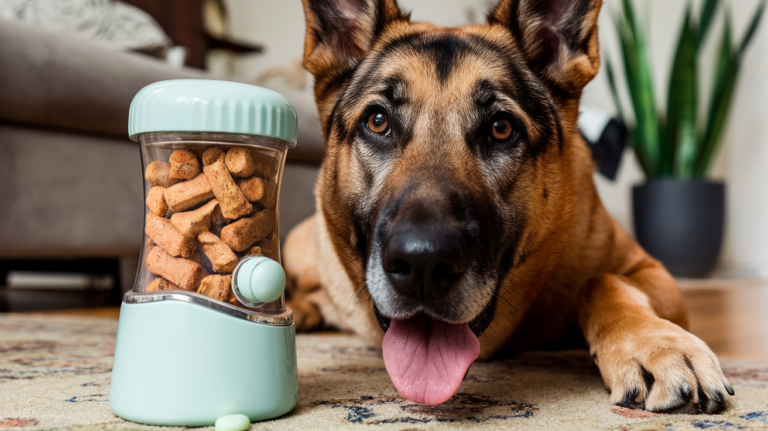
Stop using a regular dog bowl. I’m serious. Your German Shepherd’s ancestors worked for every meal, and that instinct still burns inside them. Use puzzle feeders, snuffle mats, or scatter kibble in the grass. Better yet, use mealtime as training time. Make them work for every piece through commands, tricks, or problem solving.
This transforms you from “food dispenser” to “collaborative partner,” which is exactly what German Shepherds crave. Within days, you’ll notice your dog watching you more intently, checking in more frequently, and treating you like the most important creature on Earth.
Step 2: Speak Their Language (It’s Not What You Think)
German Shepherds are communication masters, but most owners talk at their dogs instead of with them. Learning to read and respond to your GSD’s signals creates an instant connection that feels almost telepathic.
Watch the ears. Those expressive ears aren’t just adorable; they’re satellite dishes broadcasting your dog’s emotional state. Forward means interested, back means worried or submissive, and swiveling means they’re processing multiple sources of information. When you notice and respond appropriately to ear positions, your dog realizes you’re actually paying attention.
Mirror their energy. If your GSD is excited, match that excitement. If they’re calm, be calm. This creates harmony and makes your dog feel understood on a deep level. Most people try to calm an excited dog or energize a sleepy one, creating constant emotional friction.
| Your Dog’s Signal | What It Means | How to Respond |
|---|---|---|
| Direct eye contact with soft eyes | Trust and affection | Slow blink back, speak softly |
| Play bow (front down, rear up) | Invitation to interact | Drop what you’re doing and play! |
| Leaning against you | Seeking security or showing affection | Pet them calmly, stay present |
| Showing belly | Ultimate trust | Gentle belly rubs (unless they’re submissive/fearful, then space) |
| Bringing you toys | Wants to engage with you | Always acknowledge, even if you can’t play right now |
The Power of Eye Contact
German Shepherds bond through eye contact in ways that seem almost human. Practice looking into your dog’s eyes (gently, not staring) and holding that gaze. Studies show this releases oxytocin (the bonding hormone) in both you and your dog. It’s literally chemistry creating friendship.
Do this for 30 seconds several times throughout the day. Pair it with soft words or gentle petting. Within a week, your German Shepherd will seek out your eyes constantly, creating countless micro bonding moments throughout each day.
Step 3: Make Training Feel Like Playing
German Shepherds are working dogs who feel purposeless without a job. But here’s the secret: they don’t know the difference between “work” and “fun games with my favorite human.”
Turn everything into a trick. Waiting for dinner? Teach spin. Commercial break during TV time? Practice “place” or “settle.” Walking to the mailbox? That’s heel training disguised as a casual stroll. When every interaction involves your dog’s brain engaging with yours to solve little challenges, you become the center of their universe.
The key is keeping training sessions incredibly short (3 to 5 minutes max) but doing them constantly throughout the day. This prevents boredom and creates dozens of positive interactions between you and your GSD.
Your German Shepherd doesn’t want a master; they want a teammate. Every training session where you both work toward a goal strengthens that team.
The “Yes!” Method
Replace “good dog” with an enthusiastic “YES!” every time your GSD does something right. This word becomes a celebration marker that means “you nailed it!” The energy and emotion you pack into that one word creates powerful positive associations with pleasing you.
Pair every “yes!” with a treat, toy, or play session at first. Eventually, the “yes!” itself becomes so rewarding that your dog will work just to hear it. This transforms you into a living, breathing reward machine.
Step 4: Physical Connection That Matters
German Shepherds are surprisingly physical dogs, but most owners don’t leverage this properly. Strategic touch creates neurological bonding that goes beyond simple affection.
The two hand rule: When petting your GSD, use both hands and pet for at least 30 seconds at a time. Quick pats feel dismissive. Long, slow, two handed petting while making eye contact triggers deep relaxation and bonding hormones. Focus on chest scratches, ear massages, and that sweet spot right before the tail.
Practice “passive presence” where you simply exist in the same space as your dog without demands. Sit on the floor while reading or watching TV. Your German Shepherd will eventually gravitate toward you, leaning, touching, or just being nearby. This builds comfort and security.
Groom with Purpose
Brushing your German Shepherd (and you’ll be doing a lot of it with that double coat) shouldn’t be a chore. Make it a ritual. Set up a specific spot, use this time for gentle talking, and make every brushing session last at least 15 minutes. The combination of physical touch, focused attention, and care creates profound bonding.
Your dog will start looking forward to grooming sessions, and you’ll notice them seeking you out more throughout the day.
Step 5: Create Shared Adventures
German Shepherds bond most deeply through shared experiences, especially novel ones. Your dog’s brain releases bonding chemicals when you explore new environments together and face mild challenges as a team.
Go somewhere new weekly. It doesn’t have to be exotic. A different park, a friend’s house, a pet friendly store, or even a new neighborhood for walking creates shared memories. During these adventures, your GSD looks to you for guidance and security, which cements your role as their trusted partner.
When you encounter something your dog finds uncertain (a strange object, unusual sound, or new surface), approach it confidently together. Your calm leadership during mildly stressful situations builds enormous trust.
Every new place you explore together becomes a memory that strengthens your bond. You’re not just a dog owner; you’re an adventure partner.
The “Where’s It Going?” Game
During walks, occasionally sprint forward suddenly, or change direction without warning. Make it playful and exciting. This teaches your German Shepherd to constantly monitor your position and movement. Soon they’ll naturally stay more engaged with you during every walk, creating a continuous flow of attention and connection.
This single technique transforms boring walks into dynamic adventures where your dog can’t take their eyes off you.
Step 6: Respect Their Protective Nature
German Shepherds are natural guardians, and trying to suppress this instinct damages your relationship. Instead, channel it productively. Give your GSD a “job” of watching over the house or alerting you to visitors.
Acknowledge alerts properly. When your dog barks at someone approaching, don’t yell “no” or punish them. Instead, go check what they’re alerting you to, thank them calmly (“thank you, I’ll handle it”), and then give a release command like “okay” or “all done.” This validates their protective instinct while establishing you as the decision maker.
This approach makes your German Shepherd feel like a valued team member rather than a nuisance, which creates deep loyalty and trust.
Protective Training Builds Trust
Teach your GSD commands like “watch” (pay attention to something) or “check it out” (investigate something specific). This gives structure to their guarding instincts and makes them feel purposeful. When your dog successfully performs these protective behaviors on command, they feel accomplished and connected to you as their partner.
Step 7: The Bedtime Bonding Ritual
Where your German Shepherd sleeps matters more than most people realize. If possible, let them sleep in your bedroom (even if not on the bed). The vulnerability of sleep is when the deepest bonding occurs between pack animals.
Create a bedtime routine. Same sequence every night: final bathroom break, a few minutes of calm petting, quiet talking, then lights out. This routine signals safety and partnership. Your GSD will begin to see bedtime as quality time with you rather than forced separation.
Many owners report this single change transformed their relationship more than anything else. Those quiet hours sharing space while sleeping create subconscious bonding that manifests as increased daytime attention and affection.
The transformation in your German Shepherd’s behavior and attachment to you can happen remarkably fast. These aren’t tricks or manipulations; they’re tapping into what German Shepherds already want: a capable, interesting, engaged partner. Start implementing these steps today, and by tomorrow night you’ll already notice your dog watching you differently, staying closer, and responding more eagerly. Give it a week, and you’ll have a shadow who considers you the most important thing in their world. The bond you’ve been hoping for has been waiting for you to unlock it all along.